The Flying Longhorns Take in the Burnt-Orange Skies of Africa
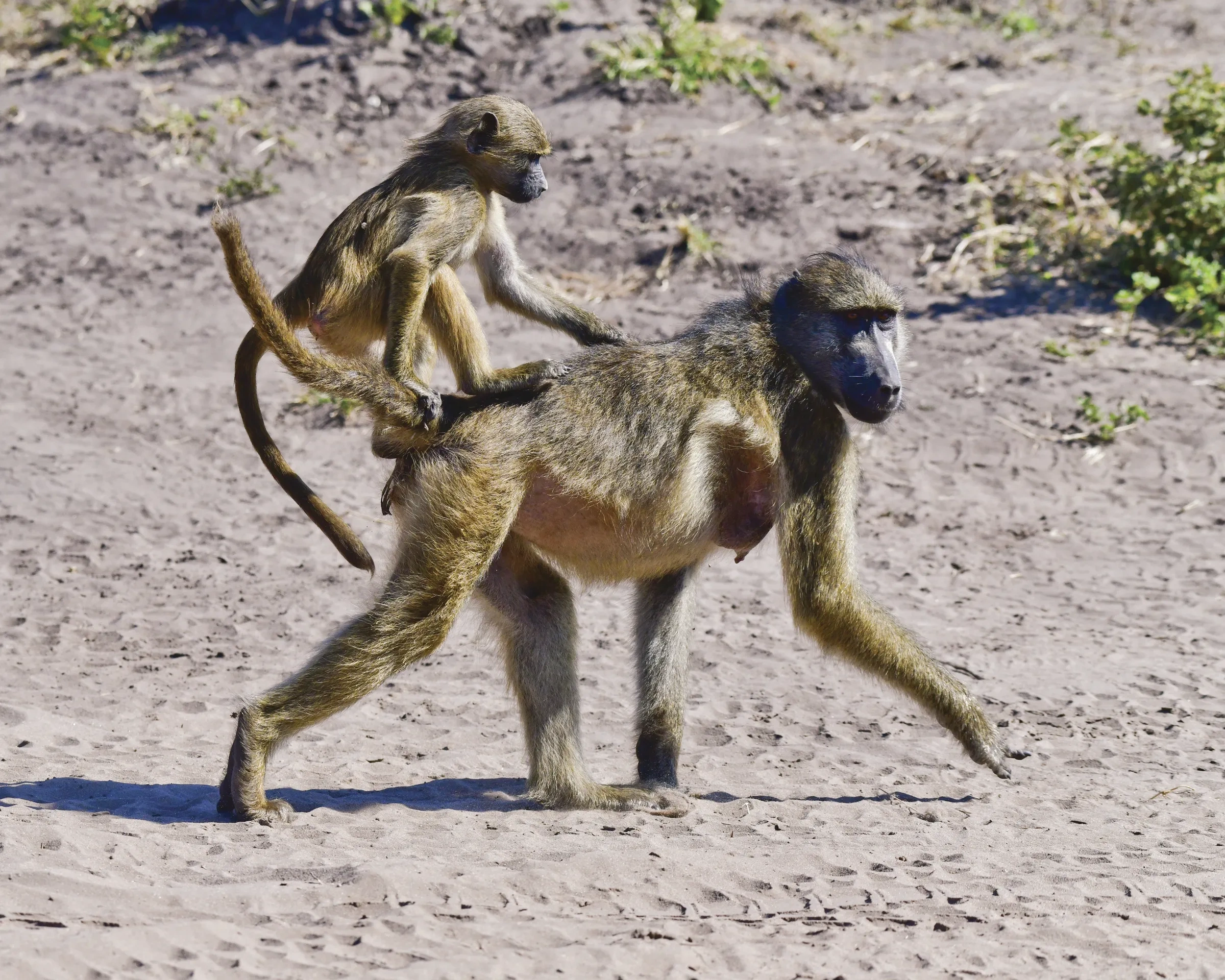
All was peaceful as we sat down for lunch at an outdoor restaurant on the shores of False Bay. It was April, too early for whale season in South Africa, but we kept an eye on those calm waters anyway, hoping for a sighting of a stray humpback or a southern right whale. But then a woman shrieked in terror, and we turned to see a much different creature. A giant baboon had just leapt onto one of the nearby tables and was grabbing a fistful of fried calamari off a startled diner’s plate. It was a long-snouted male chacma, a member of the largest baboon species, appearing out of nowhere like a Viking raider. He sat on the end of the table for a moment, prideful and defiant, and then grudgingly withdrew before an onslaught of waitresses clanging their serving trays.
It was business as usual for those young women, but another are-we-really-here experience for the Flying Longhorns. We were in the early days of a two-week sweep that would take us through South Africa and to the neighboring countries of Botswana, Zimbabwe, and Namibia. Sights like marauding baboons, or wild ostriches ambling along the stony seacoast of the Cape of Good Hope, were still registering to our outlander eyes as startlements.
in Chobe National Park.
We had begun our trip in Cape Town, at the venerable and soothingly pink Mount Nelson Hotel, where a young war correspondent named Winston Churchill had been a guest during the Boer War, and where the creator of Sherlock Holmes, Arthur Conan Doyle, had once staged seances. The hotel backed up to Table Mountain, the two-mile-long massif rearing so high above Cape Town that clouds form on its flat summit and create a hovering white band known as a “tablecloth.”
From the top of Table Mountain, which we reached one morning via a fast-moving cable car, we could make out Robben Island a few miles offshore. It was a smudgy, low-lying oval of land, nothing special to look at. But when we took a ferry across Table Bay and disembarked at the island’s harbor, near a shoreline crowded with African penguins, we were standing on historic ground. Robben Island, according to one author, is “a wretched monument to the centuries of misery it has seen.”
It was that same author, Christo Brand, who served as our tour guide that day. He was a genial man in his 60s, wearing khakis and a zip-up sweater vest. Nelson Mandela, the anti-apartheid activist who rose to the presidency of South Africa after almost three decades in prison, was incarcerated on Robben Island for 18 of those years. Brand had been his jailer there and had grown to be his friend. “It was impossible not to be drawn to him,” Brand wrote in his book, “this powerful leader of men facing a lifetime of hard labor and isolation, seemingly without bitterness or anger.”
As Brand showed us around the prison complex, we had a glimpse of the loneliness, exhaustion, and hovering despair that Mandela and his fellow political prisoners had endured here. We saw the blue stone quarry where they were forced to hack out rocks to build dikes and walls, the scraggly little garden that Mandela had lovingly tended and fertilized with hoarded pigeon droppings, and where he had buried the forbidden manuscript of his autobiography, Long Walk to Freedom. We saw the cramped, tidy cell where he had lived: its red toilet bucket; a table holding a metal plate, cup, and spoon; and the coarse blanket rolled up at the head of a thin mat that had protected Mandela’s body from the cement floor.
We posed for a group photo in a wide declivity in the landscape where the prisoners had once nearly blinded themselves from the glare of the sun on the white limestone. Behind us, on the dug-out flank of the pit, there was a deep shadow that marked a cave entrance where Mandela and his fellow prisoners would gather in the shade and hash out what form a nation governed by the African National Congress should one day take.
“That cave,” Brand told us, “was the first parliament.”
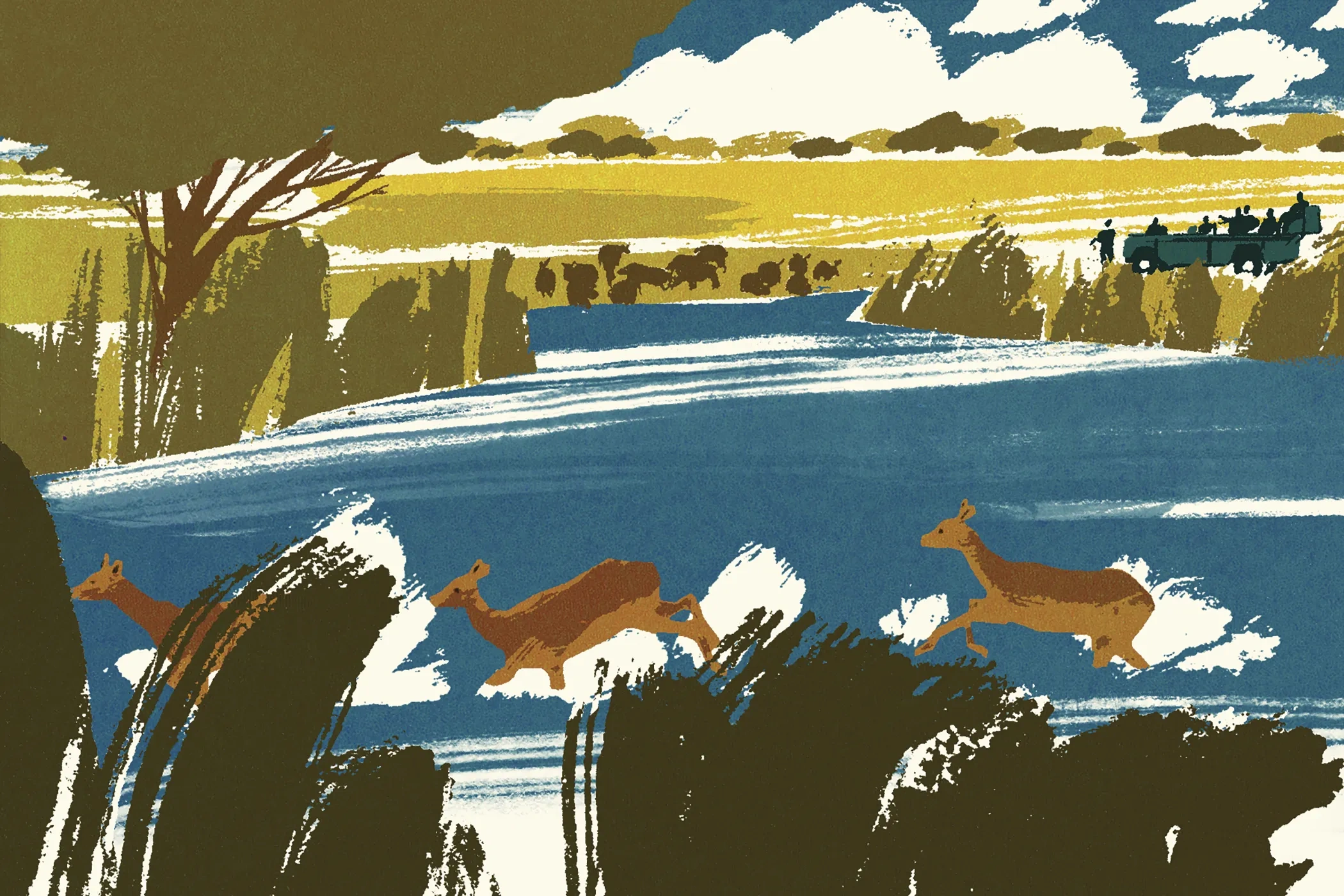
The legacy of apartheid inevitably shadowed us on our journey throughout South Africa. On the balcony of Cape Town’s City Hall, we saw the statue that depicted Mandela as president, addressing the nation in 1994, only four years after being released from prison. We strolled through Company’s Garden, a lush public park in the heart of Cape Town bordering Queen Victoria Street, where we stood in front of the building that once housed the Race Classification Board. This was the site of the notorious “pencil test,” in which someone’s race (and to a large degree their fate) was determined by whether or not their hair was dense enough (i.e., Black enough) to hold a pencil in place when they shook their heads.
In Johannesburg, we stayed in the affluent suburb of Sandton, at a sumptuous boutique hotel where gray ibises probed the manicured lawn with their downward-curving bills. In such a setting, amidst so much drear racial history, the pooh-bah vibe was uncomfortably strong. We were guests in a neighborhood where ordinary residences were protected by gatehouses and 10-foot-high walls topped with electric fences, a world away from the place we visited next, the sprawling township of Soweto on the southwestern edge of the city.
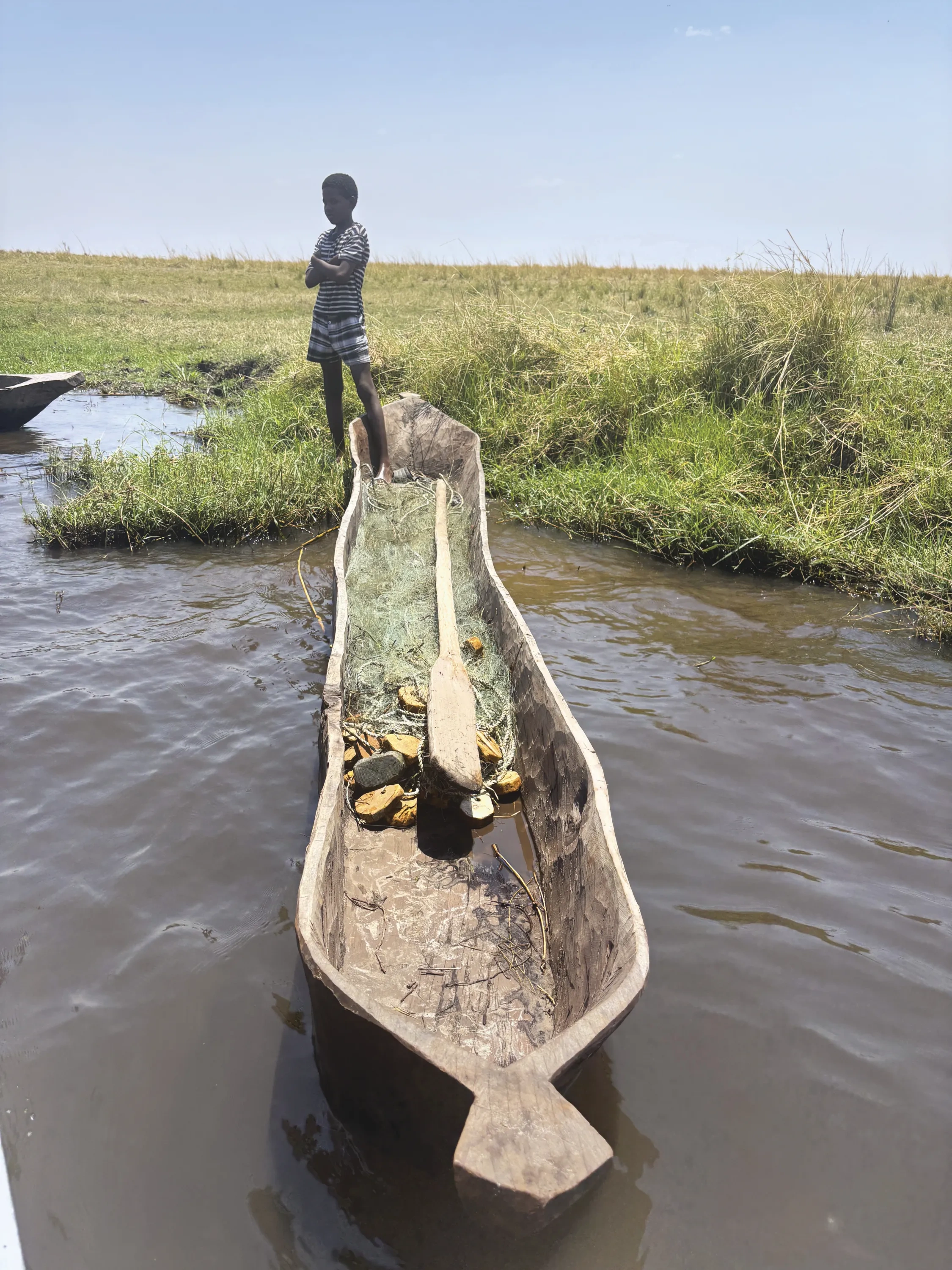
the Chobe River with his dugout canoe.
The Flying Longhorns snaked our way through the streets of Soweto on an air-conditioned tour bus. We discovered a heaving, thrown-together metropolis of 2.5 million people, where Zulu was the dominant language and where, despite an unemployment rate of 32 percent, there was a bustling, homegrown economy, evidenced by people selling tires and live chickens out of their homes or pushing giant rolling bins of trash along the roads.
In Soweto, we pinballed through recent history, visiting the redbrick house, still pockmarked with bullet holes and scorch marks from firebombings, where Mandela and his wife Winnie had lived. Then there was the open-air memorial to Hector Pieterson, the 12-year-old schoolboy who had been shot by police during the 1976 Soweto uprising, and whose photograph—dying, cradled in the arms of a stranger, his grieving teenage sister at his side—had helped shock the world into a visceral awareness of injustice.
But the long-running story of apartheid, not to mention centuries of colonial and tribal wars, amount to barely a growth ring in the human history of South Africa. In caves a few hundred miles east of our baboon restaurant on the Cape, archaeologists have found fossil traces of Homo sapiens dating back at least 120,000 years.
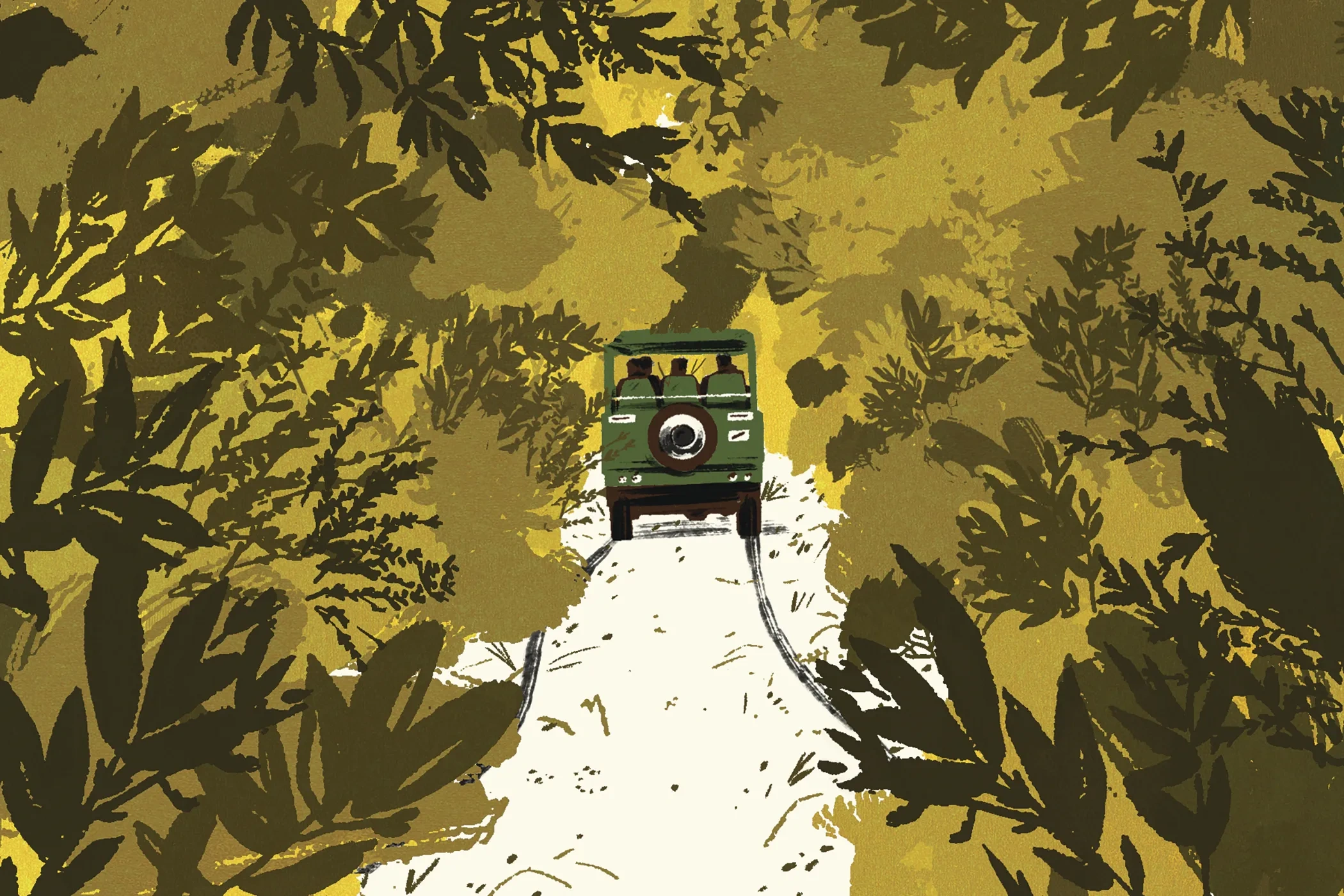
And, as we were made aware when we flew to a private game preserve named Mala Mala, Africa has a way of making humans feel beside the point. Mala Mala is on the western edge of the vast Kruger National Park, in a region known as the Sabi Sand. For three days, three times a day, we embarked on wildlife viewing excursions in doorless, roofless, two-tiered Land Rovers. Our Flying Longhorns tour group was parceled out into three vehicles, each in the custody of an expert driver/guide. In the Land Rover I was assigned to, the driver was a high-spirited Zulu from Durban named Thabisani who told us to call him Tubbs, “you know, like Crockett and Tubbs!”
Tubbs conveyed us across the Sand River, along dirt roads carved out of the bush, through rocky valleys dominated by the dramatic granite outcroppings known as kopjes, and up and down slopes that required a breath-holding trust in the magic of four-wheel drive.
Friends who had been on such safaris in Africa had told me it was a life-changing experience, but I didn’t really understand what they meant until, on our first drive, Tubbs steered us to within a very few feet of a leopard lounging on a dirt mound. It was late in the afternoon, the sun starting to slip toward the horizon behind us and spotlighting the animal’s lush fur and intoxicating rosette patterning. We were so unnervingly close to the leopard that, if we were to violate the rules to remain silent and stay seated, we could have reached out of the Land Rover, extended an arm, and—
But of course, none of us did anything of the sort. We just stared in stupefaction. A large part of the wonder we were experiencing came from the stillness and indifference of the leopard. As we gawked, it looked past us, alert to the movement of prey in the grass—a genet, a lizard—that might rouse its interest. But it paid no more attention to us than it might have to a passing cloud.
It was impossible not to feel somehow dismissed by this leopard’s indifference—dismissed but also exhilarated to witness a world that was not predicated upon human involvement and scrutiny, that existed long before the first Homo sapiens found a home in those South African caves.
During our time in Mala Mala, we had many more close-up encounters with animals going about their lives being observed by us, but observing us in return only as background clutter. We drove literally through an elephant herd, a parting sea of gray. We watched the babies gamboling and stumbling, the adults stripping the leaves off branches with their dexterous trunks. We didn’t need to be reminded to be silent—we were already speechless with awe—and so all we could hear was the sound of the thorns scratching the elephants’ thick hides as they browsed through the trees.
We saw nine lions sitting side by side in the grass, as unmoving as Easter Island statues as they stared with one will across the savanna at a strung-out herd of impalas. They seemed to be patiently calculating an attack strategy. In the scraggly shade of acacia trees above a dry stream bed, we witnessed the aftermath of an attack on a wildebeest by a clan of spotted hyenas. The wildebeest had broken its leg trying to get away but had managed to kick the matriarch of the clan in the mouth. She sat bleeding 30 yards away, the rest of the clan surrounding her, waiting for instructions. Meanwhile the wildebeest sat forlornly in the stream bed , unable to move, as the hyenas patiently waited for their moment.
“Only a matter of time for this wildebeest,” Tubbs said, as he put the Land Rover in reverse and we headed back to the lodge, allowing this slow-moving drama of predation to continue, as it seemed to be meant to, out of our sight.
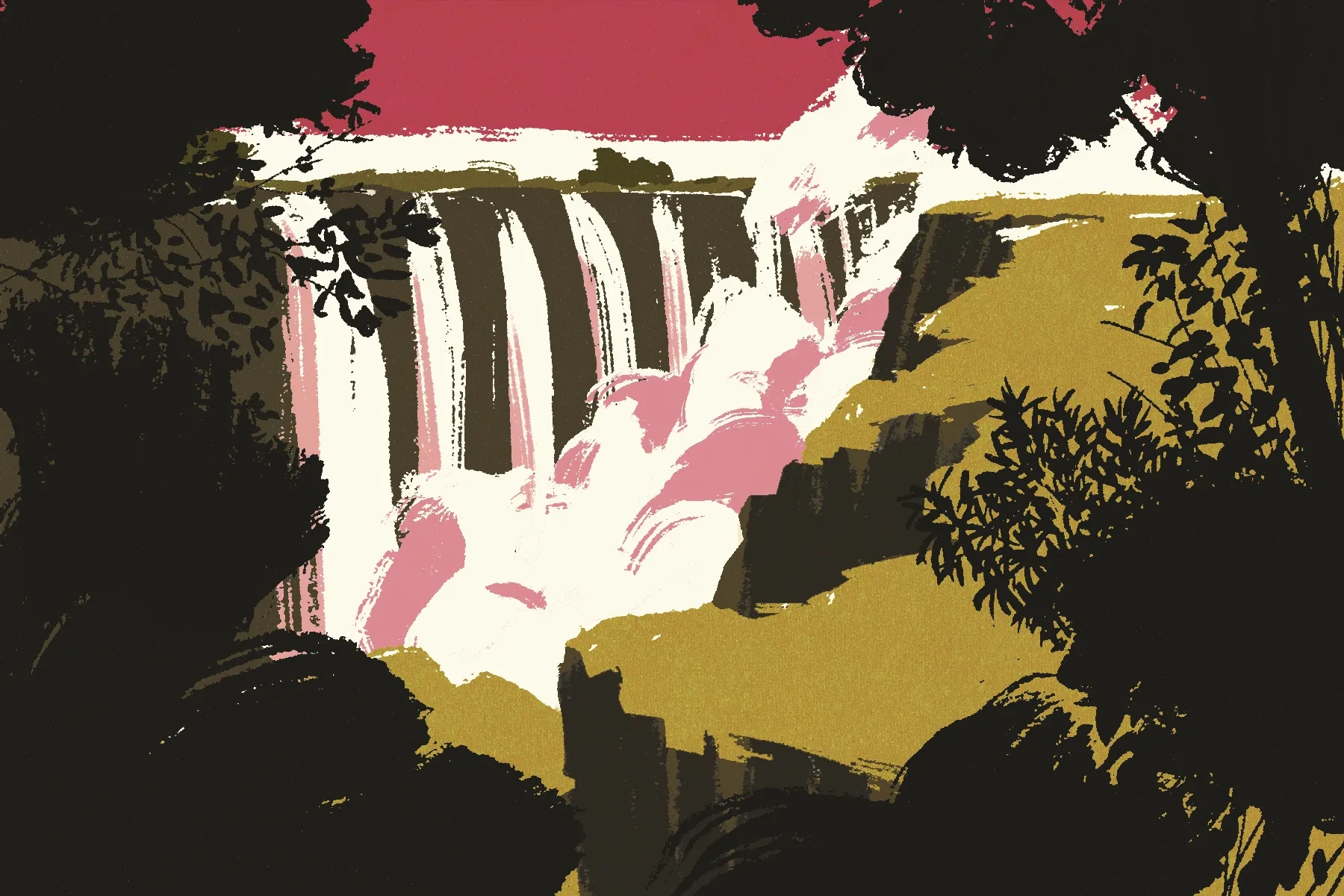
On our African journey, the lessons of human inconsequence kept coming. We hopped a brief flight to Zimbabwe, where at the entrance to Victoria Falls, we walked past a gauntlet of souvenir stands and a group of vervet monkeys perched on top of a Pepsi machine, through a turnstile, and then along a path leading to a giant statue of David Livingstone, the British explorer and missionary. Dr. Livingstone had one hand on his walking stick, the other on his hip, as he gazed confidently westward, toward one of the cataracts making up Mosi-oa-Tunya, a phrase in the Kololo language of the region that translates to “The Smoke That Thunders.”
The “smoke” was mist, rising up over one of a series of gorges on the Zambezi River where the water furiously, endlessly plunges 355 feet, roughly twice the height of Niagara Falls. At a lookout across from the Livingstone statue, and at similar viewing stations along the Zimbabwe side of the river, we stood in rented raincoats, our faces and shoes drenched. We stared in amazement at the falls and at the perpetual and perfect rainbow that rose above them in the mist and listened to the ageless roar of cascading water—sights and sounds older than the senses our species had evolved to perceive them.
All during the trip we had been reminiscing about our times at The University of Texas, the things we had experienced there that had marked us and set us on our various courses throughout life. But at places such as Mala Mala and Victoria Falls we found ourselves bound together not by stories of the past but by an overwhelmingly present sense of shared wonder.
The final phase of our journey involved a series of quick border crossings from Zimbabwe to Botswana to Namibia—three countries in one afternoon!—and then we embarked on boats to board the luxury excursion ship Zambezi Queen in the middle of the Chobe River.
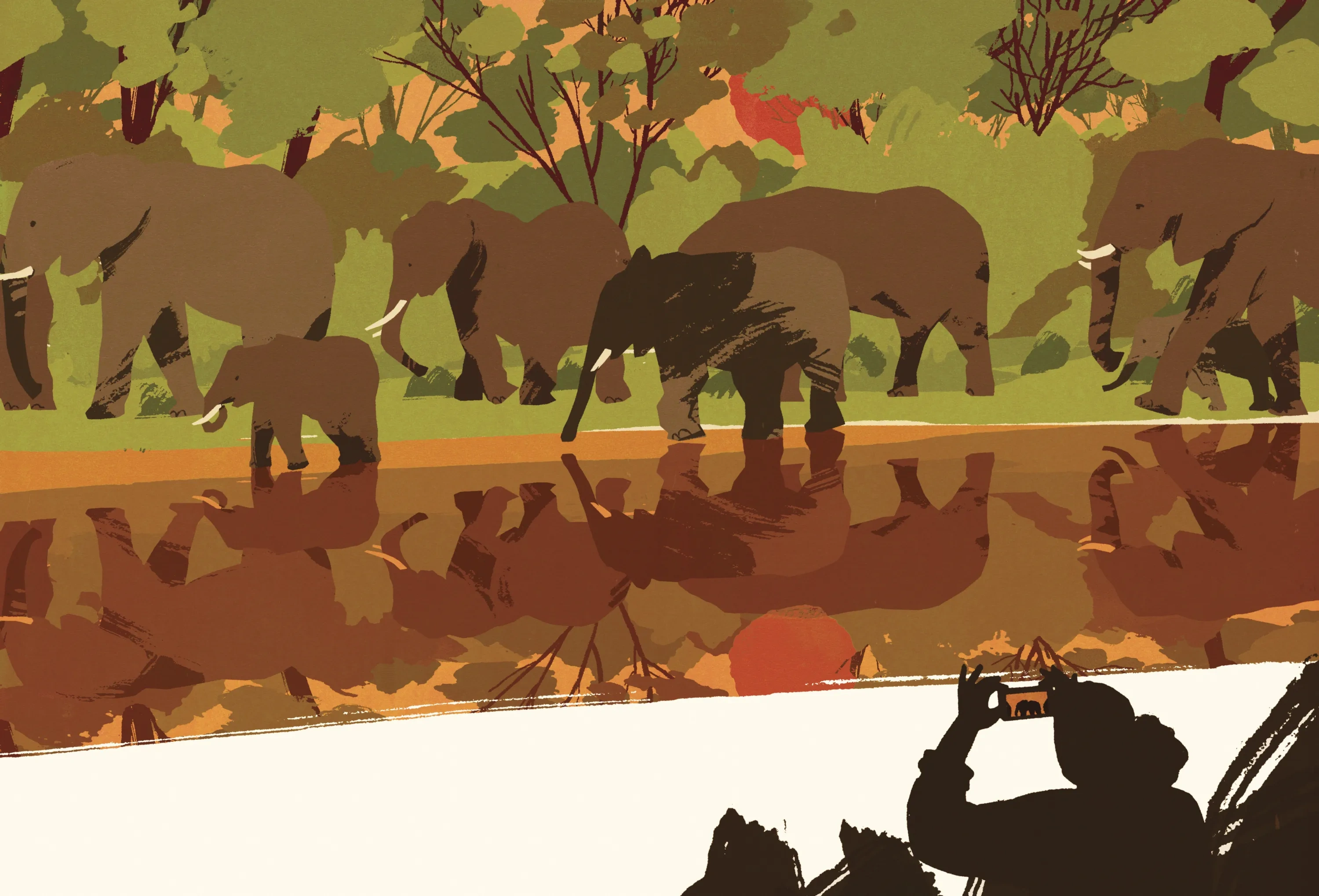
We were downstream from Victoria Falls, just after the rainy season, where the Chobe—which divides Botswana from a narrow panhandle of Namibia known as the Caprivi Strip—spreads into a delta-like expanse. On the Botswana side, the river borders Chobe National Park, home to the densest populations of elephants in Africa. We should have been used to seeing elephants by now, but we soon discovered that nothing could neutralize the wonder of encountering these beasts unconfined and ranging freely as they excavated mineral salts from the banks with their tusks or entered the river and snorkeled along underwater, breathing through their trunks.
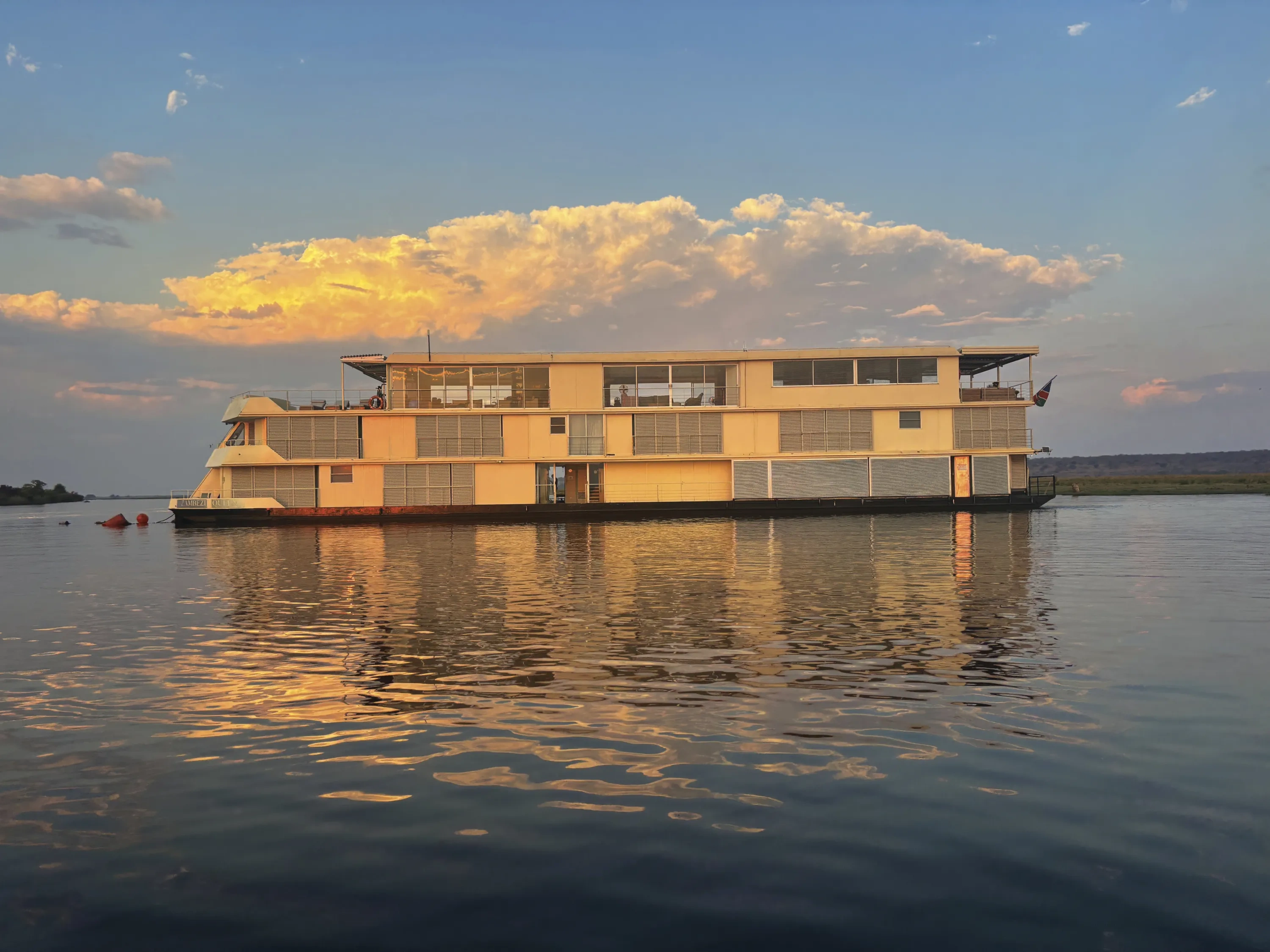
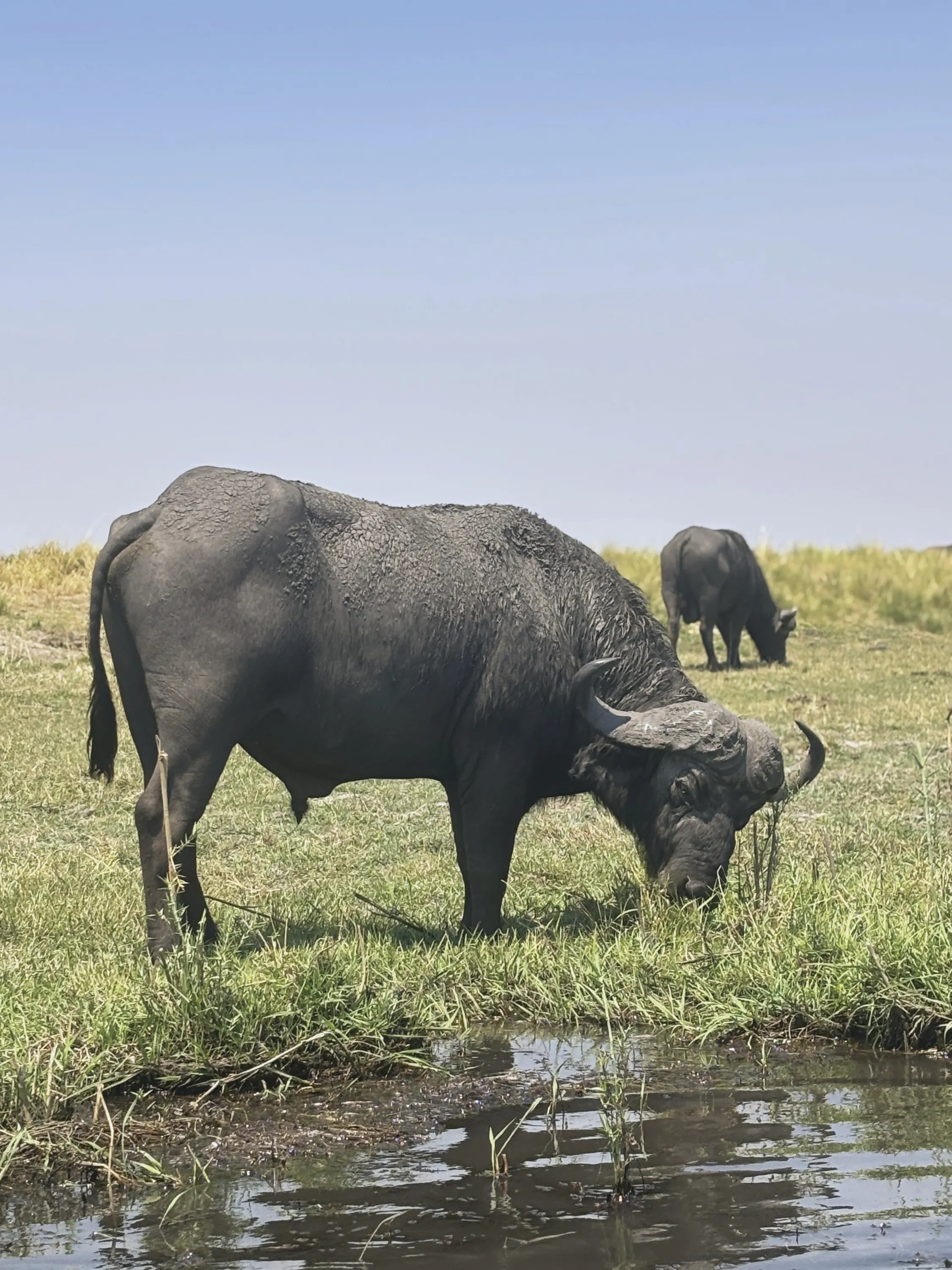
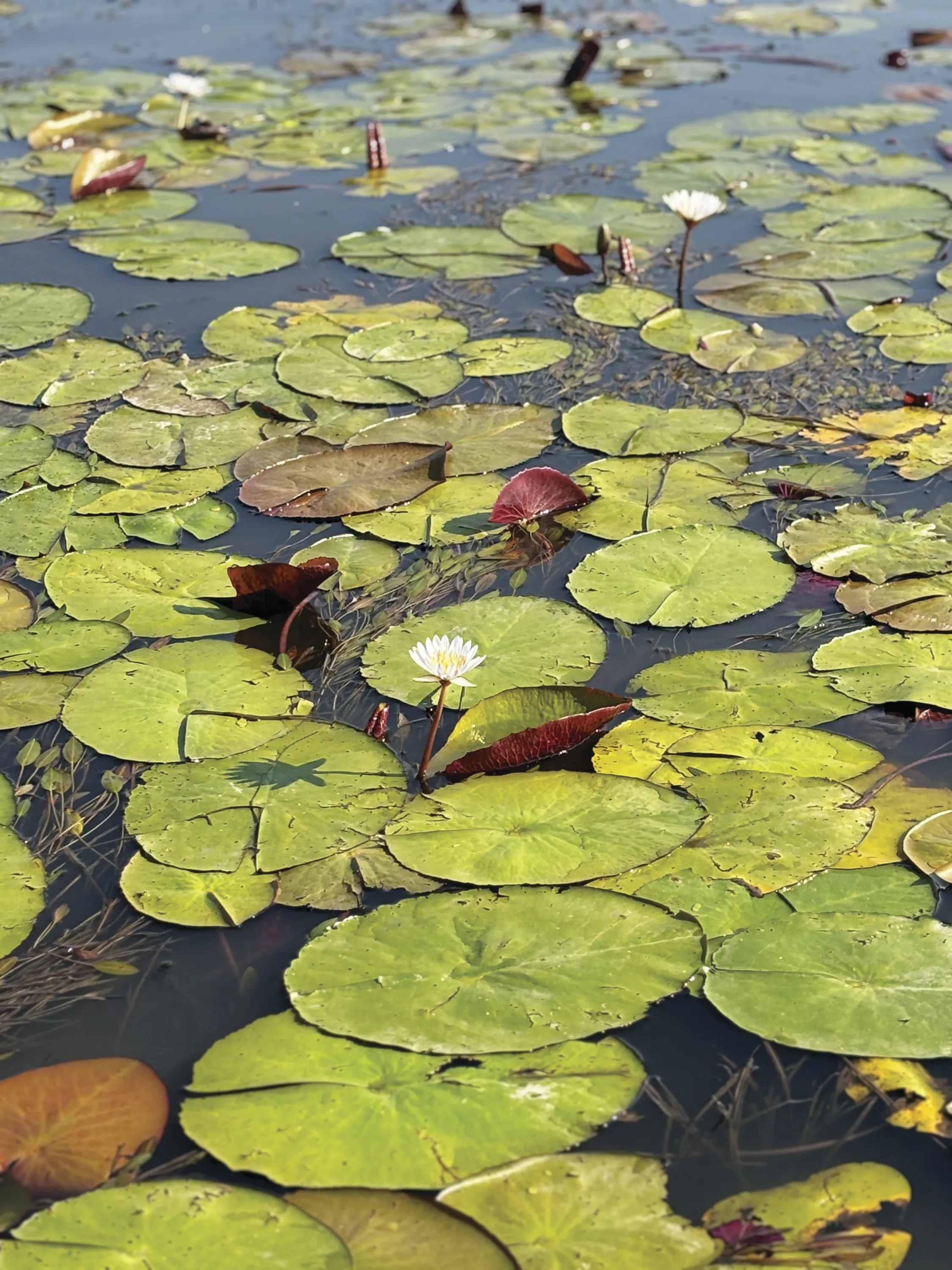
During the next three days, nimble boats piloted by expert Namibian wildlife guides repeatedly zoomed us away from the stately, three-decked mothership. We often returned to the same places: expanses of water lilies where African jacanas—better known as “Jesus birds” for their apparent ability to walk on water—strolled unconcerned on their elongated toes across the floating lily pads and papyrus beds. Beyond them were floodplains harboring Cape buffalo, and local farms where herdsmen standing upright in tippy dugout canoes splashed the surface with tree branches, driving their cattle away from the crocodiles patiently waiting for them where the water deepened.
At the end of the day we would retire to the afterdeck of the Zambezi Queen as the sun set on the river with its marshy islands and the two African countries it divided. The sky above the Flying Longhorns was a blazing burnt orange, so magnificent we gave up trying to photograph it or describe it to one another and just sat there in silence watching it.
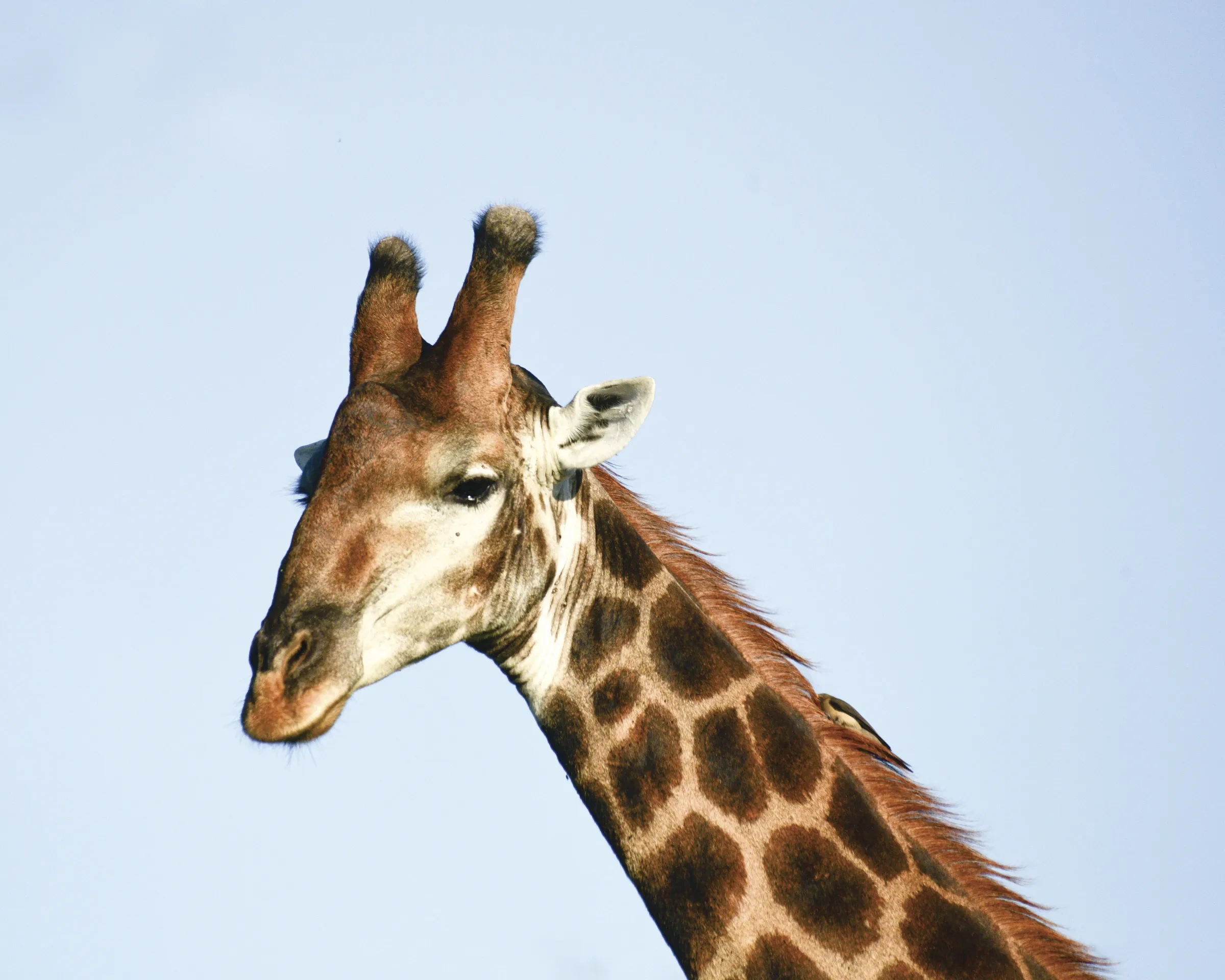
One of the spots we frequented on our water safaris was a place the guides called Elephant Cove. On our last excursion, it was as if all the animals we had hoped to see in Africa had arranged to meet us there. We saw the necks of giraffes drifting above the tree line, the heads of hippos stippling the water all around us, impalas licking the mineral soil on the eroded banks, a pied kingfisher landing on a nearby branch above a black monitor lizard, and a motionless crocodile catching the late afternoon sun near the water’s edge, then almost absent-mindedly snatching a hard-working dung beetle in its jaws.
And the elephants: Some of the 20 or 30 individuals we saw rummaged and plodded through the vegetation and across the featureless soil, while others wandered into the water and settled there, boulder-like. You could almost hear the older members of the herd sighing with contentment as the young elephants splashed around them.
Elephants live 60 or 70 years in the wild. The youngest members of our Flying Longhorns expedition were in their 40s, which meant that the baby elephants we saw would outlive even them. It meant that the oldest members of the herd had been adults, along with us, when Nelson Mandela was released from prison. And along with us, they would one day pass from the earth. But at that moment, Africa seemed incomprehensible in its depth of time and its ever-recycling pageant of creation—a place none of us, human or elephant, could ever really leave behind.
CREDIT: Illustrations by Harry Tennant. Photographs from top, Mack Barham (2); Margaret Williams (4).