A New Book Traces the History of the Undefeated 1914 Texas Longhorns
Excerpt adapted from Varsity: The Undefeated 1914 Texas Longhorns by Charles Kupfer and John H. Keck, © 2026, published with permission from Texas A&M University Press.
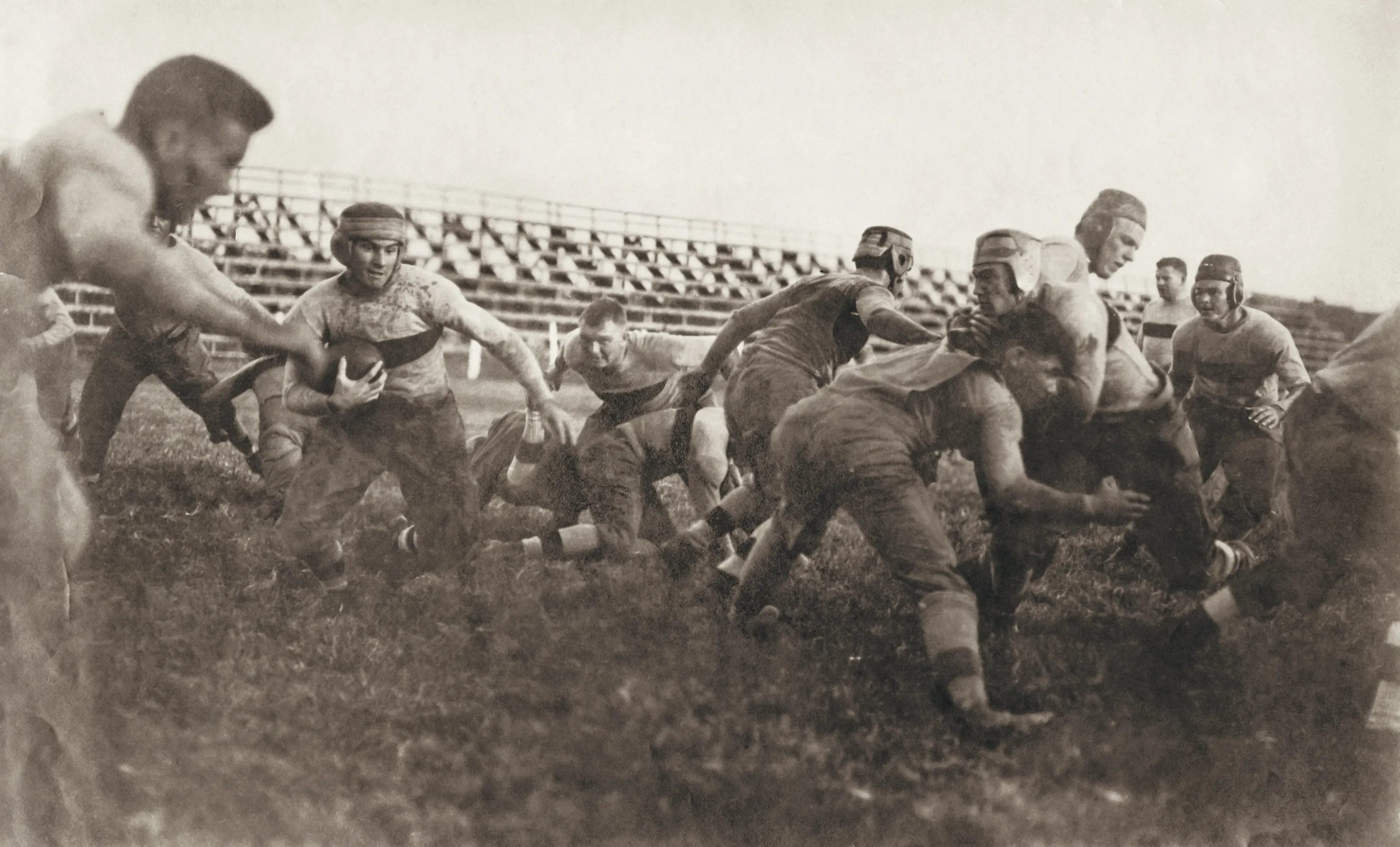
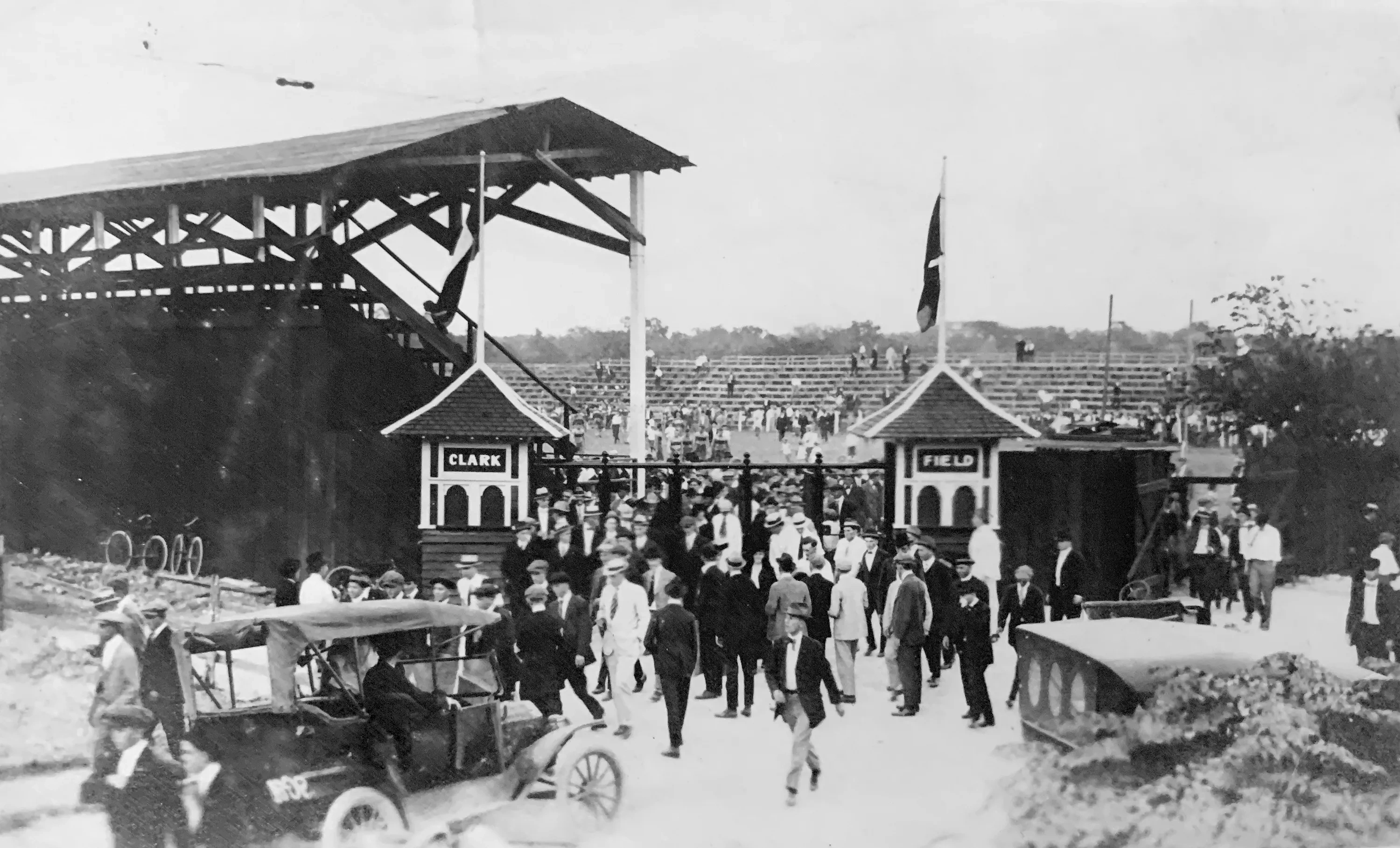
Football fever raged on, as fans filed into Clark Field for the Saturday afternoon tilt. The weather was hot, as always in Austin during September. Attendance was 2,200, marking the largest opening-game crowd in memory. As usual, orange and white festooned the old wooden stands as fans yelled and cheered.
The main question Head Coach Dave Allerdice faced was how his new backfield would perform. Calling it “a problem,” as one sportswriter in search of an angle did, far overstated things. Writers noted that three of the previous year’s backfield starters had graduated. Curiosity surrounding the newcomers was intense.
Clyde Littlefield generated speculation, although his caliber of play was no secret. The previous season, the native of Oil City, Pennsylvania, was underweight due to a malaria bout. Littlefield was never hefty, but sickness made him look too skinny. The year 1914 saw Littlefield at a robust 185 pounds, and even faster than before his illness. Speed and arm strength were Littlefield’s trademarks. What really sparked excitement was his passing accuracy. Fans insisted that Littlefield could hit any part of the field within an inch. The hometown Austin American praised “his remarkable passing power” and promised readers that he would return from illness fully recovered.
scrimmages with the Longhorns and knew he had made the varsity.
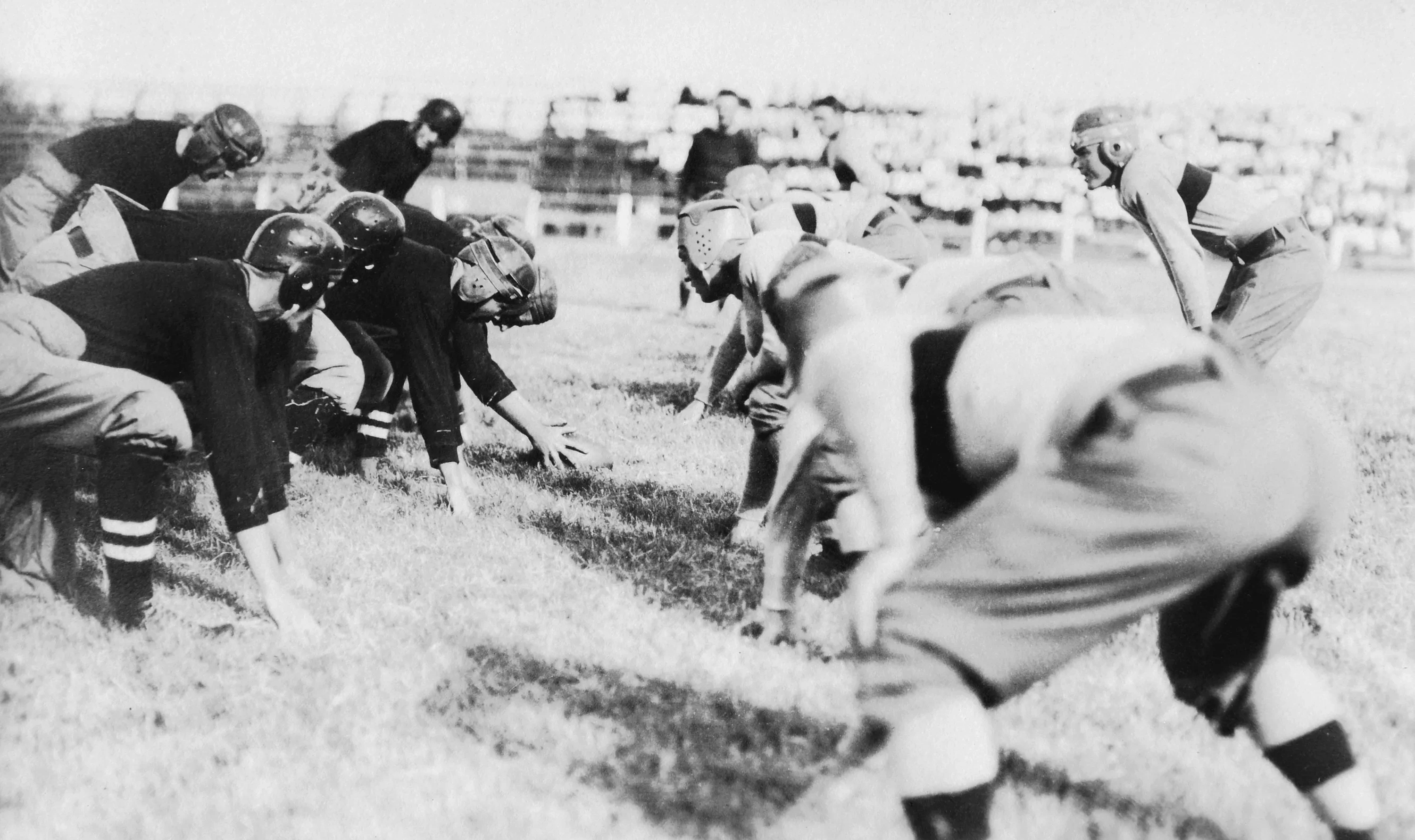
There were multiple plays and formations. Ray Keck (or Gus “Pig” Dittmar, when he was healthy) would snap to a halfback, the fullback, or Arthur “Coke” Wimmer at quarterback as the play required. Every Longhorn knew where the ball was going, and where he must go, on every snap—whether to run, throw, or block. It was this guessing game that kept opponents off-balance.
An aesthetic improvement was noted in the papers since the Longhorns debuted new uniforms. The jerseys were gray with orange stripes, the socks a matching gray with an orange stripe. The pants featured new, lightweight hip pads, an Allerdice adaptation designed to be cooler in the heat, allowing his players to avoid wearing a rash-preventing union suit underneath. Varsity players wore long underwear in 1913, wilting as they sweated under the Texas sun. Allerdice preferred the newer, lighter gear; he ordered the pads made to his specifications. Players praised the protection and freedom of movement.
The Austin Statesman understood that 1914 marked a new era in Texas sports. The paper (which later became the Austin American-Statesman) ran a photo montage with portraits of Allerdice, assistant coaches Billy Disch and George Patterson, and athletics director L. Theo Bellmont. A premature yet confident headline read, “To These Men Texas Owes Its Athletic Supremacy: The Five Who Made the Varsity Undisputed Champions.” Already, expectations were that the Longhorns would win every game.
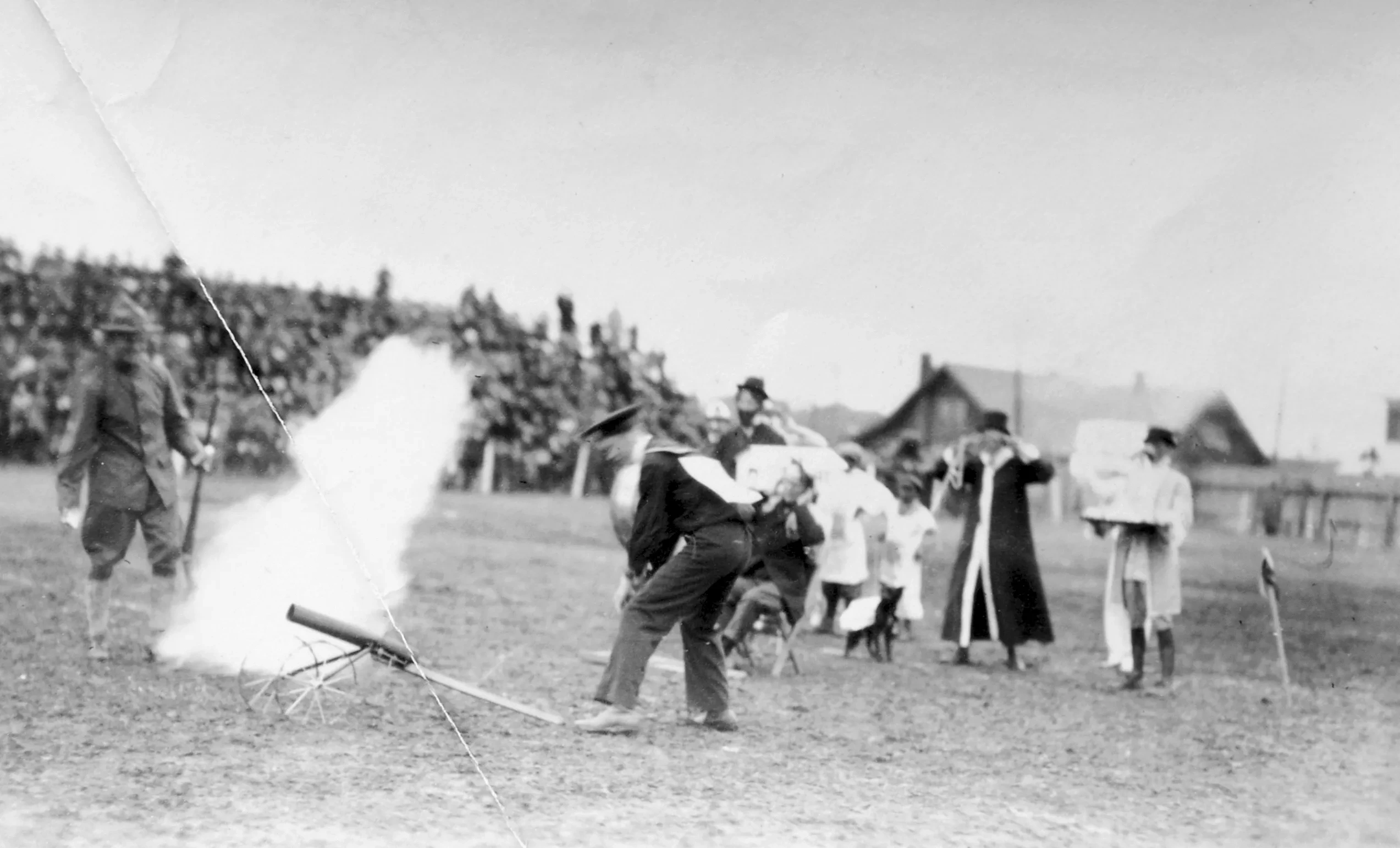
by the Globraskers, a campus stunt organization.
Allerdice’s starting lineup was as follows: right end Pete Edmond, right tackle Scrub Kane (subbing for injured Alva Carlton), right guard Louis Jordan, center Ray Keck, left guard W. S. Birge, left tackle Charlie Turner, quarterback Coke Wimmer, right halfback Leonard Barrell, left halfback Clyde Littlefield, and fullback Bert Walker. Right tackle was normally Carlton’s spot, and Allerdice used three substitutes to fill in.
Dittmar’s ankle kept him out, giving Keck the chance to start in his first varsity game. That was a memorable moment for the young man from Cotulla. Close friends with Dittmar, he did not relish Pig’s injury. But he did appreciate the fact that he was a starter in the game that marked the start of his varsity career. At quarterback, it would be Wimmer’s job to keep the defense off-balance by directing and misdirecting the ball on every down.
Trinity University kicked off. The game started with a Texas drive dominated by hard running from Len Barrell. Barrell was an actor as well as an athlete, blessed with superb body awareness and kinesthetic grace. He could fake effectively and move with power. Barrell carried the ball around the right end for a lengthy gain during the first drive. Breaking free, his first touchdown was an easy matter for the Houston-born halfback, who scored two TDs on the day. He also kicked the extra points.
Trinity went nowhere on their first possession, punting back to the Longhorns, who promptly ran a scoring drive all over again. Backed by excellent line blocking, Barrell—whose sore ankle prompted Allerdice to rest him during practice—tore through the overmatched Trinity defense again and again. The rout was on.
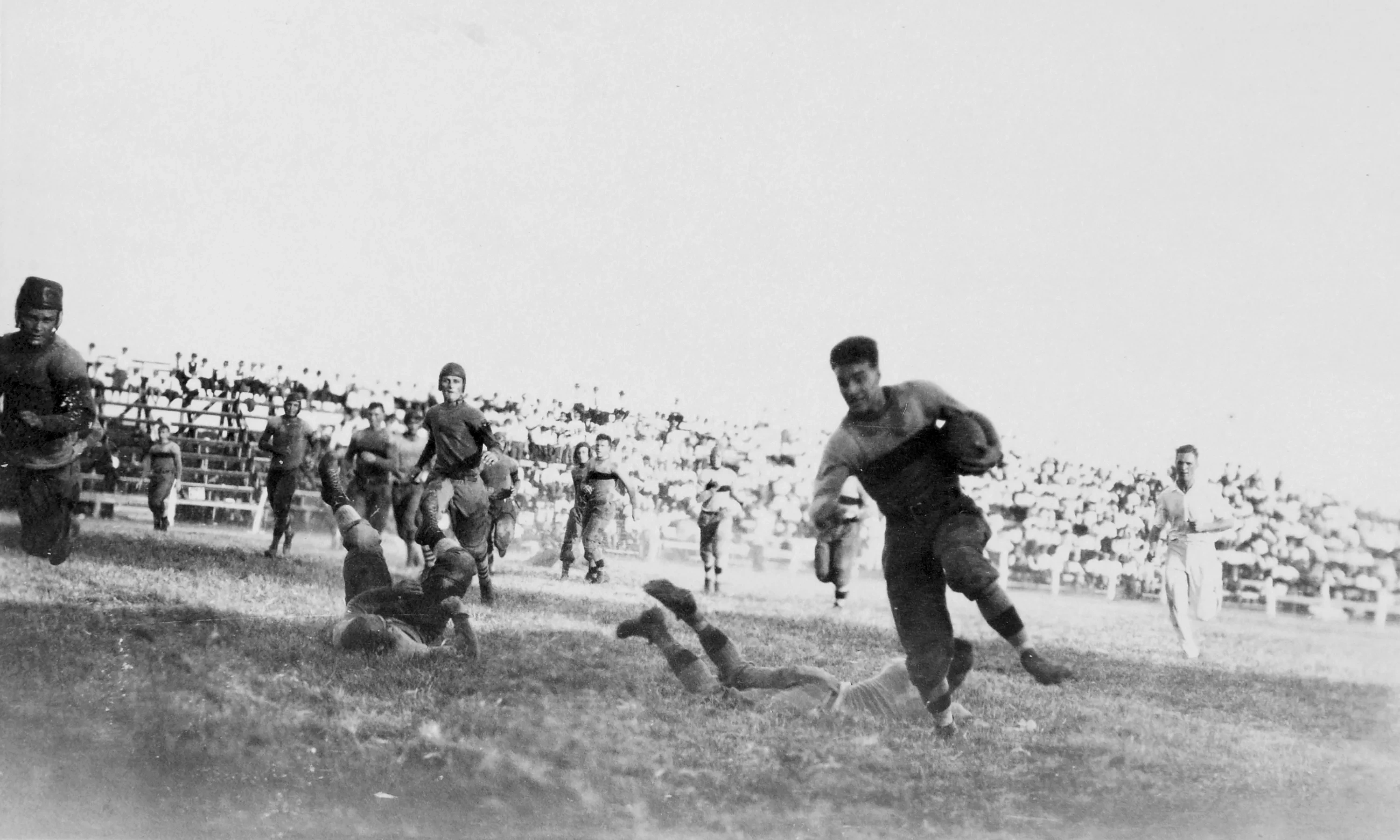
Allerdice, still fearful about losing starters to injury, began substituting freely. In came second-stringers such as quarterback Frank Loftus, halfback Snowden Leftwich, and fullback Carl Runge. Getting the second string some experience could only help later.
Trinity’s passing attack made progress on their third possession. They strung a few passes together and—for a moment—the visitors’ pluck showed. But “Hit the man hard” spirit showed up for Texas, resulting in a Trinity fumble.
Now the Longhorns unveiled what they had practiced for so long. The drive was marked by the passing plays Allerdice drilled into the players back in San Marcos. Twice, Barrell faked the run, only to drop back and find Littlefield downfield for passes of seven and eighteen yards. Littlefield’s speed and precision let him slip past the defensive backfield both times.
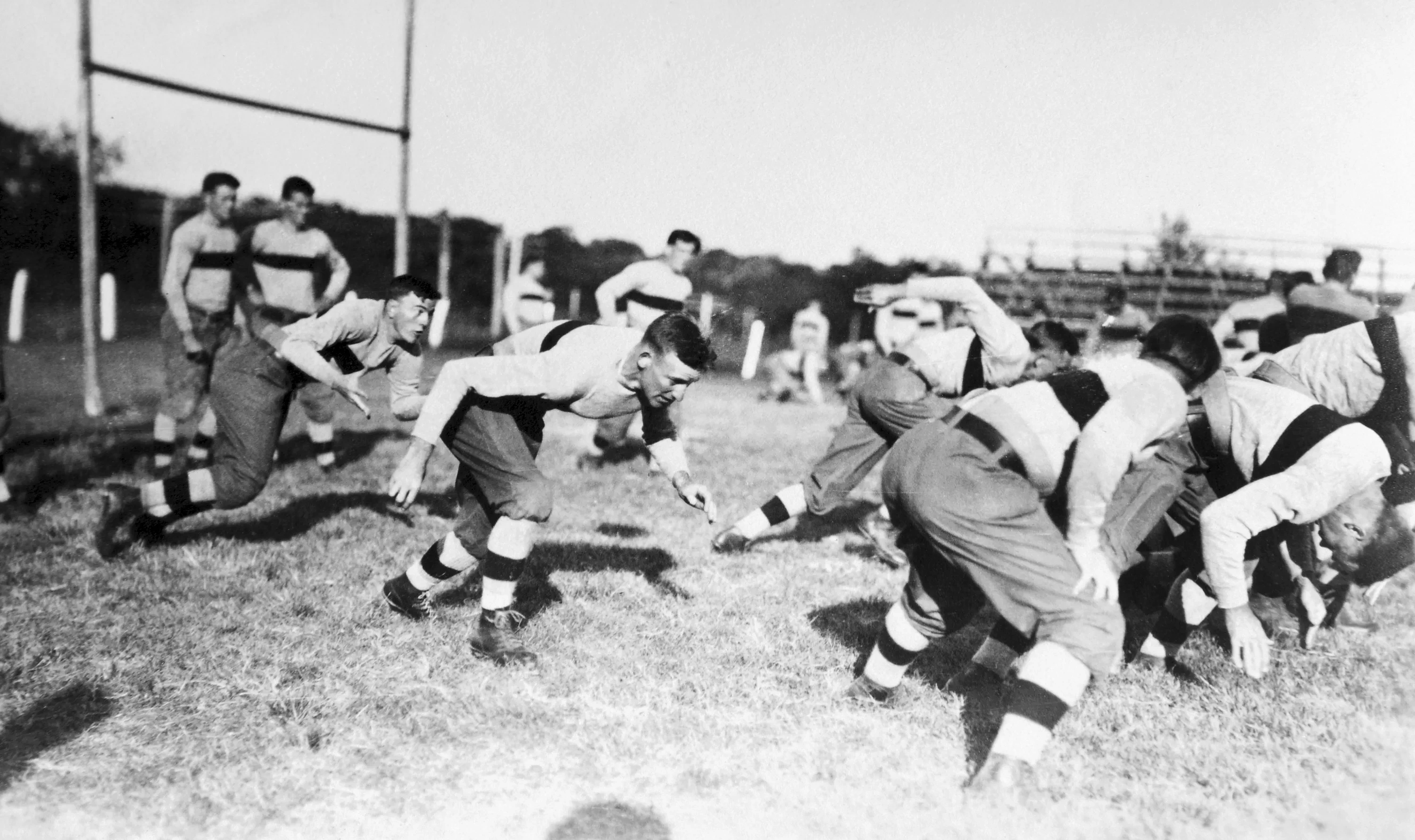
Revealing the pass plays also revealed another weapon at Allerdice’s disposal: Littlefield’s speed made him as dangerous a receiver as he was a thrower. Barrell did not have Littlefield’s accuracy, but the latter’s speed let him catch up to the ball. Walker also surprised the Trinity defense with a pass to the fleet Littlefield. Trinity failed to pressure the passer despite desperate efforts to mount a rush. They were perpetually caught between wanting to rush the passer, but risk leaving downfield receivers open, or dropping deep, and leaving the passer free to concentrate unmolested.
A deep friendship existed between Littlefield and one of his blockers, Ray Keck, since both were products of the Marshall Training School in San Antonio. Littlefield trusted Keck, who seemed to know where the fast back would go in the open field. Keck at center led the offensive line that day, which kept Trinity on its heels and frustrated by the Longhorns’ multiple sets and patterns.
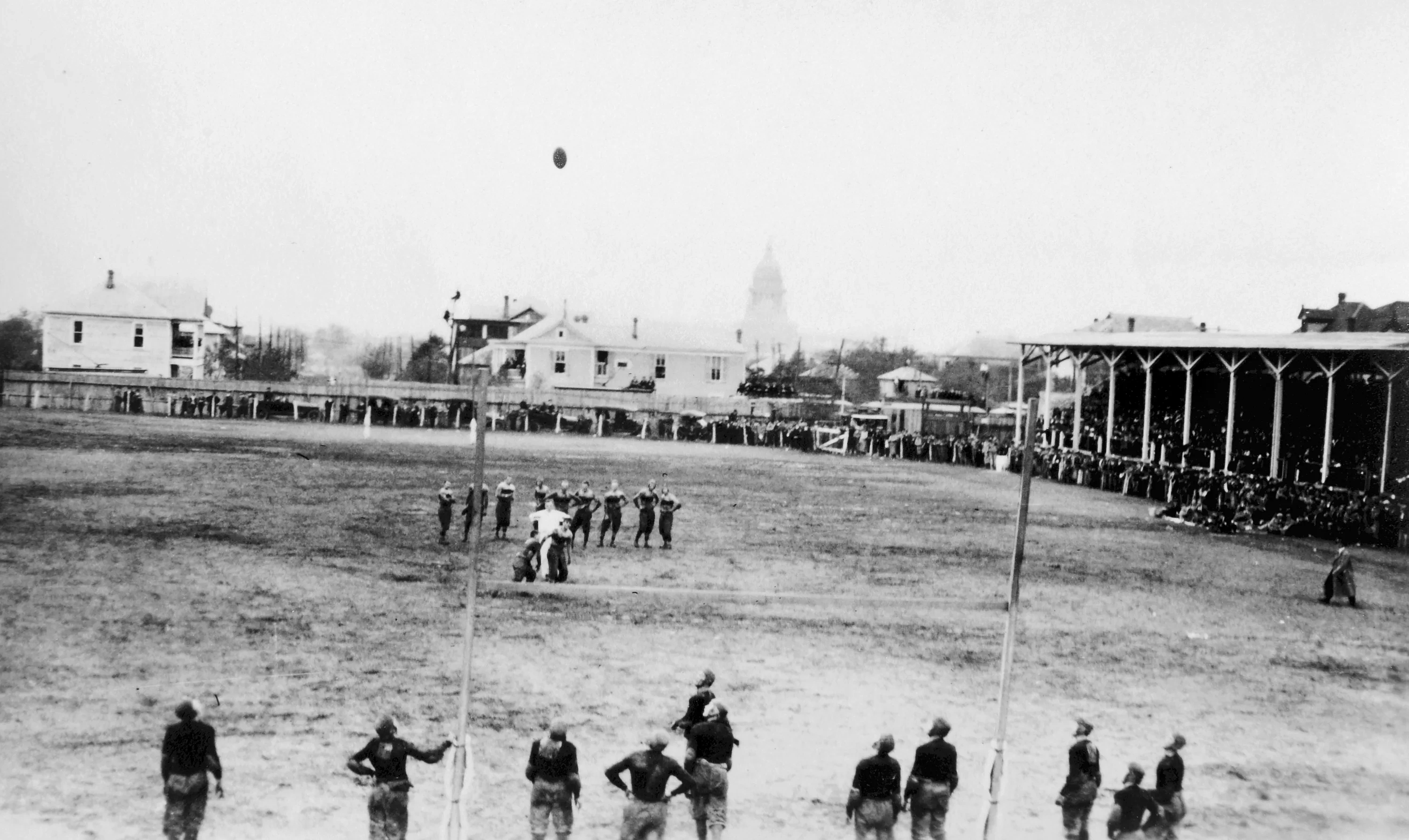
Littlefield and Charlie Turner hooked up for a 60-yard scoring pass for the third touchdown of the day. Bearing in mind that the pass was such a recent addition to the team’s repertoire, the scoring bomb looked to fans and players like a harbinger of great things to come. Littlefield’s arm strength and accuracy drew cheers repeatedly while fans gleefully agreed that the ballyhooed new aerial offense was a booming success, and plenty of fun as well. Trinity was unable to move the ball, their passing scheme fruitless against the defensive rush.
Although the game was out of hand, it had to be a great thrill for Ray Keck when he beat the blockers and swooped in to block Trinity’s field goal try, a forlorn attempt to break the shutout. The Cotulla product’s long road to varsity paid off with a notable play that drew attention and shouts in the press box. It was Keck’s moment to shine after three years of dogged preparation. “In the line, Keck surprised everyone with his work,” enthused one writer. “He played a good defensive game, was aggressive enough, and passed the ball in a manner beyond criticism.”
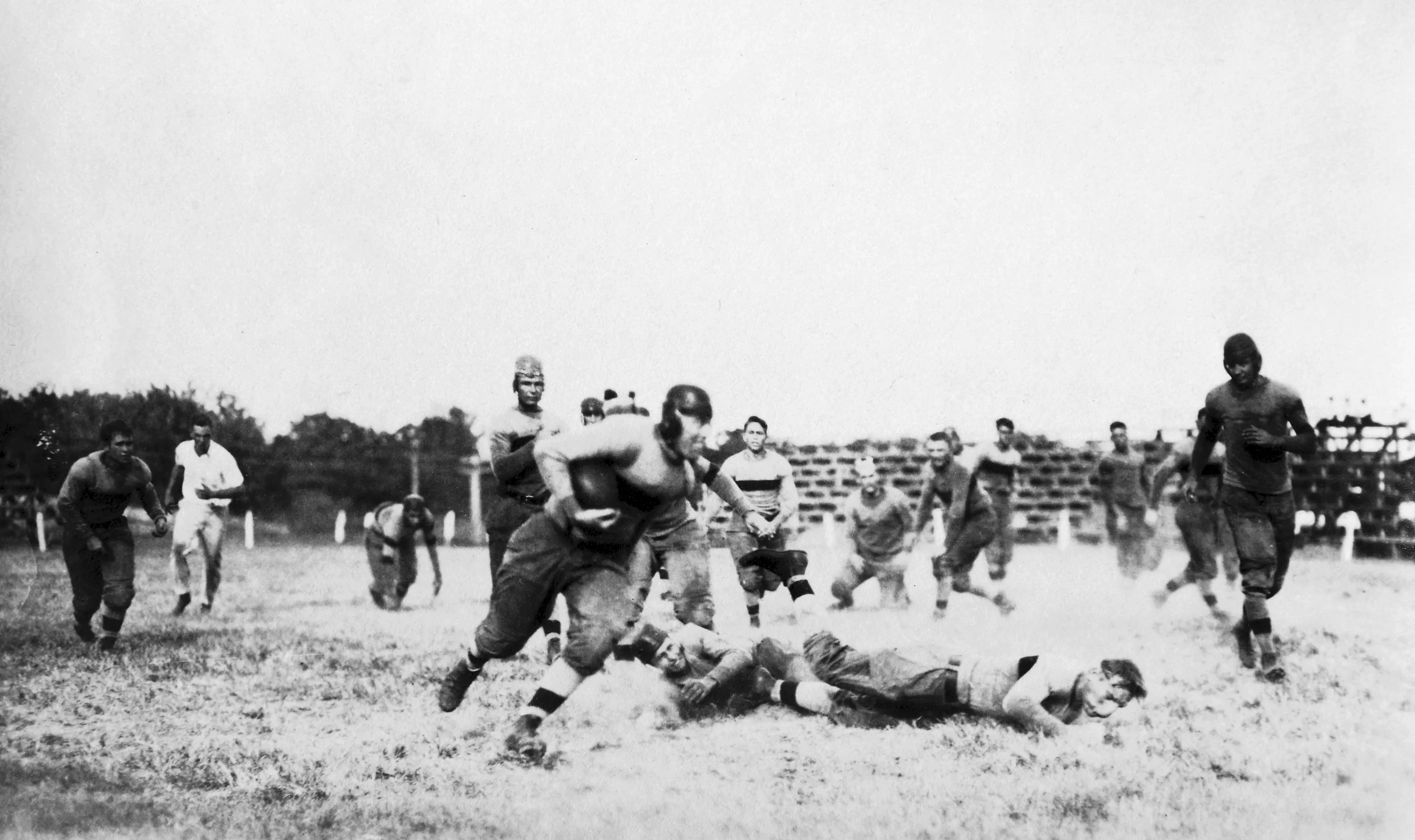
Overall, the game was a plain thrashing. For their part, Trinity might have lost by a larger margin but kept playing hard. This did not go unnoticed by careful observers, such as the Texas coach. Allerdice was not one to run up the score on a beleaguered opponent. The Longhorns successfully unveiled their new backfield, which showed neither rookie nerves nor confusion over the new offense. The game was a cakewalk. Allerdice, his players, Bellmont, and 2,200 fans saw a Texas team take their outmanned opponent seriously enough to shut them out, 30-0. The 1914 season was underway.
The Texas Longhorns looked good enough to justify all the optimism thrown their way. But since the outcome had been assumed, Trinity received praise in many of the game stories. One was typical. “In the face of certain and overwhelming defeat,” ran a lede paragraph in the Austin Statesman, “Trinity College gave The University of Texas a plucky fight Saturday afternoon and pleased a very large crowd with its determined defense.”
of his teammates, Barrell served in the military during World War I.
Not for the last time, Allerdice could chew over the unreasonable expectations of the local press and many fans. His Longhorns rolled out a new offense, which proved effective. They handed Trinity a 30-0 whitewashing replete with dazzling plays. Fans had plenty to cheer about, and sportswriters could have sung the praises of Allerdice’s preparations with more verve than they did. But in several articles, it was the overmatched visitors who drew the most praise for losing gamely. Wanting a matchup against Texas A&M, fans and writers had gotten Trinity instead. They were unsatisfied. The absent Aggies continued to haunt Texas football.
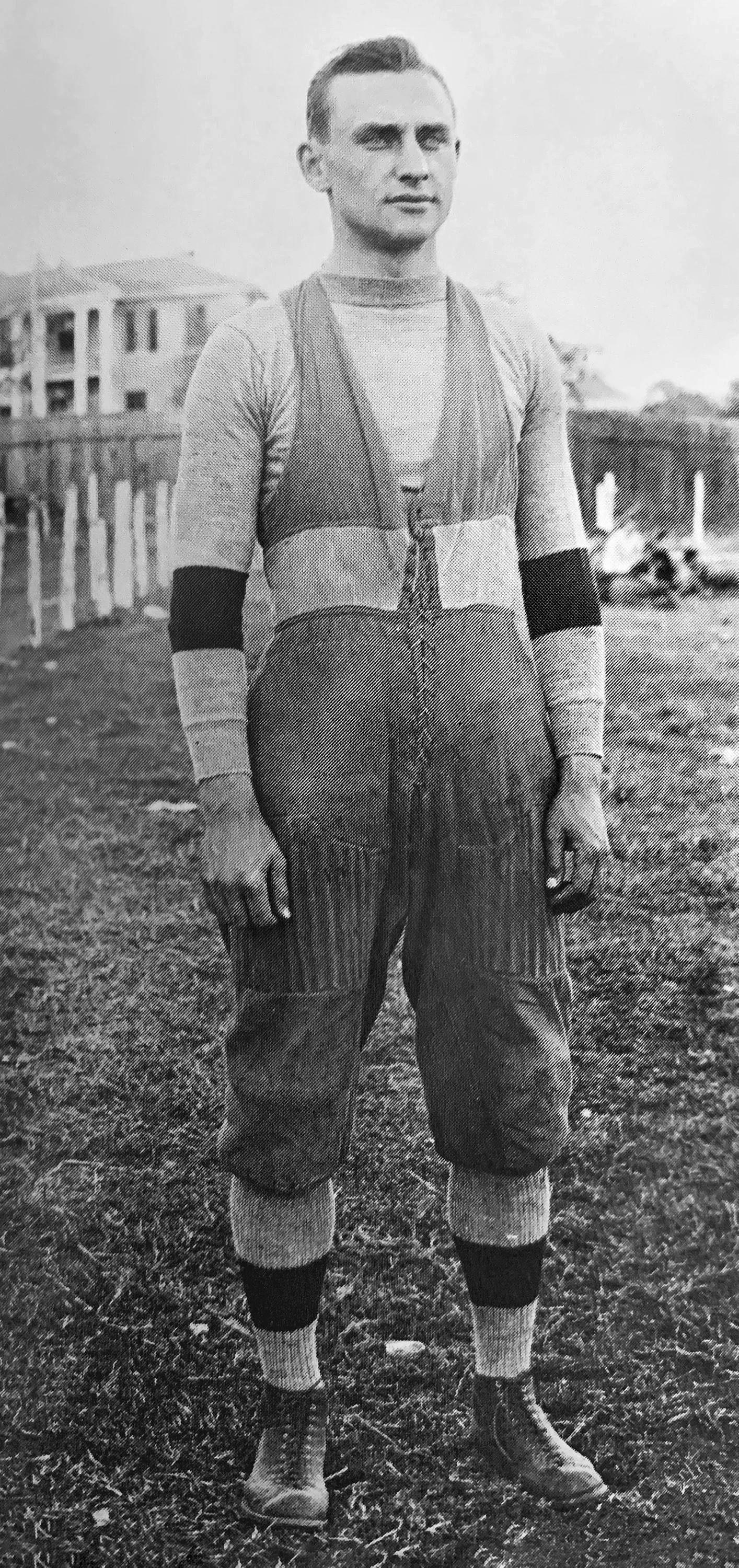
Head Coach David Allerdice
Texas had trouble keeping coaches in those early days, running through fourteen before hiring David Way Allerdice. Like his predecessors, Allerdice came from up north. He was a star player at the University of Michigan from 1907 to 1909, serving as team captain in 1905. After graduation, he coached at Butler in 1910 and arrived in Austin to take over the program in 1911. His task was plain: Win big, and put Texas football on the national football map.
Allerdice had learned that Texans were not shy about what they wanted. They wanted a big-time football team at The University of Texas, so they set out to hire a big-time coach. They’d have taken Fielding Yost if they could have gotten him. But the University of Michigan legend had no intention of moving to the frontier. Ha! So he’d recommended Allerdice, his protege. And now it was up to Allerdice to deliver the glory that University of Texas fans demanded. They started off calling their still-small school a world-class university, and they meant for the team to be world-class, too. Just as good as the big teams from up north.
How many times had Allerdice heard his old coach, Yost, warn, “Football games aren’t won; they’re lost.” When Allerdice captained Yost’s 1909 Michigan team, they’d only lost once, to Notre Dame. That was enough to help the new graduate land the Butler coaching job and for teammate and friend Billy Wasmund to be named Texas coach. And when poor Billy fell out of a window and died down there in Austin, UT went back to Yost again, who advised them to hire Allerdice this time.
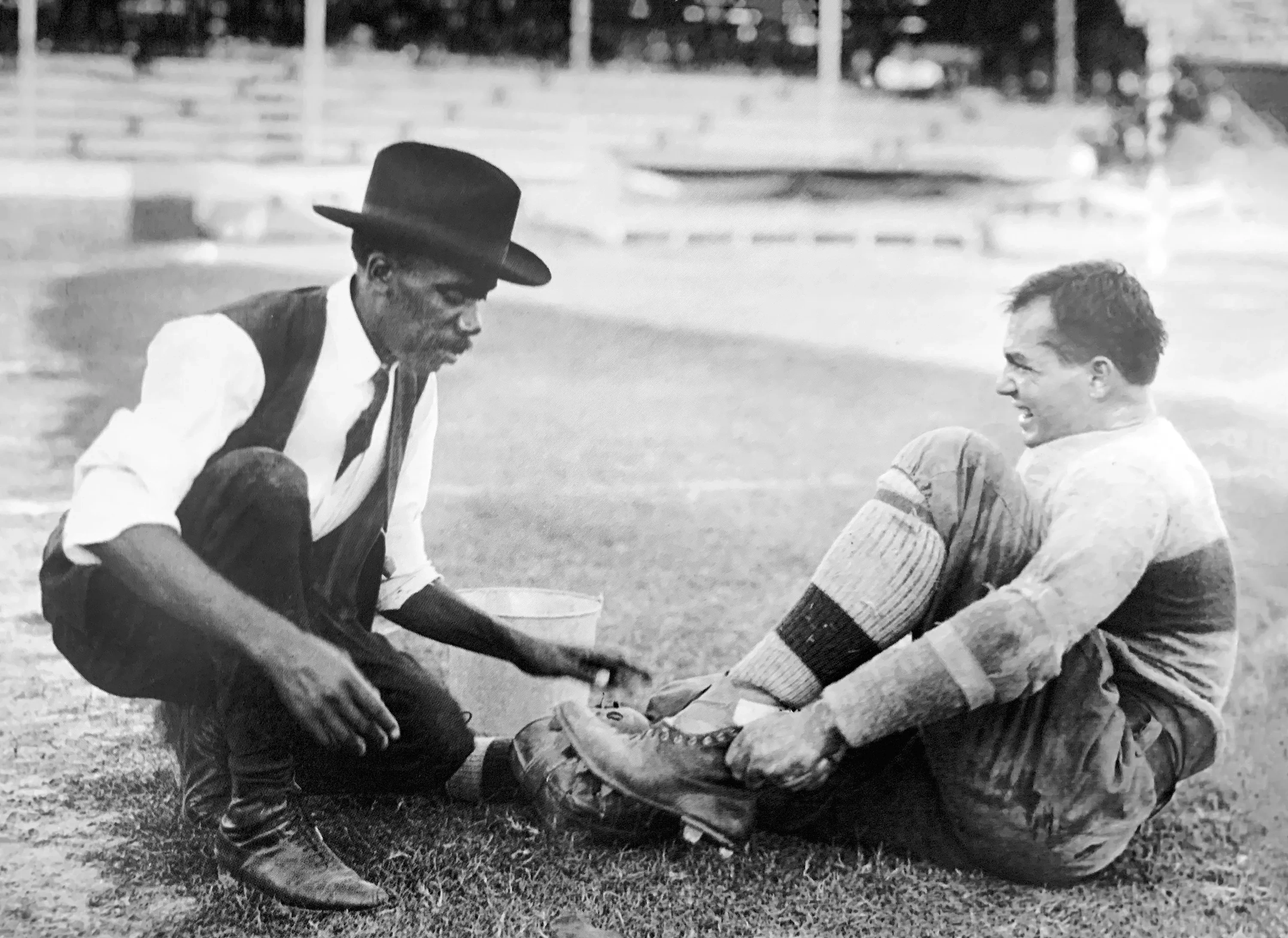
UT Athletics Hall of Honor in 2000.
Henry “Doc” Reeves
Born in West Harper, Tennessee, in 1871, Henry Reeves’s parents were emancipated after the Civil War. History teaches that the path from Tennessee to Texas is an honored one, blazed by no less a Texan than Sam Houston himself. In one sense, Reeves was a classic Texan. But race set him outside of the Texas mainstream and meant that his story, while exceptional and somewhat known to the public of his day, remains patchy and incomplete in the historical record. Reeves, a Freemason, lived north of campus in the African American neighborhood of Wheatville. A laborer who worked in private homes, his dedication impressed Judge James B. Clark, a librarian at the University, who recommended him for employment on the Forty Acres.
At first, in the mid-1890s, when the team was brand new, Reeves worked for the football team as a water boy. His tall, lithe, mustachioed figure became a fixture at practice, where “W-a-aa-a-a-ter, Henry!” became a varsity rallying cry. He attended to the needs of football, basketball, baseball, and track athletes. His talents soon expanded his work beyond toting a bucket and dipper. Reeves’s work combined duties of a trainer, physical therapist, and manager before there were names for such professions in the sports world. Tall and swift, with a long gait, invariably donned in a formal dark suit with a Stetson hat, Reeves was the first person to reach any injured player. His tender touch was famous for its ability to reduce pain and knead out the soreness in a hurt athlete’s muscles and joints.
It was these skills that led to the nickname “Doc.” While the Longhorns had “Doc” Neilson, who was a true physician and served as medical consultant, it was Reeves who worked with the varsity every day of practice and during games. Reeves massaged, supported, and comforted the Longhorns on the field, in full view of thousands. That visibility was another key to his campus role; it was why he became a fondly remembered presence for generations of students. Upon Reeves’ death, The Houston Post occasioned elegiac commentary: “No figure is more intimately connected with the reminiscences of college life, none. In the hearts of Longhorn athletes and sympathizers, Doctor Henry can never be forgotten.”
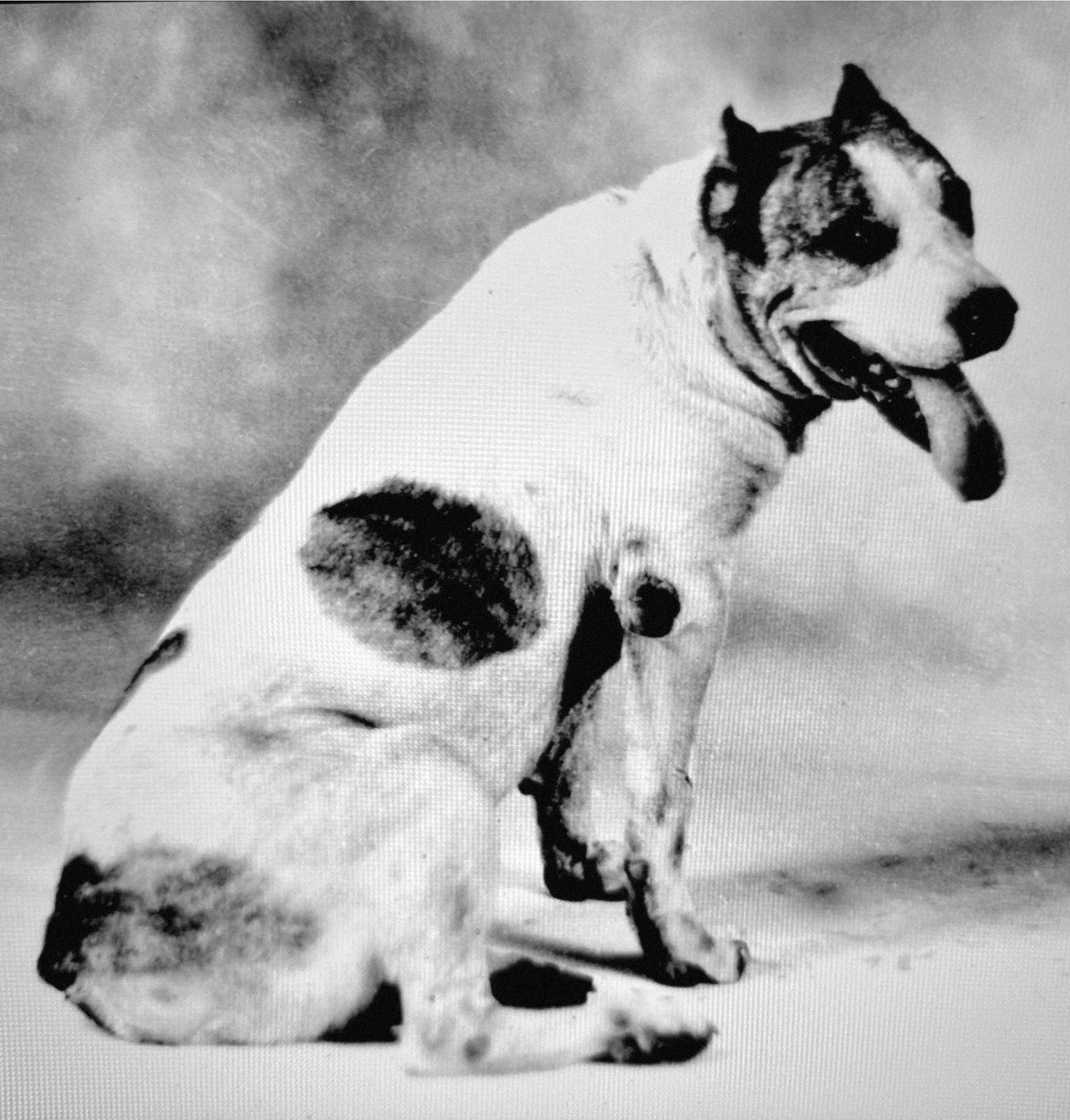
UT’s First Live Mascot
Texas Athletic Director L. Theo Bellmont enjoyed attending varsity practices, often bringing his dog, a gregarious mutt born in February 1913. The puppy was a Forty Acres favorite, especially with the football players. They liked his speed and respected his tenacity when chasing the ball during practice. The bowlegged pooch had free rein of campus, following Bellmont to work, perambulating, chasing squirrels, digging up flowers, and accepting homage from students. He frequented classrooms, where professors and students routinely welcomed him to lectures.
Every dog needs a name, and this one gained one due to a friendship with varsity’s starting center. That was sophomore Gus “Pig” Dittmar, one of the team’s best players. Dittmar could slip past blockers like a greased pig at the rodeo, hence his nickname. Watching Pig and his four-legged friend standing next to each other on the sidelines, a teammate noticed their similar bowlegged stances. “Pig” became the name of Bellmont’s dog, which became the first live mascot of The University of Texas. It would be two years before anyone thought of bringing a Longhorn steer to a game.
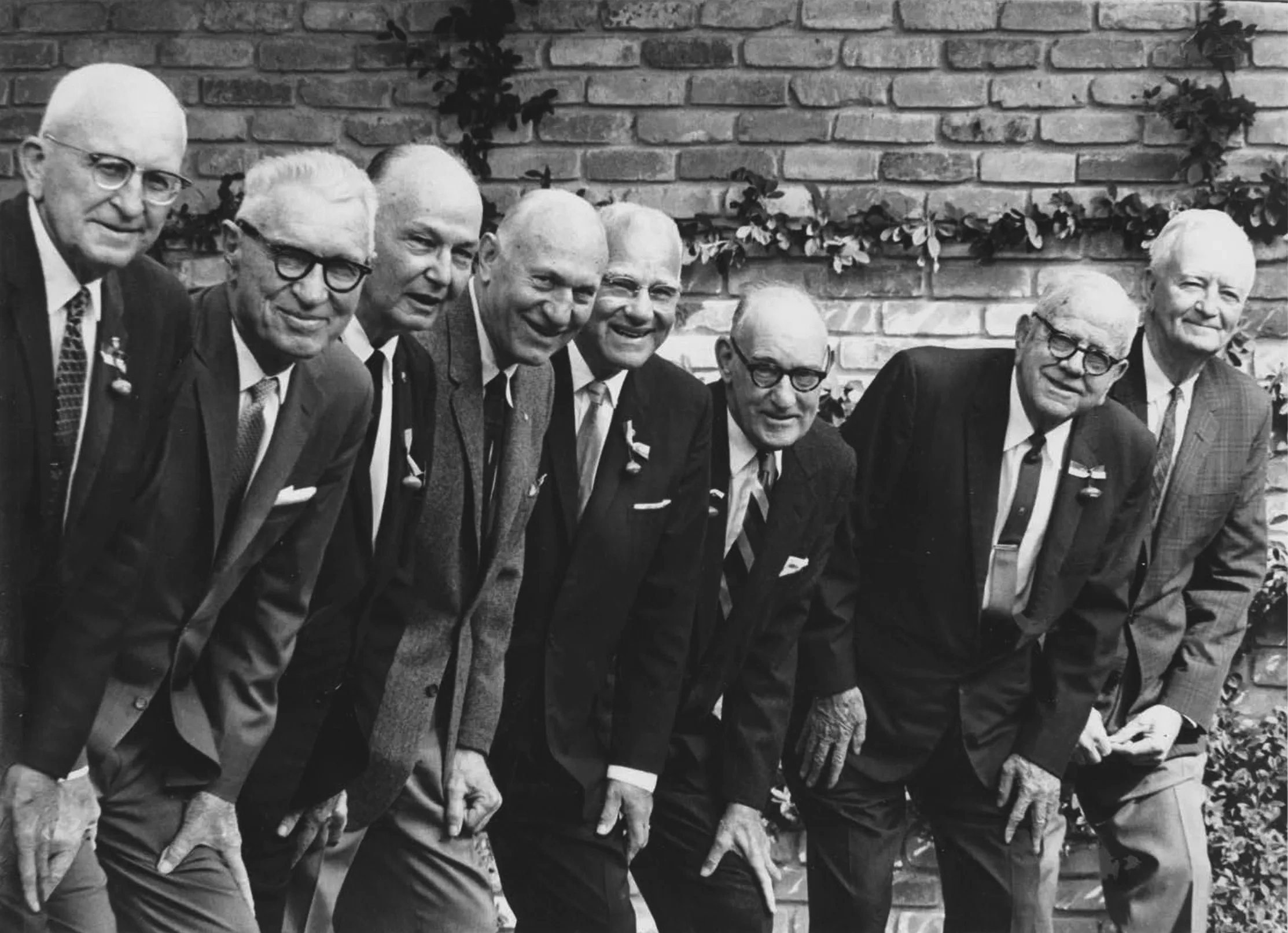
Goodman, Dittmar, Barrell, Carlton, Nielson, and Walker.
CREDITS: Keck Family Collection (7); H. J. Lutcher Stark Center for Physical Culture and Sport, The University of Texas (5)