Building a New Student Experience for Longhorns
Miguel Wasielewski came to The University of Texas as a freshman in 1993 from San Benito, Texas, population approximately 22,000. That fall, UT welcomed 48,555 students to campus, a big and beautiful place with an oft-overwhelming number of people and opportunities.
Wasielewski, BA ’97, MEd ’10, PhD ’14, Life Member, has never left, working across departments and decades to ensure that all he learned about navigating UT as a first-generation college student—and now as a parent to a Texas sophomore—can help future students make the most of everything newly at their fingertips. The Alcalde spoke with him about his new role as UT’s first vice president for student experience, at the helm of an effort to build a more seamless experience for all Longhorns.
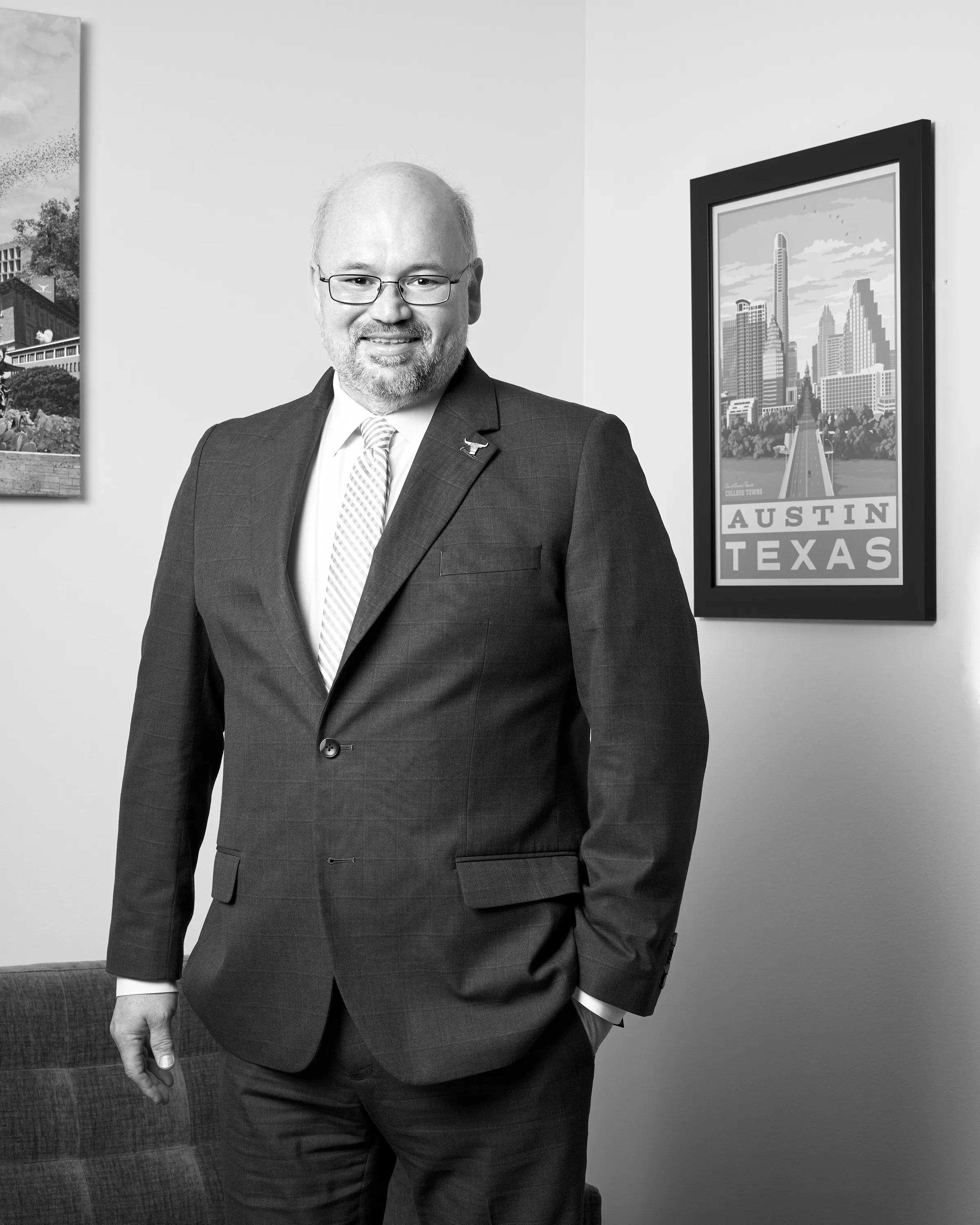
What structure will this new student experience take?
We are thinking about it like a degree plan. A student knows they have to take certain classes over their four years, and then there are other ways they can choose their own adventure. We are suggesting there should be a non-academic degree plan for students, so they know what to expect from their experience on campus.
But we need to have meaningful recommendations for students to be able to do that. As a student progresses, we want to leverage the information they included in their application, combined with a more well-maintained database of opportunities campus to share with students.
I want us to be able to provide an experience here where a student doesn’t have to feel lonely. If they don’t want to join a club or an intramural team, for example, they can still go do something on campus. We connect them to the right information, and then we also assess and revise what we have available to ensure that it is useful to students in today’s world.
So what are you changing in this new role for students navigating the Forty Acres in 2026?
One important change is that we’ve separated what used to sit together in the Dean of Students Office into three clearer paths for students. Student emergency support services will be connected with Texas One Stop, so students have a clearer place to go for help if they’re in crisis, financially or otherwise. Academic integrity and student conduct are now their own unit. And then the Assistant Vice President of Student Life will be focused entirely on the student experience—being in student spaces, listening to what students need, and helping them navigate their time here.
Before, we had the principal and the counselor combined in one office. Sometimes students need support, and sometimes the University has to provide discipline, but those should not always feel like the same door.
We are really interested in feedback. Not every idea will be immediately practical—someone recently suggested an ice hockey team, which is a cool idea—but we want to gather ideas from across the full spectrum of people who care about UT.
Throughout your tenure, what have you and your colleagues noticed needed to change about the student experience?
In enrollment and admissions, we had a front row seat to what students are experiencing, and we saw a lot of missed opportunities to direct students to the experience that we know exists here.
Over time, we’ve isolated the [administrative] process in a way that actually creates barriers to navigating this institution in a meaningful way. The resources that are available to students have evolved substantially, so it’s important for the University to evolve in the same way, to meet students where they currently are.
What has changed the most since you were on campus?
Just the ability to have food delivered to your dorm—in many ways, that can replace the experience of going to the dormitory cafeterias or venturing into the city. We’ve created this opportunity for students to be confined to campus if they want to be.
We also know that the concentration of students is now within this very small perimeter around campus. When students are living across Austin, that might put them in a situation where they’re on campus for an entire day—whereas if you live in West Campus, you can just walk the three or four blocks back to your place. So students are interacting with campus and the city in a different way.
What are some resources you see students underutilize?
No matter how great a student was in high school, there are probably going to be times here at UT when they are going to have to ask for help. We want to create a single module where a student can just raise their hand and say, “I need help.”
Besides logistical ease, what other benefits do you foresee?
College students, especially freshmen, are at an age when so much development is happening. Who they will be for the rest of their life is cultivated during this four-year period. What’s important is that we have a number of opportunities that are available to students, to say, “Look, what you’re doing right now may be different next week, next year, and at the end of your college experience, and that’s okay.”
Every day here at UT is an opportunity to have some confidence to move forward, or it can sadly be an opportunity for that student to feel like they don’t belong. And that sense of belonging—that’s more than a module. It has to be us, as a community of support that exists well beyond Texas Student Experience, coming together and saying, “We want to support students.”
What makes the student experience at UT unlike any other university?
The students are exceptional here. We had close to 100,000 applications last year, and our class enrolled 9,400 students this fall. Being around those interested, talented, intriguing, and unique individuals is an amazing thing.
This interview has been edited and condensed.
Portrait by Matt Wright-Steel