Decoding the Chemistry of Texas Wine
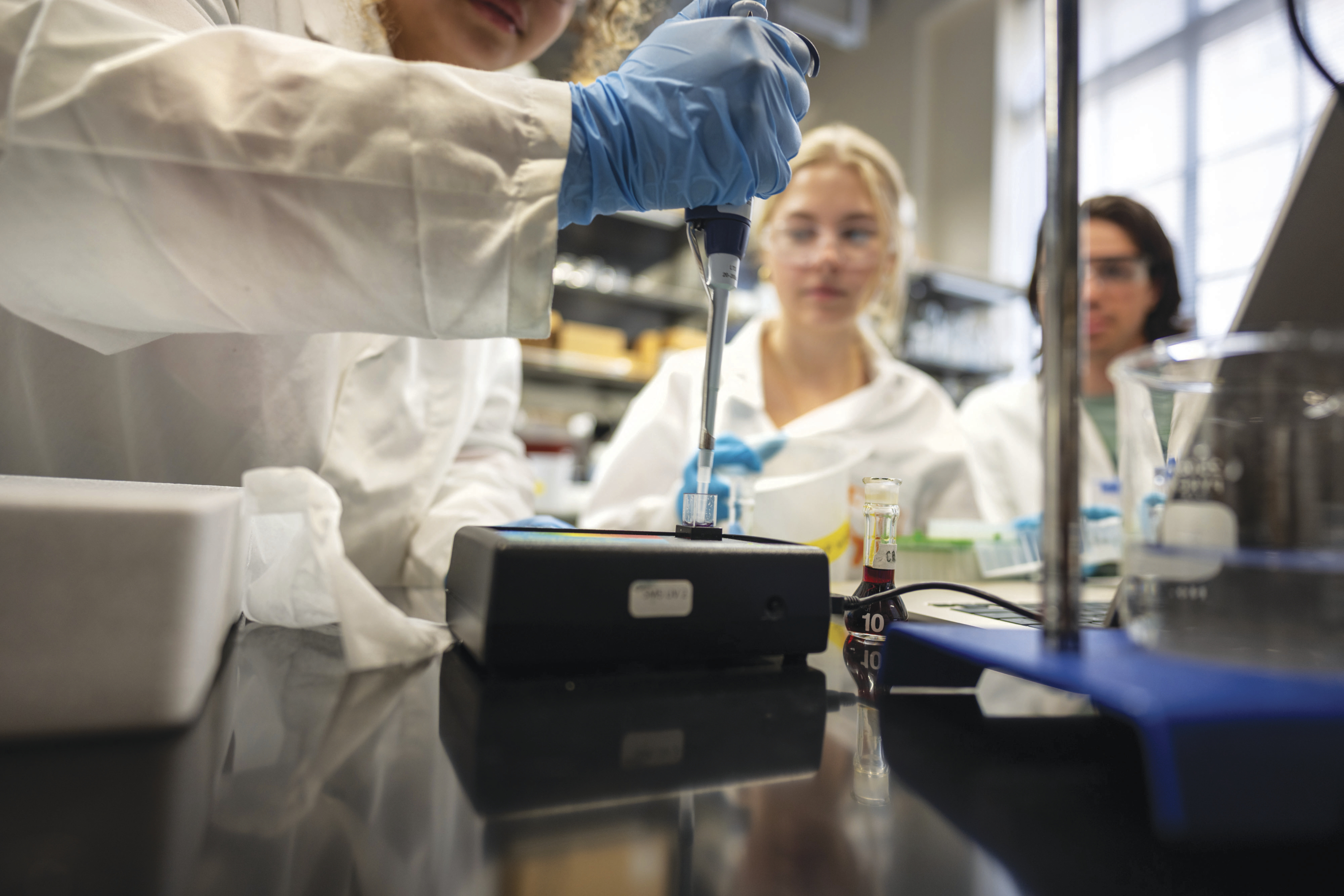
On a warm morning in the Texas Hill Country, a group of students from The University of Texas at Austin move slowly between rows of grapevines with clippers in hand and coolers full of dry ice at their feet. They work carefully, cutting leaves and grape clusters, sealing each sample and freezing it within minutes so that nothing in the tissue changes before it reaches the laboratory. These students are part of the UT Wine Initiative, a growing collaboration between UT scientists and Texas vintners that blends analytical chemistry with the centuries‑old craft of winemaking. The project places undergraduates at the center of research questions that matter to an evolving industry: how Texas terroir expresses itself at the chemical level, and what new technologies can reveal about grape quality and the interplay of soil, climate, and vine.
Ultimately, the work asks a larger question:
How can science help to define Texas wine?
Texas’ wine story has been one of steady emergence. The state boasts mineral‑rich soils, and a burgeoning wine culture fueled by more than 700 wineries across eight American Viticultural Areas (AVAs)—resulting in a $24.4 billion economic impact. But Texas wine still doesn’t enjoy the same widespread recognition as regions like Napa Valley or Bordeaux—and that’s where UT’s research enters the conversation.
Fall Creek Vineyards in Driftwood became an official industry partner of the UT Wine Initiative in 2019. Sergio Cuadra, the winery’s now owner, remembers arriving from Chile and instantly sensing just how different Texas is from other wine regions.
“The first thing you realize is that it’s very hot here, hotter than almost anywhere else in the wine industry world,” Cuadra says. “Texas is as hot as it was when grapes were growing widely in places that now we call Iran, Iraq, Eastern Turkey, Armenia, Georgia, Lebanon, Israel, and the Arabic Peninsula. All that area of the Middle East is the origin of the Vitis vinifera plant, and it was there growing naturally in a climate that’s very similar to the Central Texas climate.”
That heat, he argues, might not actually be a handicap, but part of a unique environmental story. Vitis vinifera, the grape species used for most fine wines, evolved in climates that saw intense heat, so the plants adapted to grow and produce fruit in those conditions. Central Texas, with its long, warm growing season and varied soils, offers a living laboratory to explore those adaptations scientifically.
Because for Cuadra and other winemakers, anecdote and intuition aren’t enough. “We tell stories about our wines all the time,” he says. “But I want to not only tell you what I think. I want the endorsement of an institution like UT … Solid scientific research to describe what happens in a wine region like Texas is a great endorsement and adds credibility to the already good results that we are seeing.”
In an industry awash with marketing stories about terroir and taste, that kind of scientific credibility matters. And for a young region still defining its identity in the broader wine market (with critics, buyers, and curious consumers alike), it could even be pivotal.
The UT Wine Initiative sits inside UT Austin’s Freshman Research Initiative, one of the largest undergraduate research programs in the nation. Each spring, roughly 35 students enroll in the Supra Sensors research stream, a laboratory where analytical chemistry meets real‑world problems such as wine classification and grapevine physiology.
Most participants are not aspiring winemakers. In fact, many arrive with pre‑medical plans or interests in more traditional bench science. But through structured coursework and hands‑on projects, they learn how to apply chemical analysis to the kinds of complex biological samples that define wine chemistry. And because the initiative bridges academia and industry, many students gain insight into careers they might not have considered otherwise. Some even end up discovering a passion for enology, the science of wine itself.
“We want students to get engaged in research as early as their freshman year,” says Diana Zamora‑Olivares, PhD ’14, associate professor of practice and codirector of the UT Wine Initiative. “This is a great way for them to learn different analytical techniques and tackle real‑life work problems.”
The Supra Sensors stream teaches students to use high‑end analytical tools such as mass spectrometry and advanced chemometric data analysis. They learn to process readings that might contain thousands of variables in order to extract meaningful patterns that differentiate one wine from another.
These opportunities are made possible through the support of sponsors such as H‑E‑B, Republic National Distributing Company, Fall Creek Vineyards, and the Yates Family. Their backing ensures that the research remains grounded in real industry needs while giving students access to resources that might otherwise be out of reach.
One of the Initiative’s most compelling tools is technology pioneered by Eric Anslyn, professor of chemistry and codirector of the UT Wine Initiative with Zamora‑Olivares. Anslyn’s work in differential sensing began as a proof‑of‑concept inspired by the human senses of taste and smell. He uses a liquid-phase sensing array built from a library of peptide‑based sensors designed to interact with tannins in wine. When different wines are introduced to the array, the indicator complexes undergo distinct color changes. These colorimetric “fingerprints” are measured and analyzed to reveal clusters of wines that are similar or different, reflecting variations in tannin composition—essentially creating a computerized palate comparable to that of a top-trained sommelier. “It’s like having an electronic nose and tongue,” Cuadra says of the initiative’s analytical tools.
“Over the years, this sensing method has proven robust for wine detection and classification,” Anslyn says. “The patterns that emerge consistently allow us to distinguish among varietals, blends, terroir, and vintage. This includes differences associated with vineyard location, regional growing conditions, and harvest year.”
In 2010, the Supra Sensors’ work even became evidence in a class-action lawsuit against a national wine producer for mislabeling French Gamay as Pinot Noir. In 2012, $165,000 in unclaimed settlement funds were redirected to support their research, giving the students resources to continue refining their sensing technologies and practices.
Other Initiative projects include a collaboration with Andreea Botezatu, an associate professor and enology extension specialist at Texas A&M, as well as partnerships with Texas winemakers Ron Yates, Salt Lick Vineyards, and Spicewood Vineyards.
“The projects with these partners are either ongoing or in their final stages,” Zamora-Olivares says. “We hope to share our findings with the community later this year or next year.”
Wine’s complexity is staggering. A single glass can contain thousands of individual compounds, all interacting to produce aroma, flavor, and structure. The field of metabolomic analysis tracks small molecules—such as anthocyanins, sugars, tannins, acids, and phenols—and helps bridge the gap between the vineyard and the bottle.
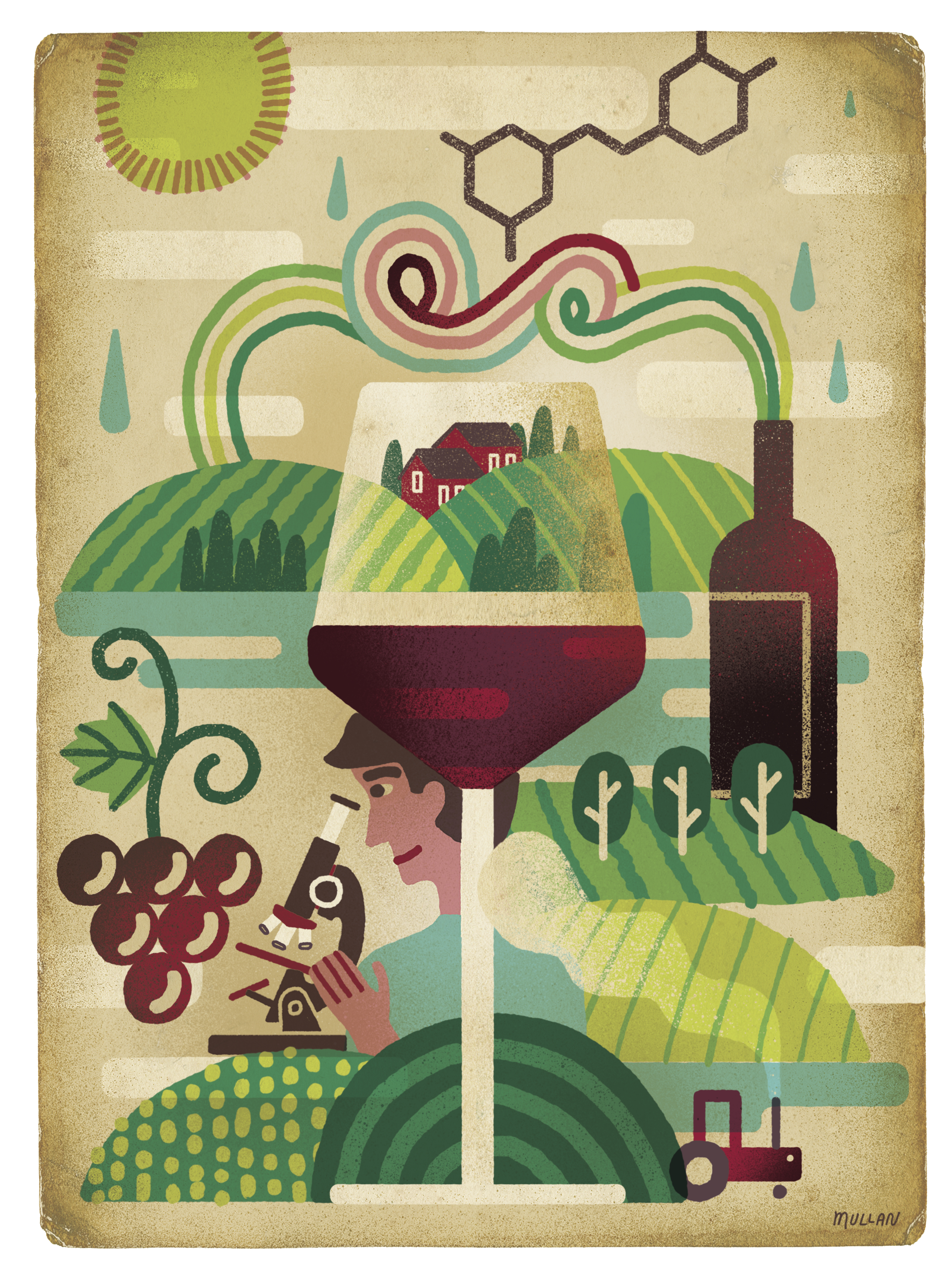
In the Supra Sensors lab, students learn to interpret these results and link them back to the vineyard conditions where the grapes were grown. For example, metabolomics can reveal how soil, climate, and viticultural decisions—such as hang time on the vine—affect the chemical profile and potential quality of a wine.
It’s a holistic approach that unites chemistry, plant physiology, and sensory science—a far cry from the romantic but vague notion of “terroir” that often appears in tasting notes. Current research with Fall Creek Vineyards focuses on understanding what distinguishes wines from different regions, with emphasis on Texas Cabernet Sauvignon and Tannat, a red wine grape known for its high tannin levels.
“These data are compared with wines from internationally recognized regions to evaluate similarities and differences,” Zamora explains. “This integrated dataset provides the first combined chemical and sensory reference points for these Texas varieties.”
Another active research focus is an investigation into heat shock proteins—molecular signals that grapevines produce in response to extreme temperatures—and how those responses shape both the plant and the wine it ultimately yields.
In practical terms, heat poses one of the most persistent challenges for Texas growers. High temperatures can accelerate sugar accumulation while reducing acidity and disrupting the slower development of tannins and flavor compounds. The result is often fruit that is technically ripe but chemically out of sync—which can affect flavor, texture, and balance in the final wine.
Heat shock proteins act as a kind of cellular defense system, helping grapevines stabilize and repair themselves under stress. By tracking when and how these proteins appear, researchers hope to better understand how vines endure Texas’ intense and often unpredictable climate.
“Understanding the impacts of each heatwave on plants and the way they adapt would give us more clarity on what is needed in the vineyard at a given time,” Cuadra says. “Right now, things done one year may not work the following one due to changing conditions.”
Back in the lab, students analyze vineyard samples, translating biological responses into data that can be compared across seasons and sites. Over time, those datasets could allow growers to anticipate how vines will respond to stress, and adjust irrigation, canopy management, or harvest timing with far greater precision. Beyond viticulture, understanding how plants deploy heat shock proteins could have broader implications for agriculture in a warming climate, and even for understanding how living systems adapt to extreme heat more generally.
As the UT Wine Initiative looks ahead, its roadmap is ambitious: deeper exploration of how environmental conditions shape grape chemistry, expanded industry partnerships, and a continuing mission to tell the molecular story of Texas wine.
For winemakers and scientists alike, Texas offers fertile ground, both literally and figuratively. “Texas has all the elements to be a premium wine producer region.” Cuadra says. “One of the most precious things that any wine region can have is good potential soils, and we have those. The Hill Country has a rare combination of granite-based soils in the north and limestone-based soils in the south. The High Plains have amazing potential, too, even further west near El Paso.”
Cuadra emphasizes not only quality but scale: “Right now, we have hardly enough grapes to give our fellow Texans the wine they demand. And we certainly don’t have enough to go out to the rest of the U.S., which is there for us to claim. We need to plant more grapes, produce more wines, and actively show what Texas can produce.”
As Anslyn explains, science provides the tools to make that vision tangible. “Our goal is not to change how people understand wine. As applied chemists, we focus on developing chemical tools that help us better analyze real-world samples,” he says. “Through the UT Wine Initiative, we hope that differential sensing can support Texas winemakers in understanding the distinctive characteristics present in their wines.”
For Texas wine, this ongoing research with UT represents a path toward consistency, credibility, and recognition. And in the end, what fills the glass is more than flavor. It is the story of landscape, climate, community—and the students and scientists who are helping to decode it.
CREDITS: UT Wine Initiative; Mike Mullan