The University's 90-Year-Old Dioramas Have a Rich History
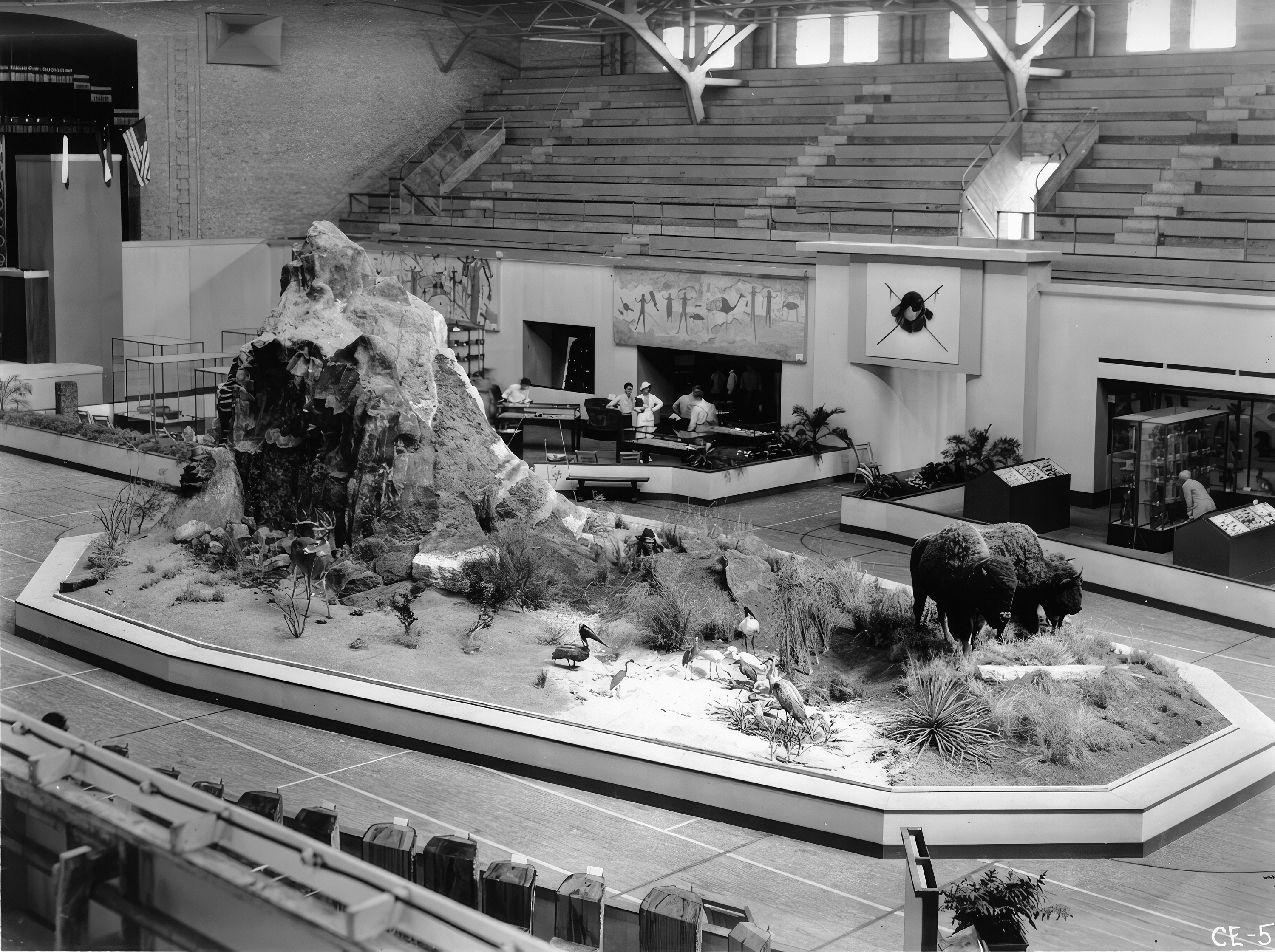
Over the decades, people wandering into Gregory Gym could experience many things: the rowdy roar of a crowd cheering on Texas Volleyball or Basketball; live music from artists such as Louis Armstrong or Janis Joplin; the organized chaos of registration; boxing matches, poetry readings, dance parties. But walking into the gym in 1936 was likely one of the most memorable experiences: Visitors were greeted by three life-size American bison grazing near a 25-foot rock, surrounded by a scattering of prairie grasses and long-legged shorebirds.
As part of the University Centennial Exposition science exhibit, the bison (then referred to as buffalo) were mounted onto a hand-built, three-dimensional environment, creating a diorama—a relatively new style of museum exhibit at the time. The bison shared the gymnasium floor with other animal specimens native to the region, including a puma and its prey, a white-tailed deer. But the bison were the stars of the show, creating a spectacle of scientific prowess. Nearly a century later, those same animals endure as teaching tools, now housed at the Texas Science & Natural History Museum.
The 1936 Texas Centennial Exposition was a grand, statewide celebration marking a century of independence from Mexico. While the main attractions were held in Dallas and Fort Worth, institutions across Texas participated, and UT seized the moment to flaunt itself as the state’s flagship university. The 1930s marked an era of bold and showy statements on campus: the Tower—destined to become the tallest building in Texas for the next two decades—rose over the landscape, and construction wrapped on buildings such as the Texas Union and Hogg Memorial Auditorium. The University was eager to welcome the world to the Forty Acres for the exposition, with the natural history exhibits at Gregory Gym anchoring the show.
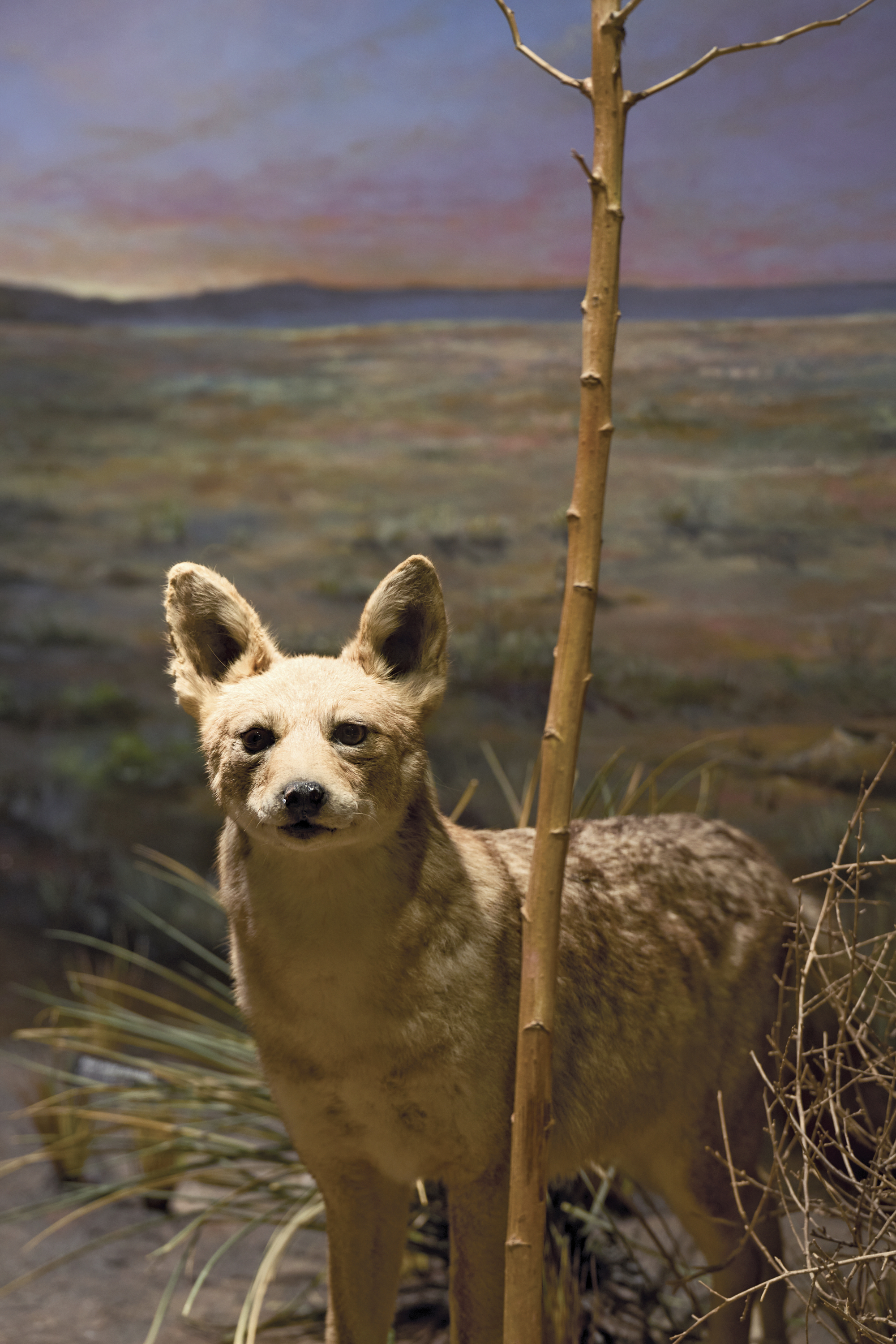
The bison were gifted to the University by the Great Southern Life Insurance Company of Dallas. Before the animals could be exhibited, however, they had to be taxidermied and mounted, a process contracted to Jonas Brothers, a Denver-based studio specializing in natural history exhibits. At the time, museums such as the American Museum of Natural History in New York City were moving away from static displays and inaccessible specimens in favor of exhibits that combined taxidermy with painted backdrops and realistic foregrounds to convey ecological context. “Dioramas are much more informative than just putting an animal on a pedestal and saying, ‘Here’s a gray fox. Here’s a roadrunner,’” says Pamela Owen, PhD ’00, associate director of the Texas Science & Natural History Museum.
D.B. Casteel, supervisor for the zoology department, was tasked with overseeing the diorama endeavors, and the pressure was immediate. Jonas Brothers was also mounting the science exhibit’s puma and a deer, while juggling orders from the main Centennial show in Dallas, creating a tense timeline for meticulous work.
In a letter dated February 29, 1936, Jonas Brothers acknowledged receipt of the bison specimens but cautioned that the process of creating the form, mounting, and shipping the animals would take roughly three months, leaving no wiggle room for the June 1 deadline. Complicating the matter, the studio also noted that the bison arrived in a challenging condition, including missing pelvises. On May 22, with no animals yet on site, Casteel wrote in worried anticipation. “May I add, finally, that I just hate to rush you so in these matters, but I am going to be rather considerably embarrassed personally, for our exhibit [if it is] excessively lacking in completeness by June 1.”
The exhibition, despite the challenges, opened just in time. Publicly, the program was a success. But the mood behind the scenes was a bit more complicated. Casteel expressed disappointment with the size and stature of the bull buffalo, which he said fell short of expected dimensions—this is Texas, after all. By his measurements, the animal was 9 inches short from tail to shoulder and 3 inches short from hump to ground. In a June 5 letter, Casteel acknowledged that the mount might be “suitable for popular exhibition” throughout the summer, “but another specimen will have to be substituted for it in the future.”
A replacement bull never materialized, and the bison exhibit—flaws and all—went into storage until 1939, when it was installed in the newly opened Texas Memorial Museum, now the Texas Science & Natural History Museum, where it remains on view today.
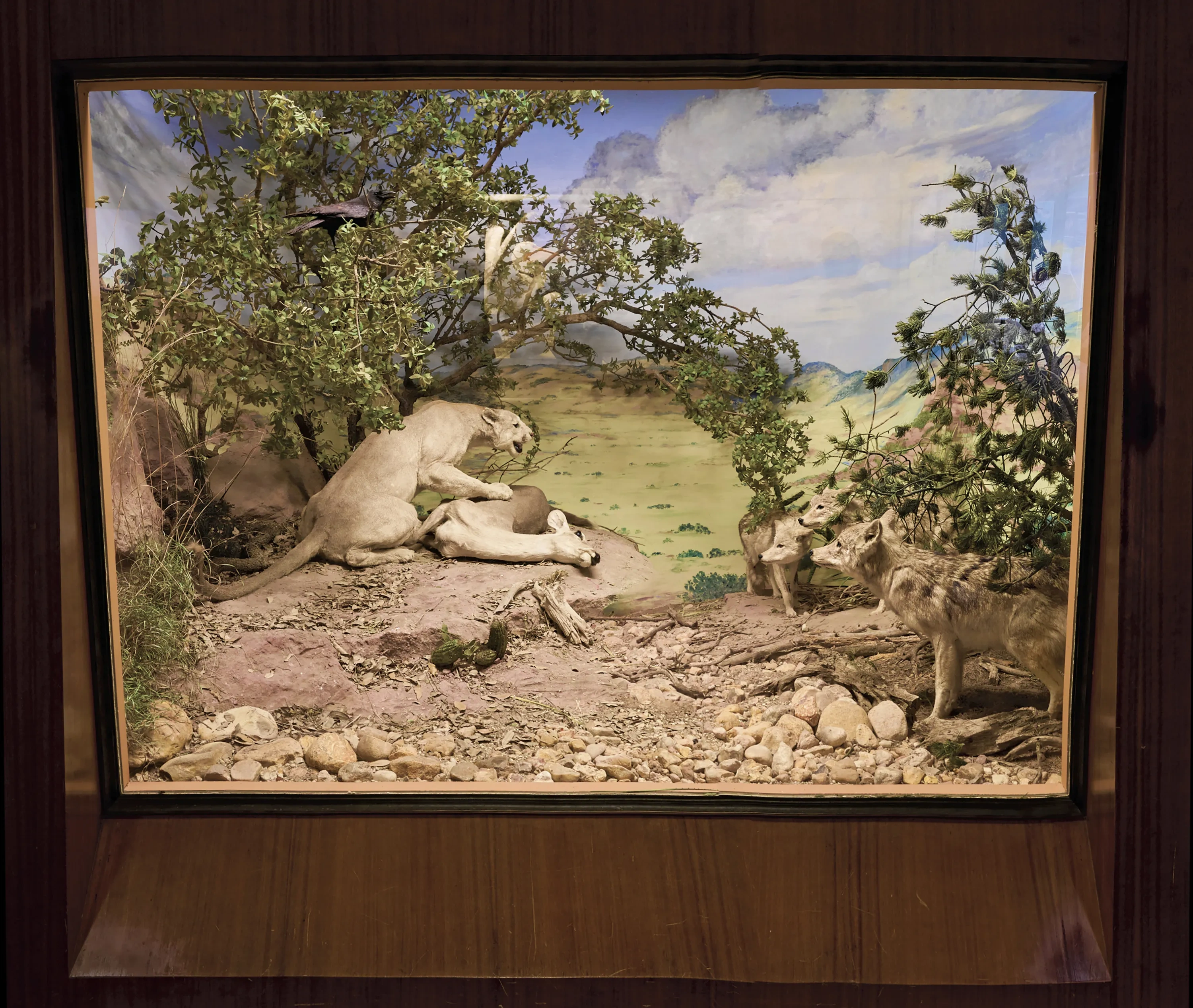
The three buffalo roam in the Texas Wildlife Gallery, a hall of dioramas featuring native creatures, including the 1936 puma and its prey. “Maintaining these taxidermy exhibits, these dioramas, is really important,” Owen says. “From a historical perspective and looking into the future.”
Ninety years after visitors first encountered the much-to-do exhibit at Gregory Gym, the bison live on as a powerful teaching tool. “Dioramas slow people down,” Owen says. “They ask you to look, to notice relationships, to think about how these animals live together in a place.”
CREDIT: Matt Wright-Steel; The University of Texas