Texas Rocket Engineering Lab is Shaping a New Generation of Engineers
Gameday tailgates always have something to ogle, from the giant inflatable longhorn, to ziplines and food vendors. But, on November 22, 2025, something extraordinary stood outside Darrel K Royal-Texas Memorial Stadium: a 30-foot-tall rocket. The students of the Texas Rocket Engineering Lab (TREL) were showcasing their rocket Halcyon as part of an activation to raise awareness for the program, when program director Kevin Sagis noticed a little girl with her family staring in amazement. The girl’s curiosity prompted him to encourage a few of the female engineers to show her the rocket and talk about their work. Witnessing her excitement and inspiration is part of what motivates Sagis and his students.
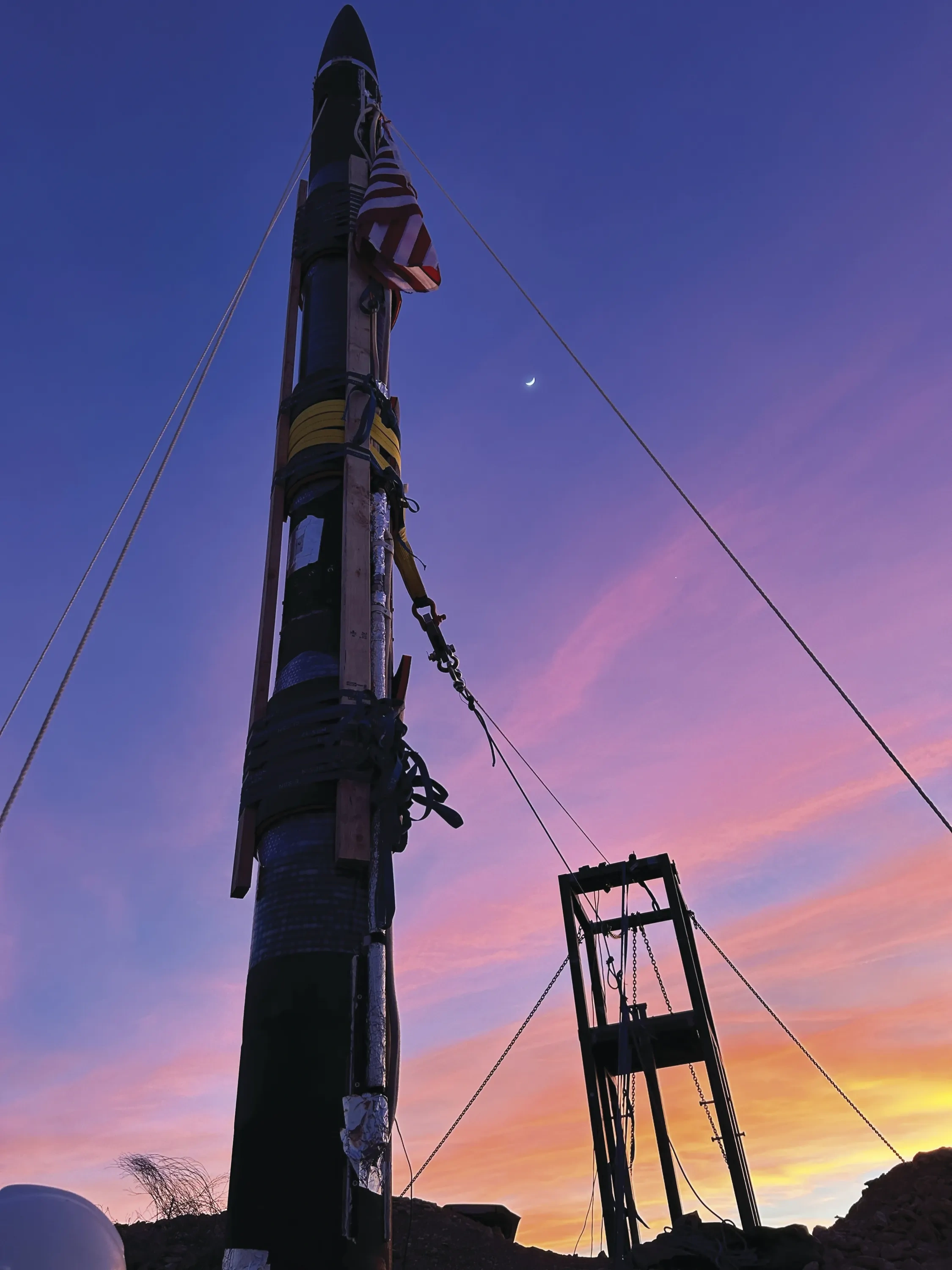
TREL is a student-operated research group that began at UT in 2018 and currently has more than 120 members collaborating to build two liquid bipropellant rockets, Neptune and Halcyon. This means they operate on liquids as fuel instead of a solid motor. Neptune will become the first collegiate liquid bipropellant rocket to fly to the Kármán line, the boundary where Earth’s atmosphere thins to meet outer space. Halcyon, the rocket on display ahead of the home game against the University of Arkansas last fall, is the most advanced rocket built and static-fired at the college level. It’s set to fly to 20 kilometers, breaking a collegiate record.
“We build people who build rockets,” Sagis says. “TREL is building, and is nearly about to fly, the most advanced collegiate rocket ever made.”
While Sagis oversees the entire operation, it’s the students who are planning, building, and making these ventures possible. This achievement is built on years of hard work, since the group’s establishment. At one point the program had close to 300 student members, but COVID-19 forced TREL to reshape its goals and narrow its focus, downsizing its taskforce.
“UT already is the best and the brightest, but TREL is the best and the brightest of the best and the brightest,” Sagis says.
TREL’s creations stand out because of the computerized system that allows its rockets to control themselves, whereas other collegiate rockets don’t have the “brains” to do so, according to Sagis. Halcyon, for example, has a flight computer and an IMU, or Inertial Measurement Unit, that measures altitude, controls the engine, and directs the rocket on where to fly. “It’s hard enough to make the rocket itself. It’s probably 10 times harder to make a rocket that can fly itself,” Sagis says.
The students have been working on Halcyon for 18 months, giving up their winter break to continue their progress. The program has two main teams: engineering and operations. The engineers construct the actual rocket, while operations focus on acquiring and maintaining the resources necessary to sustain the group. This is one of Sagis’ main points: that TREL is more than just a lab; it’s a business.
“If you’re running [a student lab] like a company, you have to have the business aspects of it, the people who are working on the financial model,” Sagis says. “Rocket parts aren’t cheap.”
One of the students overseeing operations is sophomore Renee Tiwari, TREL’s chief business officer. Tiwari is a McCombs student and manages four divisions within the operations sector: marketing and communications, finance, supply chain procurement, and development. The operation team’s tasks include purchasing materials, curating TREL’s social media content, and maintaining support from aerospace companies such as Firefly, Lockheed Martin, RTX, Sandia, as well as generous alumni.
A large part of sustaining a company such as TREL is fundraising and securing the assets vital to continuing its work. During the summer of 2025, TREL’s operations team raised just under a quarter of a million dollars. These funds not only help create rockets, but also increase the group’s visibility.
“What we’re really trying to make TREL, is a launch pad for careers in aerospace,” Tiwari says.
Ian Cochran, a junior double-majoring in math and aerospace engineering, is TREL’s launch vehicle chief engineer. While his job involves designing, constructing, and testing the rocket, he also emphasizes the program’s larger goal of giving students the tools they need to exceed expectations and shoot for the stars (pun intended).
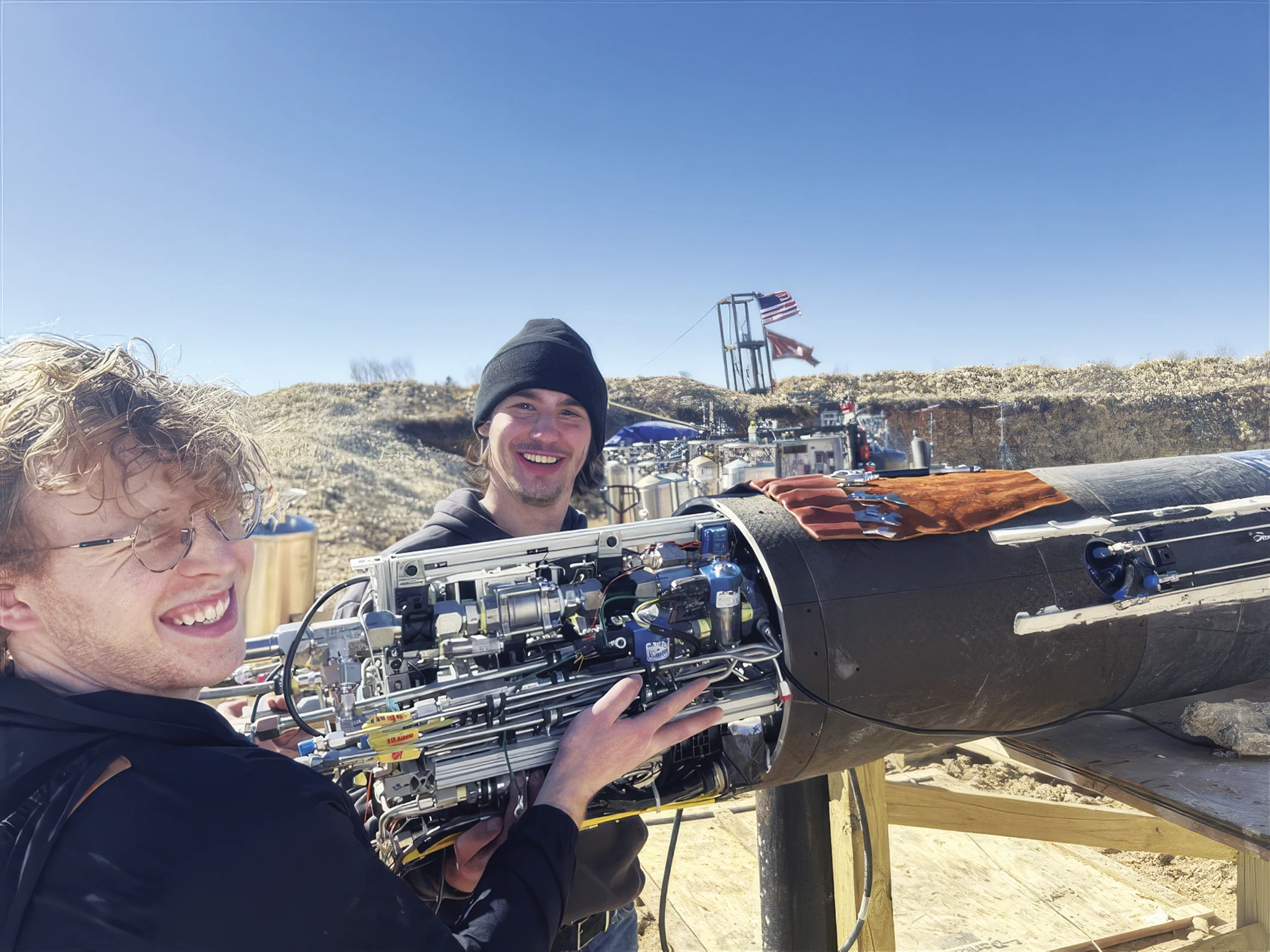
“The real, ultimate goal is to build the people up,” Cochran says. “It’s basically just four years of experience before you even get to the job market, which is pretty great.”
This collective tenacity is shown through the long hours and dedication expected from each member of TREL. The students understand the magnitude of their work and how it leaves a legacy.
“Every single day at Texas Rocket Engineering Lab is gameday,” Tiwari says. “Every decision you make is going to impact the rocket.”
The big day for these young innovators will be when they bring Halcyon to New Mexico this spring and collaborate with New Mexico State University and other institutions to officially launch the rocket.
True success for TREL and Sagis goes beyond the rockets themselves. It’s about the lessons brought along the way and the ability to inspire others, just as they inspired that young girl at the Arkansas game.
“If it takes us three times to get to space, okay, fine. And if we do it in six times, that’s fine, too,” Sagis says. “The important thing is we’re doing it, we’re learning from it, and we’re getting better each time.”
CREDIT: TREL