Good Reads Q&A: Unique Book Gathers Advice from 12 Longhorn Leaders
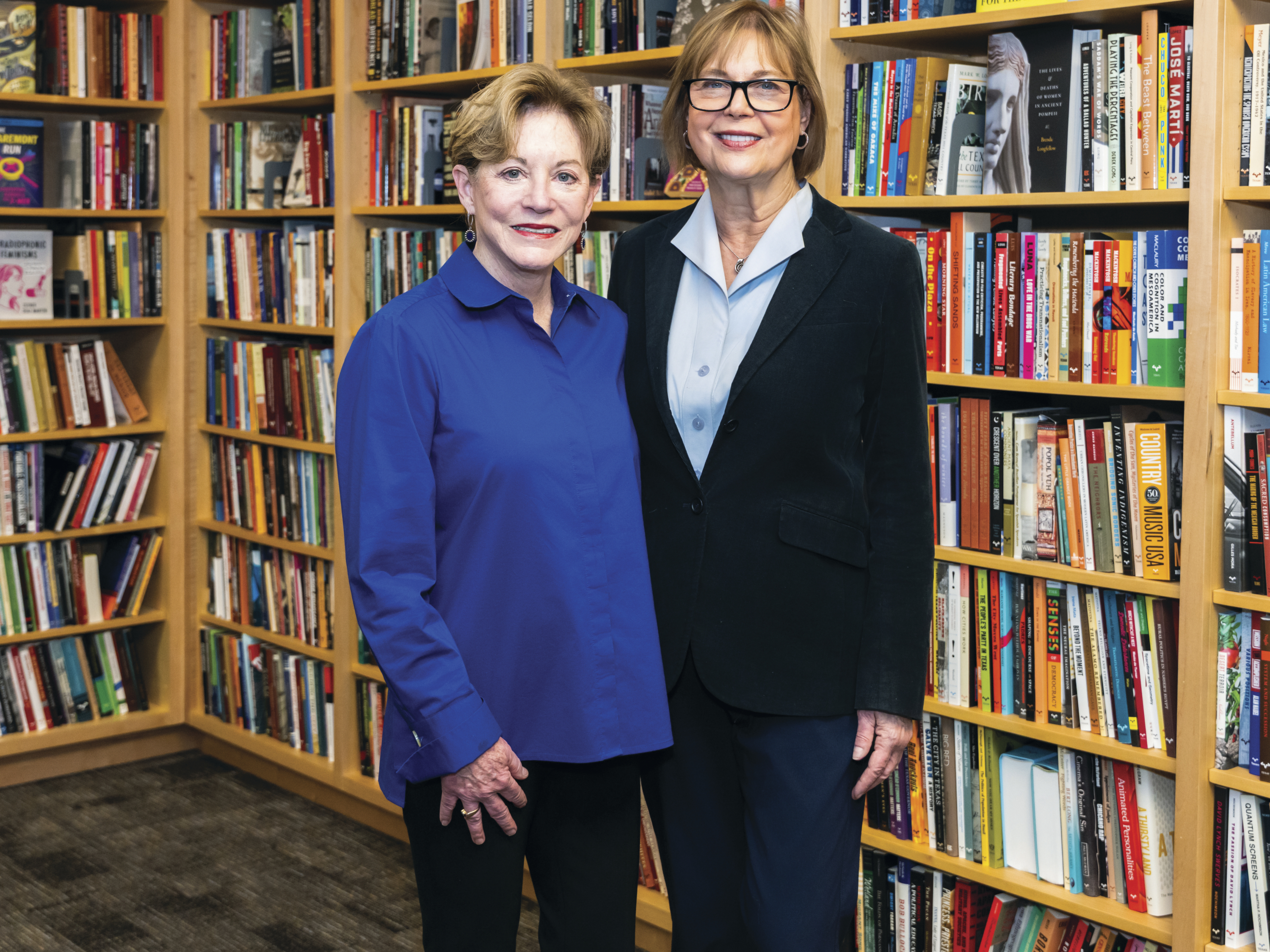
College is known for taking the rough clay of childhood and shaping the person one becomes. Perhaps no one understands this more than the authors of the forthcoming book Leadership Gets Personal, which collects interviews with some of the most successful Texas Exes in the world about the transformative impact of the Forty Acres on those who learn and grow here. Nan McRaven, MPAff ’76, EdD ’15, Life Member, is an educator, thought leader, strategic advisor, and fierce advocate of higher education across many Texas institutions. Susan Engelking, BS ’75, MFAff ’77, Life Member, is a founder of the nonprofit Institute for Community MicroMobility and previously author of Tiny Transit.
Ahead of the book’s release from The University of Texas Press on March 24, 2026, the Alcalde spoke with the authors to glean some of their learnings on leadership.
Where did the idea for this book come from?
McRaven: Susan and I started this project almost two and a half years ago ... I love my brother [Admiral William McRaven, BJ ’77, Life Member, Distinguished Alumnus] more than life itself, but I wouldn’t have called him a leader in high school. He ran track, but he never really ran in a race, whereas my sister was president of the student council and all that. But he went to college on an ROTC scholarship, and he eventually became head of the corps. I thought to myself, What happened at UT that changed the trajectory of my brother’s life?
We realized there was no book out there about what happens to students, when they come for a post-secondary credential, that transforms them into the leaders they are today. When we had pulled together a book proposal, we thought the natural place to publish it was The University of Texas Press.
How did you narrow down which Longhorns to include?
McRaven: We started with Roy Spence, BA ’71, Life Member, Distinguished Alumnus, chairman and co-founder of the advertising agency GSD&M. He’s a good friend of ours, and he has been a great partner for us throughout this process. And then we found a way to get to Matthew McConaughey, BS ’93, Life Member, Distinguished Alumnus, who said, “If Bill’s in the book, I’ll be in the book.” My friend Randa Safady, PhD ’00, Life Member, who leads communications for the UT System said, “Oh my gosh, you’ve got to have Linda Addison, [BA ’73, JD ’76, Life Member, Distinguished Alumna,] first female head of a major law firm.” And so it began to come together. We wanted the iconic names, but we also wanted alumni of every school and college within the University, and of all ages.
How did the book evolve as you started to conduct these interviews?
Engelking: We had some ideas as we started the book from the research we did on leading theories on leadership. But a lot of times in interviews people just want to just tell you about the things they’ve accomplished. With many of our subjects we were able to dig in, in a way that was new.
McRaven: Even someone like Brené Brown—many people don’t realize she was rejected by UT three times. She worked her way through school by waitressing at the I Can’t Believe It’s Yogurt! on MLK. We knew we were onto something because it was, frankly, so much more interesting.
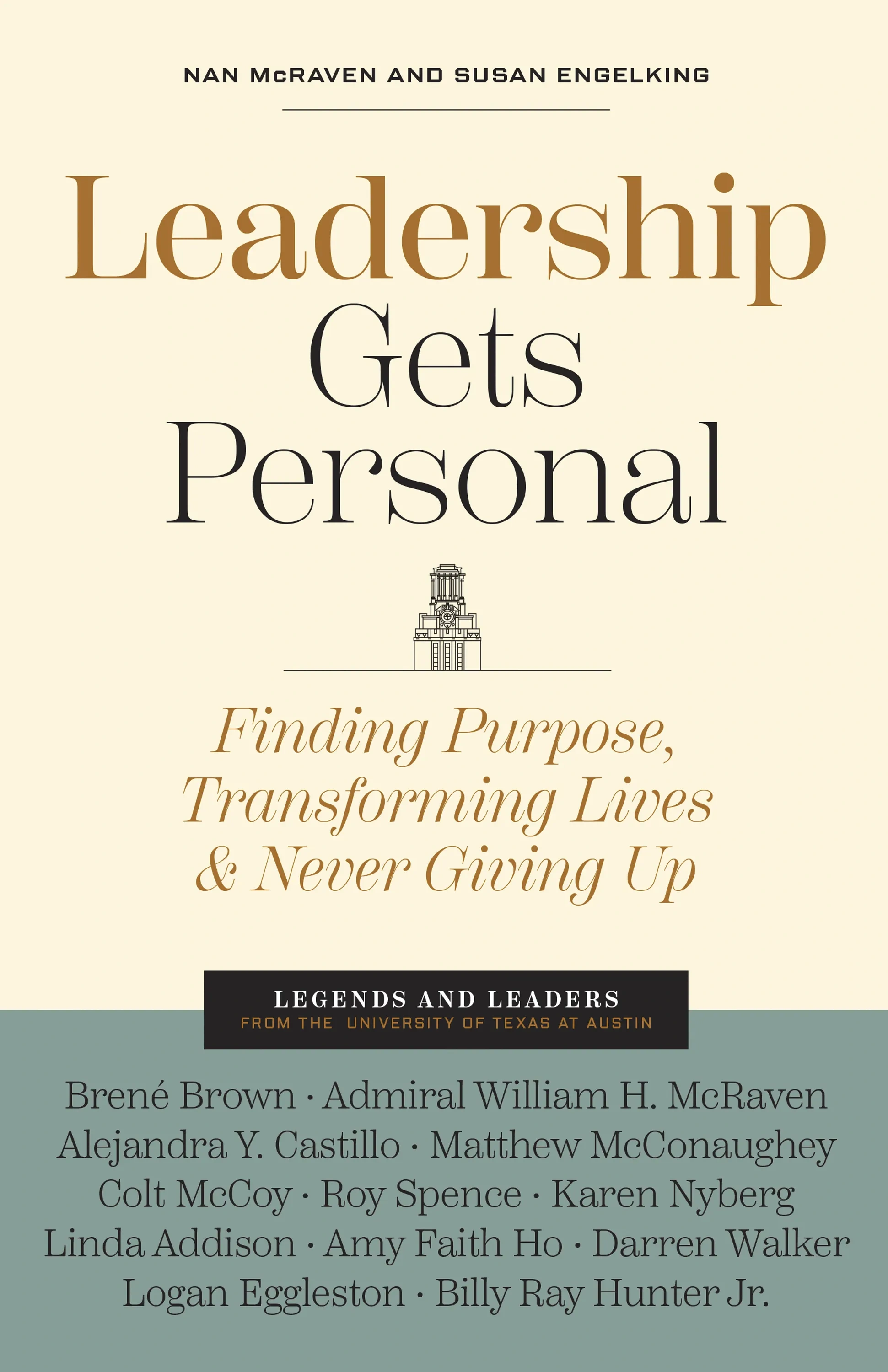
How did you land on the title?
Engelking: Some people think of leadership as being cruel or tough, or leading a corporation. But this book proves that leadership is what you do in the world to make it better. That’s why we called it Leadership Gets Personal, because it’s about leaders’ personal stories—and values.
If you look at UT’s mission statement, leadership is a core value, but so are discovery and responsibility. Every time we honed in on a story, we said to ourselves, Do they have the qualities that UT has spelled out for people who attend this University? We always tried to go back to how UT thinks of leadership.
What are some commonalities you found among your subjects?
Mcraven: Persistence was throughout all of their stories. Each of them wants to pay it forward, wants to mentor people because they were mentored. Most all of them we found to be very humble.
I think most of them also have a sense of humor—who wants to be with a leader who can’t laugh at themselves? Billy Ray Hunter, BM ’77, Outstanding Young Texas Ex, would lose his trumpet on tour, or he would have to stay in a no-tell motel room where the smoke alarm started going off, and he’s very short so has to pull up a chair to bat the alarm down.
What is the significance of this book beyond even the Longhorn community?
Engelking: We looked at a couple of global and national trends, one being the sharp decline in the public belief that a college education is worth the money, time, or sacrifice—that maybe a post-secondary education doesn’t have the value it once did.
And then there’s another trend that is really troubling: One in seven young men in the United States is not employed or in job training of any kind, not in school or the military—does not have an occupation that we can measure. This is a new phenomenon, and it’s a national crisis. These young men don’t think there’s an opportunity out there for them. What this book does, we hope, is show there is a path forward. It’s about showing that the people you’ve held in esteem—they, too, have had their struggles.
This interview has been edited and condensed.
CREDIT: Courtesy of UT Press