UT Farm Stand Cultivates Community on Campus
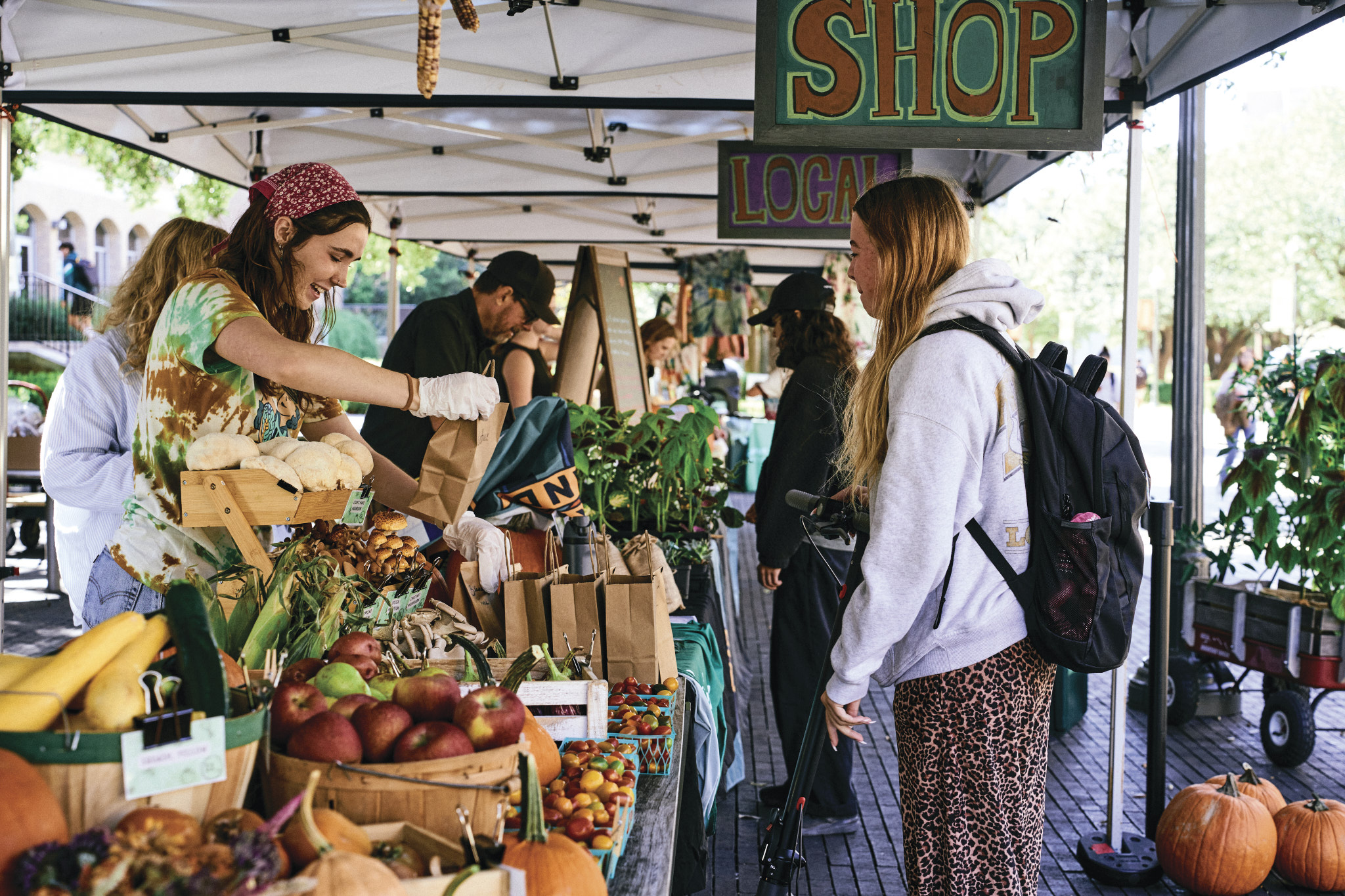
On a few Wednesday afternoons per semester, the plaza in front of Jester Residence Hall transforms into a lively marketplace. Booths overflow with fresh produce, baked goods, and plants as students gather to shop, chat, and enjoy the energy of the UT Farm Stand. This biweekly event brings campus-grown goods and local partnerships together, just steps from where students live and learn.
“The UT Farm Stand started exactly 10 years ago as a Green Fund program,” says Cecilia Raatz, sustainability coordinator for University Housing and Dining. “It was a one-time project in the spring semester of 2015, and then it was adopted by University Housing and Dining as a full-time project.”
The farm stand operates with the help of two campus gardens and a dedicated network of student volunteers who plant, harvest, and prepare produce for the market. Some weeks, as many as 45 students can be found tending the gardens under the guidance of the Farm Stand’s small but mighty staff.
For Lola Davis, a student and market team member, the experience has been transformative. “Farm Stand has changed the way that I see gardening and food and expanded my knowledge of what I think I could do as an individual and how I can empower my community,” she says.
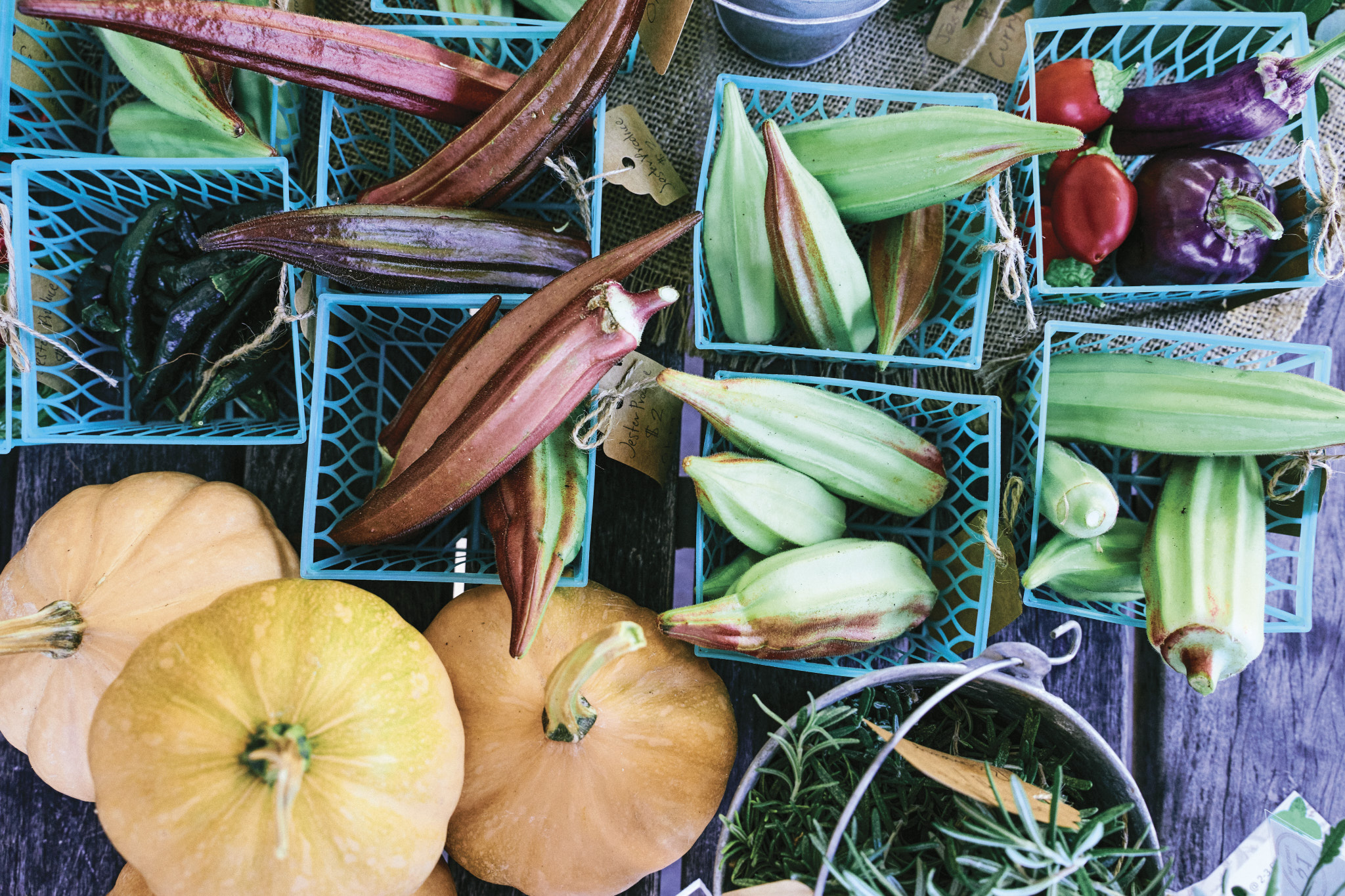
One of the most rewarding parts of the job for Davis is seeing food grown in the campus gardens make an impact on the Forty Acres. “My favorite thing that’s sold is Jester produce because it really emphasizes our local missions and initiatives to get the food that we grow in our community directly back to the community that it serves,” she says.
For Nardos Wondwossen, the Farm Stand’s zero waste student manager, that sense of connection is what makes her work so meaningful. “There’s something really beautiful about sitting down and making your dinner and realizing, Wait, I know where all this came from,” she says.
One of Wondwossen’s favorite items available at the Farm Stand, the “UTea” herbal tea blend, shows how creativity and collaboration often thrive in the program. “I think that’s the coolest thing—herbs that are grown in our garden, then dried by our team, and then turned into your daily cup of tea,” she says.
Even students who arrive without gardening experience are welcomed and quickly learn to nurture both plants and patience. “Before working here, I don’t think I had the greenest thumb,” Wondwossen says with a laugh. “It felt like
everything I touched died. And getting to learn from Scott, our garden coordinator, and learning that you don’t have to be perfect to be able to take care of something—yeah, that’s really world-changing for me.”
As the Farm Stand’s garden coordinator, Scott Blackburn has watched those lessons take root in countless students. “I think it’s a really good example of how you can take something small and make a large impact on campus,” he said.
Even after 10 years, the UT Farm Stand continues to grow—not only in the gardens it cultivates, but in the community it brings together.
CREDIT: Matt Wright-Steel