Making Headlines: 125 Years of The Daily Texan
Some coaches get grumpy in the press room after a bad loss. That is not Vic Schaefer’s style, but the UT women’s basketball coach was especially effusive after South Carolina’s 64-45 win over his Longhorns in the 2025 SEC Championship game, which was played in Greenville, South Carolina. When The Daily Texan reporter Zachary Davis asked Schaefer if the Gamecocks-friendly atmosphere had made it tougher on the Horns, the coach sidestepped the question with a query of his own.
“If I’m not mistaken, are y’all my three that drove 16 hours?” Schaefer asked, referring to Davis, BA ’25, and his Texan colleagues Anna Ambrose, BJ ’25, and photographer Charlie Partheymuller—all of whom had indeed piled in one car to make that trek from Austin.
“I want you all to know when it comes time to get a job, you put me on your résumé,” Schaefer continued. “That’s really unique, and I’m proud that you guys are here. I’m proud that you take enough pride in your job that you would do that, ’cause you don’t have to do that. And I think people need to know that. So thank you for being here.”
The moment went viral on social media and received coverage everywhere from USA Today and The Athletic to The Paul Finebaum Show and Good Morning America. It was well-earned recognition, though not necessarily because the effort was unique. Rather, it was exactly what you’d expect from staffers of The Daily Texan. Not just in 2025, but throughout the paper’s 125-year history.
As Davis posted on his X account before they made the trip, “Nothing screams student journalism more than a 16-hour drive to the SEC championship.”
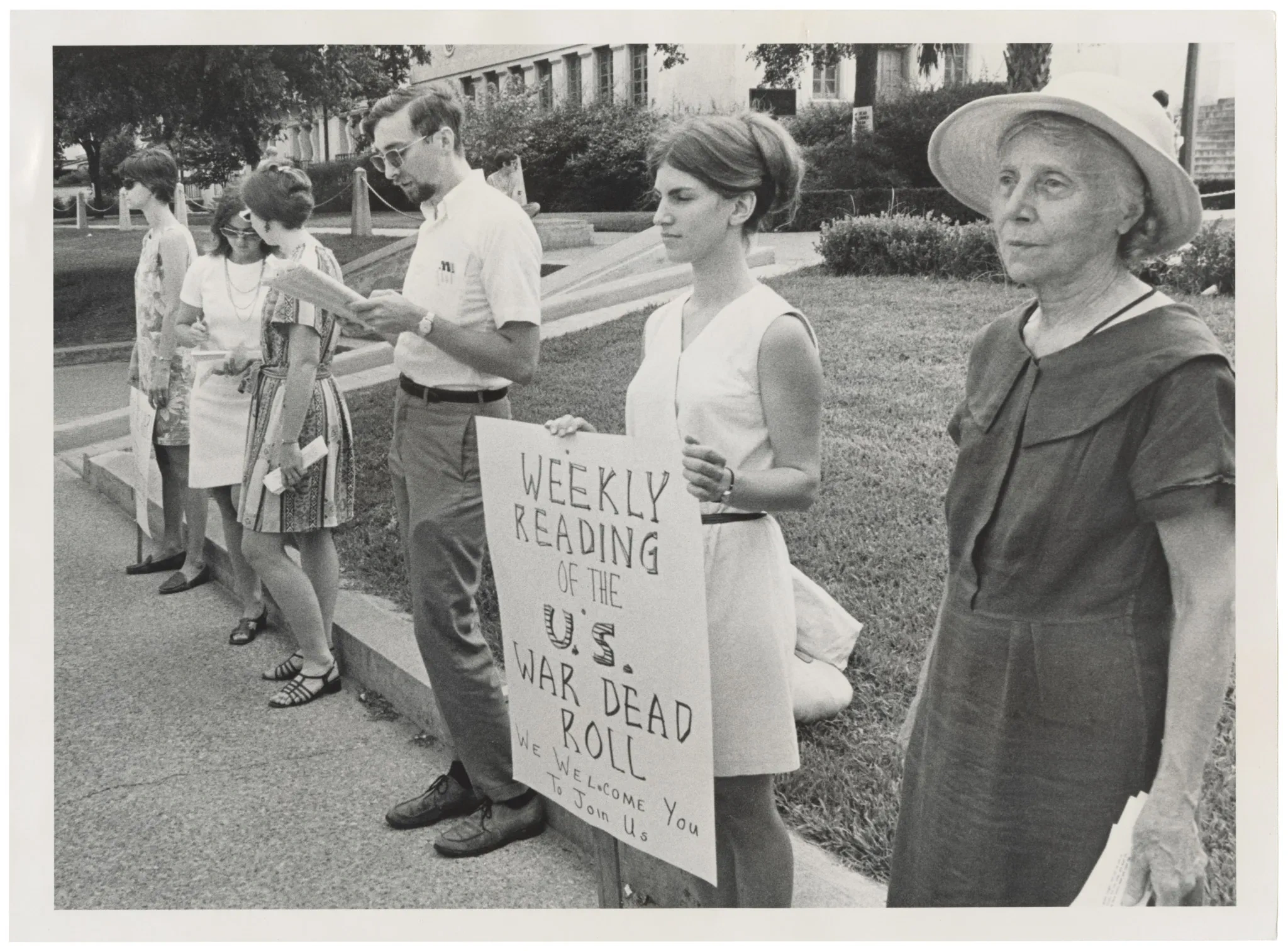
And so it’s always been when news was made—whether a major sporting championship, or more cataclysmic moments. In the ’60s, The Daily Texan reporters made similarly long trips to the March on Washington and the second Moratorium to End the War on Vietnam—often at their own expense, while also missing classes and work. Quin Mathews, BA ’74, an editorial columnist during the era, remembers some of his colleagues traveling to cover the Moratorium march by “fancy Greyhound bus” with fellow UT students, but Mathews rode with a bunch of hippies in a decommissioned school bus—paying $20 for the ride, plus $5 for food. When President John F. Kennedy was assassinated in November of 1963, the Texan chartered a plane to quickly send reporters and a photographer to Dallas, with then-editor and future Texas political journalism legend Dave McNeely, BJ ’63, writing a column back in Austin. When Apollo 13 got into trouble, Mathews; Cliff Avery, BJ ’73, Life Member; and Middy Randerson, BJ ’70, hopped into Randerson’s car at midnight, drove to Houston and secured press credentials.
This is, after all, the newspaper of such giants as McNeely; Harper’s Magazine editor Willie Morris, BA ’56; and Walter Cronkite, ’35, Life Member, Distinguished Alumnus, among many others. “The Texan comes as close to being my alma mater as anything could be,” Cronkite, who left UT without finishing his degree, told Texas Monthly’s Andy Langer on the occasion of the paper’s 100th anniversary in 1999.
Daily Texan alumni have won 29 Pulitzer Prizes, including two in 2025: Houston Chronicle columnist Lisa Falkenberg, BJ ’00—her third win—and ProPublica national reporter Cassandra Jaramillo, BJ ’16. The list of Daily Texan alumni who went into politics is equally legendary, including White House figures Bill Moyers, BJ ’56, and Lady Bird Johnson, BA ’33, BJ ’34, BL ’64, Life Members, Distinguished Alumni.

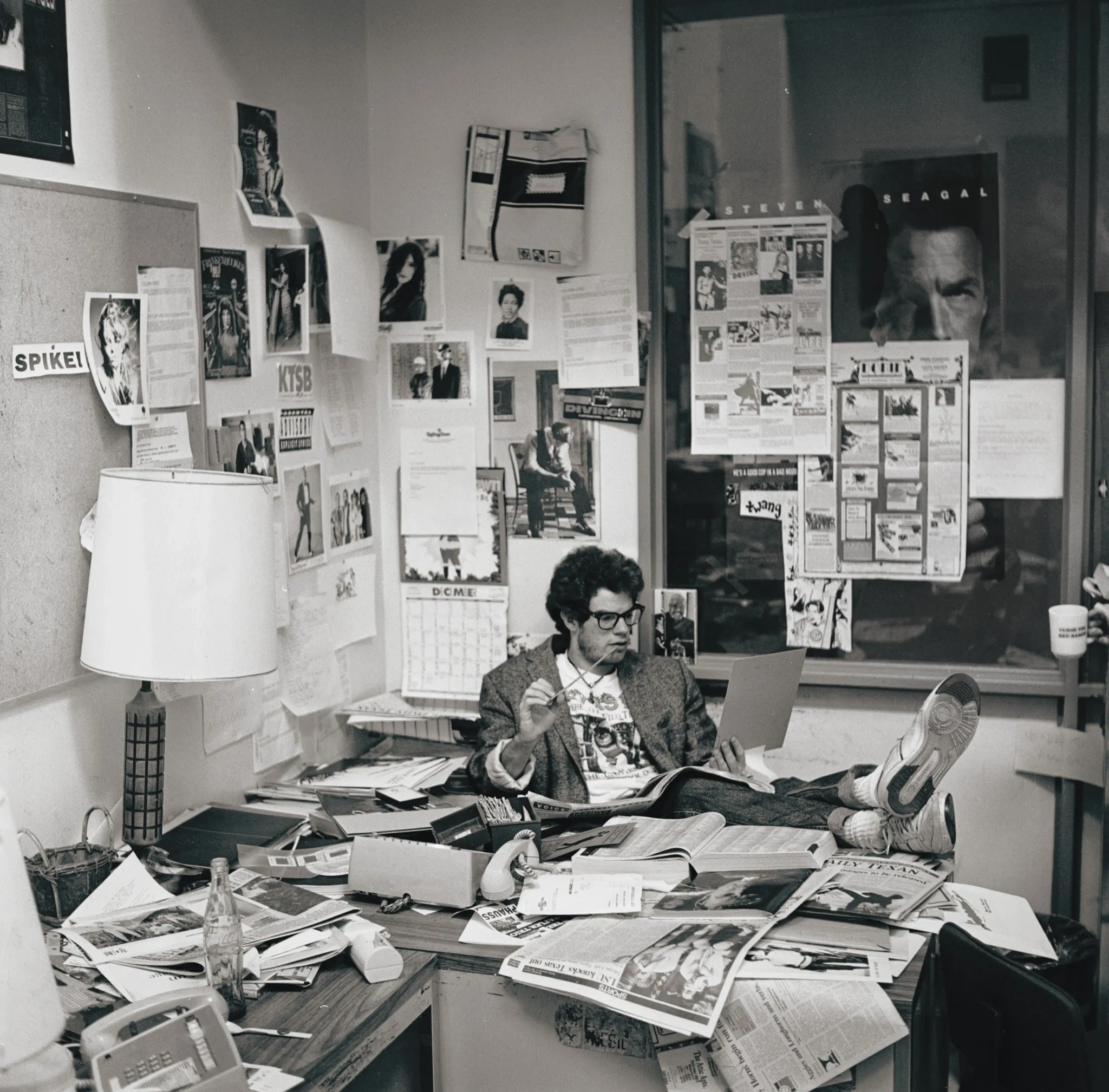
The Daily Texan has always been one of the great Texas newspapers, as well as one of the country’s great student papers. “The amount of talent in the basement while I was there was beyond belief,” says one of the Texan’s Pulitzer winners, photojournalist John McConnico, BJ ’87, MA ’94. “Every single department had multiple stars in the making. You could easily do a story on the 10-foot-by-6-foot comics room alone.” Indeed, the roster of former Texan cartoonists includes Bloom County creator Berkeley Breathed, BJ ’79, and editorial cartoonist Ben Sargent, BJ ’70—two more Pulitzer winners.
Whether majoring in communications, Plan II, or something else, students often look back on the Texan as their most important classroom. “I was never a journalism major, so everything I learned about journalism was at the Texan ,” says Lomi Kriel, BA ’04, who won a 2019 George Polk Award for her reporting on immigration for the Houston Chronicle.
“It was the most important part of my education,” echoes Quin Mathews, who went on to a career in TV news and is now a documentary filmmaker. His current project? A film about the history of The Daily Texan in conjunction with its 125th anniversary, funded by the alumni group Friends of the Daily Texan.
“I think pretty much everybody who went through there would tell you that the Texan was an important part to helping launch their career into the quote-unquote real world,” says current Friends president John Reetz, BJ ’72, who was the Texan managing editor in 1971. “Whether in journalism or something else.”
What is unique and remarkable—and also why the hoops road trip struck such a chord—is that the Texan is not only surviving but thriving at a time when the entire news biz feels precarious.
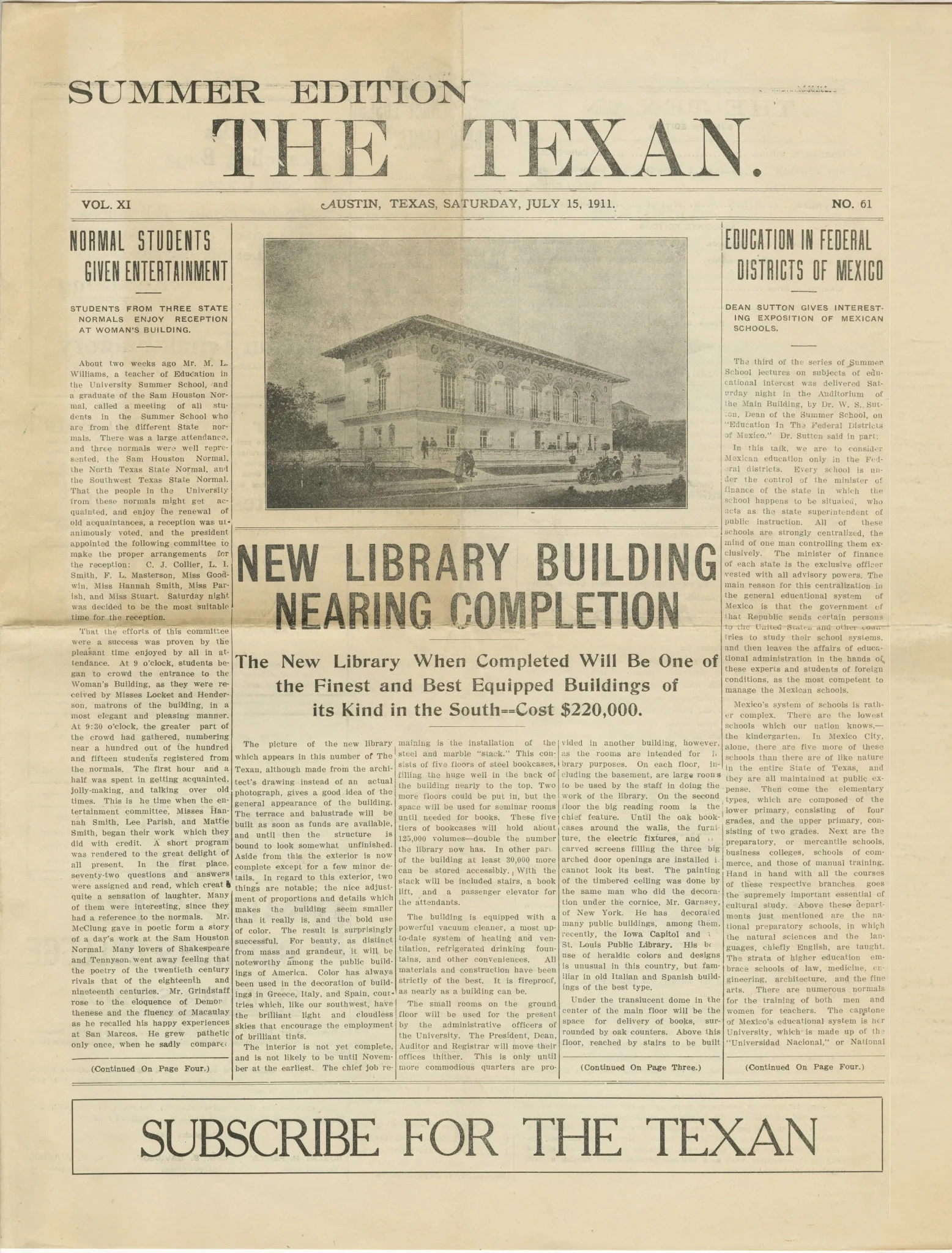
The Daily Texan celebrated its 125th anniversary on October 8. (Back in 1900, it was only published weekly and, therefore, called The Texan.) A book about the student paper, The Daily Texan: The First 100 Years, was published by Eakin Press in 1999. Authors Tara Copp, BA ’97, Life Member, and Robert L. Rogers, BA ’96, Life Member, are both former Texan editors who each wrote their Plan II thesis about the history of the paper. The cover features the front page of the March 18, 1974, edition of the paper, which put a big white box around a 1972 quote from then–University System regent Frank C. Erwin: “We do not fund anything that we don’t control.”
That issue of the Texan came out when Erwin and the regents voted to pull the paper’s funding in an expression of dissatisfaction with the paper’s coverage of University affairs. Which is to say, The Daily Texan editors were doing exactly what they were supposed to be doing as college students learning to be journalists: speaking truth to power. A combination of student protests and support from sympathetic Texas legislators put an end to Erwin’s ploy. But decades later, the paper was in another sort of existential crisis, the same one as the entire industry.
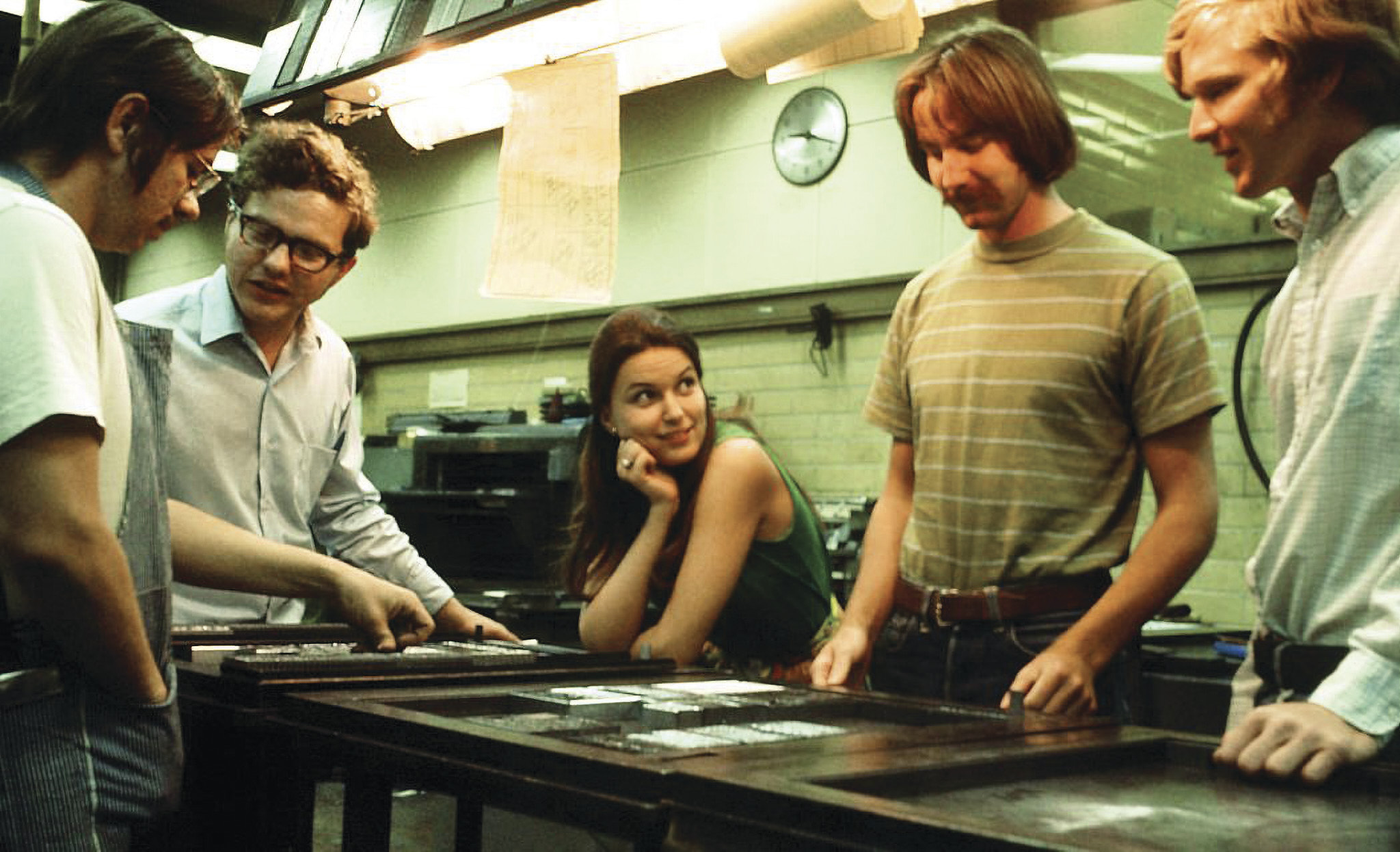
In 2009, the Texan lost a big part of its identity and history as one of the few remaining university newspapers to own its own printing press. Former UT journalism professor Griff Singer, BS ’55, MA ’72, Life Member, a key mentor to countless Texan staffers, was not only a reporter and editor in his student days, but also paid for that education by working as an apprentice printer in the press room every night. And when the Jesse H. Jones Communications Center opened in 1973, the press was right there in the same building as the newsroom. For those who worked in that basement, hearing and feeling the rumble of the machinery every day was just part of the experience, as was holding the next day’s paper in your hands.
Printing was farmed out to the Austin American-Statesman, though not for very long, as the Statesman would soon outsource its own production. The Texan is now printed by the New Braunfels Herald-Zeitung. When the Texas Student Media (TSM) board—who oversees the Texan, KVRX, and Texas Student Television—started looking for ways to cut costs, one idea was to print less often. But the physical print paper was the only thing generating significant advertising revenue. The paper’s web traffic was not especially high, as the Texan pointed out on its own editorial page at the time.
Reetz and Cliff Avery, who was the Friends’ first president, initially formed the alumni group out of concern for the Texan’s future, and to provide both symbolic and material support.
“My career ... has been in digital transformation, so I’m not a Luddite in the sense of, print is it,” says Reetz, who was the assistant managing editor of the Atlanta Journal-Constitution before working for its parent company, Cox. “Print is not it anymore. There are so many [more] ways to get information out there.”
The Texan was finally granted the time, professional know-how, and money to invest in journalism’s new era with the 2014 endowment of the Moody College of Communication, as well as bridge funding from the Office of the President. The TSM board and the professional staff (full-time, non-student workers who help run the overall operation, including advertising sales) added more people with journalism backgrounds, including people who were digital and multimedia savvy.
At the top was Gerald A. Johnson, who was originally director of Texas Student Media and is now Moody’s executive director for innovation and partnerships, with TSM and the Texan still a part of his portfolio. “Gerald was a hands-on media guy who had experience in print from the [Houston] Chronicle and also from digital,” says Reetz. “He built a very good team.”
He also built a profitable business. TSM, like any media company must these days, also has its hand in podcasts, TV, and providing services for other publications. TSM even handles a portion of the advertising sales for The Battalion, Texas A&M’s student newspaper (Whoop!) “I think it’s 10, or maybe 11 years in a row now, of profit,” Reetz says. “And that’s unheard of in student media. It’s unheard of in mainstream media, pretty much.”
The Texan is larger and more sustainable than the average big-city newspaper. Of course, its staff of approximately 400 students is entirely part-time, with only around 50 of them (modestly) paid. And “Daily” refers nowadays to online publication—a move that was made not because of the forward march of digital and mobile, but as an inevitable consequence of the 2020 COVID-19 pandemic. Since then, the print paper hits those orange boxes around campus (and other parts of Austin) on just Tuesday and Friday.
“Gerald saved the paper,” says current Moody professor of practice and TSM faculty board member John Schwartz, BA ’79, JD ’74, a former Texan editor who went on to work at The Washington Post and The New York Times before returning to the J-school faculty. “[Johnson] is really the hero of the tale. He took an organization that was in big financial trouble, and made it work.”

The Friends of the Daily Texan, meanwhile, has endowed 15 annual scholarships for current staffers, most of them also named for or funded by alumni—including Singer, Randerson, and sportswriter Kirk Bohls, BJ ’73, and his wife Vicki. Since 2018, the Friends have awarded 62 grants totaling $87,750; 45 Texan staffers applied for 13 scholarships this past year. A recent campaign to raise $500,000 for permanent endowments recently concluded.
Other fundraising has helped to cover such costs as purchasing photo and video equipment, third-party website hosting (the original Texan web server was just a computer in the basement until 2001) and yes, travel and reporting expenses for unanticipated news events. The group also helped pay for the complete digitization of the paper’s archives for UT Libraries, much to the surprise of one Redditor discussing the work of cartoonist Chris Ware. “It’s amazing that the Texan, this disposable, free student paper, had the resources to digitize all its old issues.”
John Schwartz wasn’t a student at UT during the Frank Erwin years. But Erwin was still responsible for Schwartz winding up on the Texan masthead. Schwartz had already graduated Plan II and was in law school in 1980 when Erwin died of a heart attack at the age of 60. Schwartz went down to the basement, found then–editor-in-chief Mark McKinnon, and said that there ought to be an editorial about this giant figure in the history of the University.
“Mark looked at me and said, ‘That’s great. When can you file?’” Schwartz remembers. That stopped Schwartz in his tracks, but then McKinnon, ’82, offered to work with him on it. “We sat down, and we wrote a big editorial, and it ran the next day. And I thought, I love this! I love this.”
Then as now, not all Texan staffers or UT journalism students plan to become journalists. The skills they learn—writing, interviewing, thinking critically—can translate to any career. And the actual jobs available in journalism are quite different (and far fewer) than they were in Schwartz’s era.
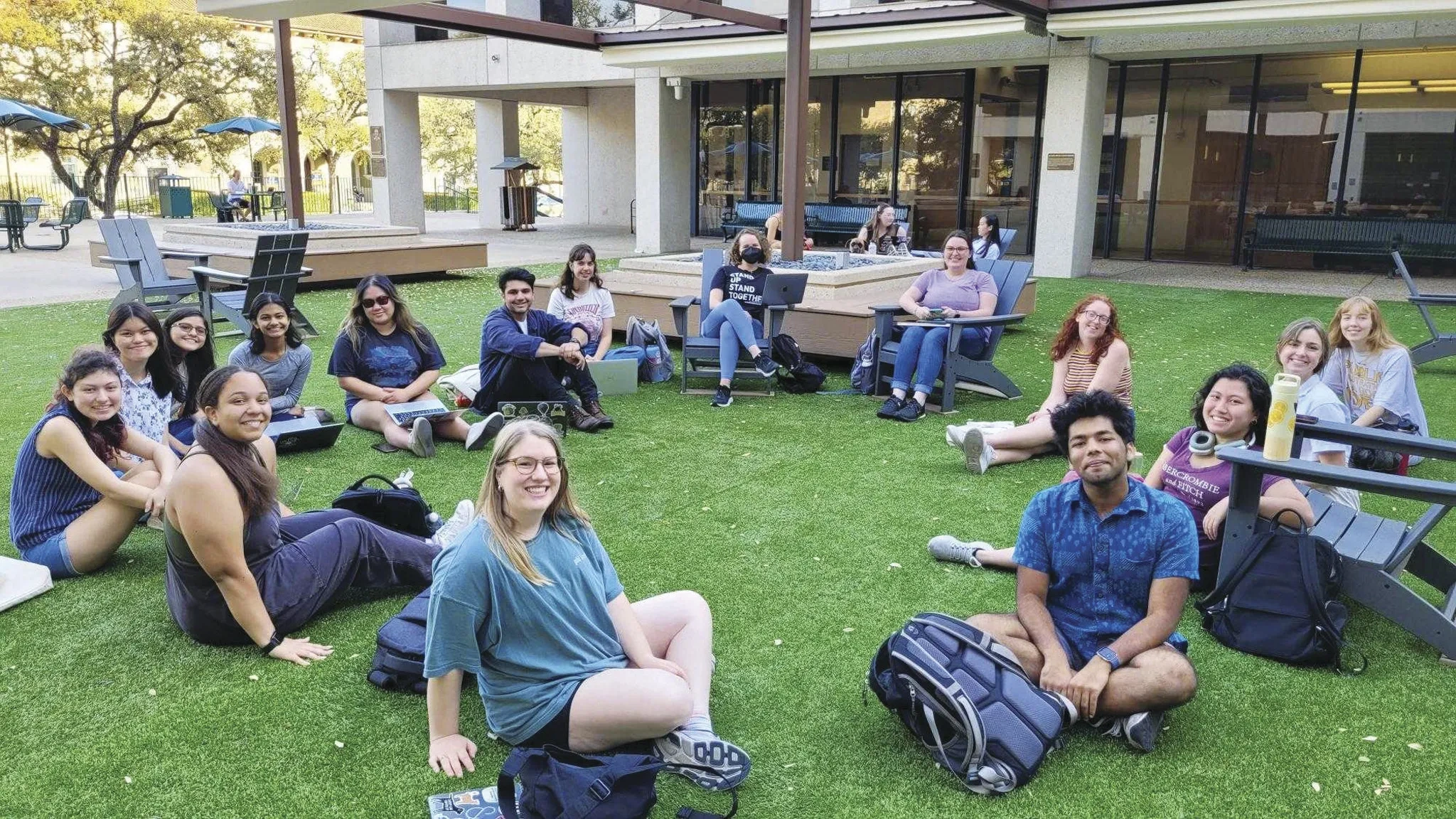
Regardless, young journos are still eager and ambitious. “They want to get out there and do it as badly as we did,” Schwartz says of his students. “Expectations have changed for a lot of people, but the students who want to be journalists are burning to do this.”
Quin Mathews, the Texan alum and documentary filmmaker, likes to say that “jobs suck. Work is great.”
“You can’t count on a job in this business anymore, but you can count on work,” he says. “You have to make your way. And I think they’re learning that. I can’t help but be optimistic seeing the young people who are putting out the paper.”
And the website. And social media. And anywhere else where UT students and Texas Exes get their news.
And of course, when the 2025 UT women’s basketball team bounced back from that SEC championship loss to make it to the Final Four in Tampa, The Daily Texan coverage team was right there with them, except this time, with a little help from the Friends of the Daily Texan, they made the trip by plane.