A New Mascot Wants You to Protect Waller Creek
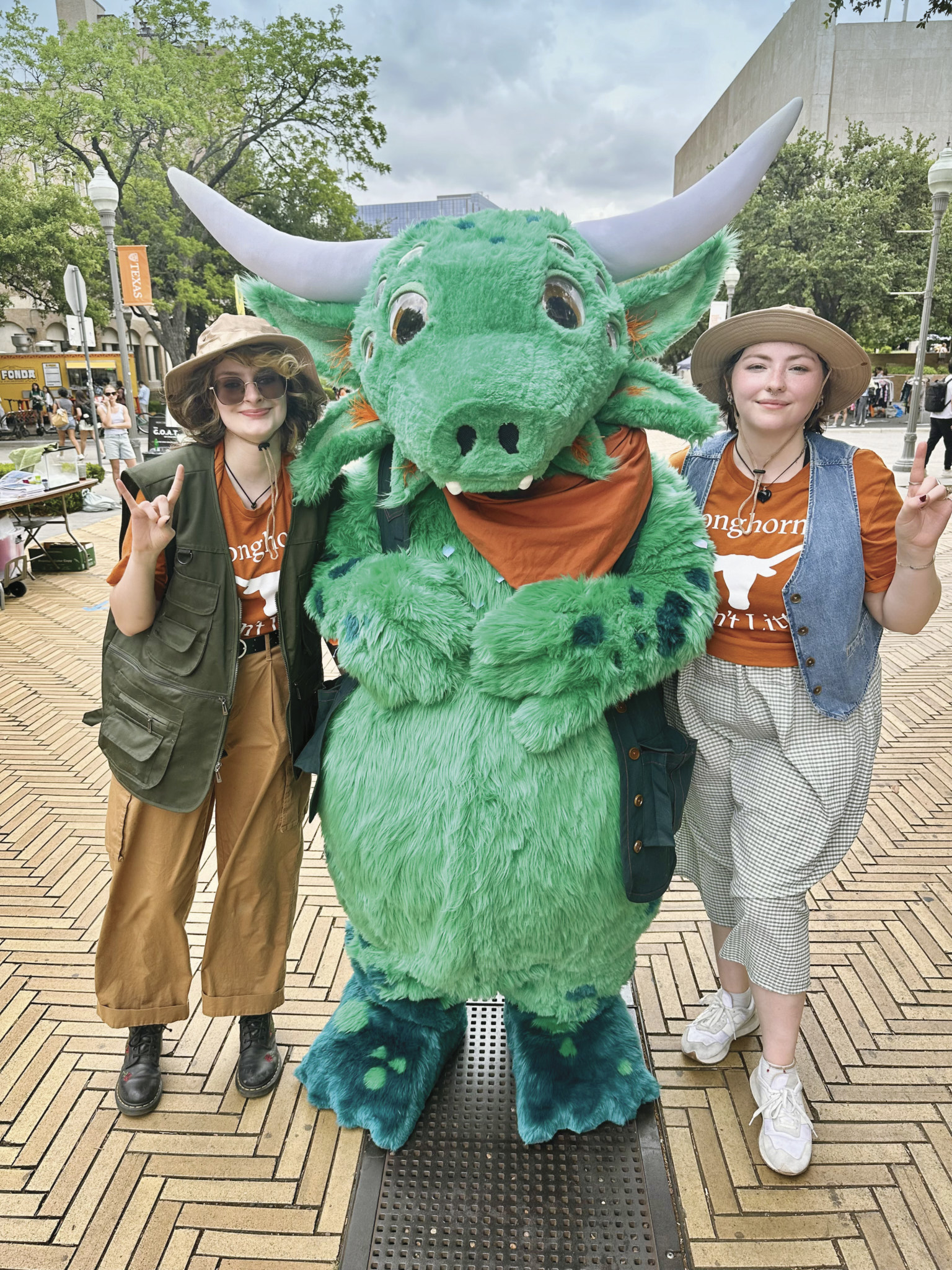
There’s a new mascot on campus. And no, he’s not a bovine. Not entirely, anyway. Creeky the Creek Monster is part longhorn, part salamander, and all about sustainability. At 7 feet tall with a massive tail and wearing a fishing vest with a burnt-orange bandana, the unique creature makes an unforgettable impression. He doesn’t speak, but his message is clear: Please don’t litter.
Creeky’s creation was years in the making—a partnership between the College of Fine Arts, Moody College of Communication, UT’s Office of Environmental Health & Safety, hundreds of students, and a pair of UT alumni. His purpose is to remind the Forty Acres that everyday activities affect the fragile ecosystem of Waller Creek, the watershed and wildlife corridor that runs along the eastern edge of campus.
The concept for a creek monster first surfaced in 2019, when Waterloo Greenway Conservancy invited Karen Maness, an assistant professor of practice in the College of Fine Arts, and her class to create a temporary art installation for Creek Show, the annual public art celebration that illuminates Waller Creek each fall. Together, the students created the Creek Monster Habitat, a multisensory installation that imagined the dwelling of a mythical creek guardian while underscoring the need for community stewardship of the creek. More than 60,000 people attended that year’s Creek Show and interacted with the art.
That project laid the groundwork for what came next. The following year, Maness and a new class set out to rebuild the installation along the creek on campus for Earth Day. At the same time, Valerie Salinas-Davis, BJ ’85, an assistant professor of instruction at the Stan Richards School of Advertising & Public Relations, launched her inaugural environmental communications class. Maness and the creek monster installation became a class client. “It was my student’s job to promote the creek monster sculpture on campus,” Salinas-Davis says.
The student-run campaign began with market research, which found that one in three UT students admitted to littering, and only half were even aware of Waller Creek. Salinas-Davis challenged her students to find a way to make watershed protection visible, and the “Longhorns Don’t Litter” campaign was born—but it needed a messenger.
Inspired by the creek monster art installation, the students set out to create a spokes-creature for the campaign that could effectively deliver the message. They wrestled with questions such as, ‘What does he look like? What’s his origin?’ Salinas-Davis says the questions were tricky to answer: “How do you take an abstract sculpture and turn it into a University mascot?”
Out of that challenge came the creek monster’s fabled backstory. Originally a benevolent spirit of Waller Creek, Creeky is said to be as old as the limestone that cradles the water’s edge. As campus construction boomed and major projects sprawled east, Creeky awoke from his slumber and transformed into a guardian on a mission to protect the watershed.
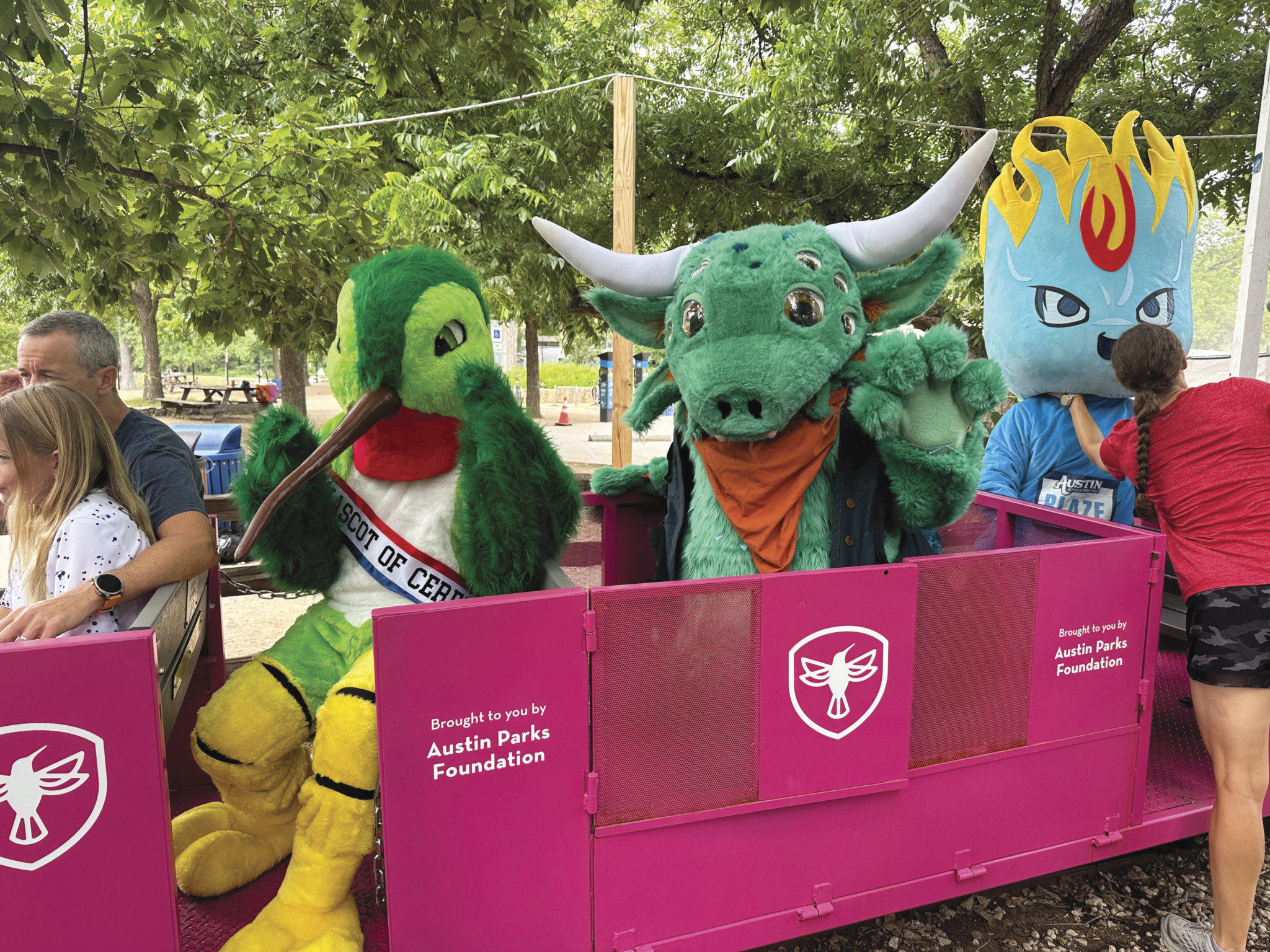
The monster, the myth, and the message were in place. Now the class needed to bring Creeky to life. They turned to Hook & Eye, a custom fabrication studio founded by alumnae Emma Craig, MFA ’22, and Lindsey Thurston, MFA ’21, both of whom worked on the original creek monster habitat project as students. “I knew they would really understand Creeky’s true essence,” Salinas-Davis says. Students visited the studio to see the design process firsthand and learned what it takes to translate an idea into a large-scale figure. And with the help of a Green Fund grant from the Office of Sustainability, Creeky was born. “The creek monster evolution is one of the hardest things I’ve ever worked on because it was so abstract,” Salinas-Davis says. “It’s been a long road, but well worth it.”
Creeky made his public debut on Earth Day of 2025, first on KVUE news, then at a campus event. That same week, he surprised more than 300 kids at Maplewood Elementary. The appearance was such a hit that Austin ISD requested an ongoing partnership to help teach students about watersheds.
With more than 30 years of experience in environmental communication, Salinas-Davis learned what works. “What we love about mascots is that they’re a spectacle. They draw attention, and they’re fun. They’re not cliché—they’re creative,” she says.
Today, the Creeky campaign officially lives with UT Environmental Health & Safety. Claire LeGrow, BS ’16, an environmental specialist with the department, serves as both client and advisor to the Longhorns Don’t Litter student club, which now manages Creeky’s outreach and appearances.
Creeky is more than a mascot. He’s a symbol of student creativity and environmental stewardship. He also shows what can happen when professors, students, staff, and alumni come together behind a shared cause. And for Salinas-Davis, Creeky’s mission can be summed up in just three words: “Longhorns don’t litter.”
CREDIT: Valerie Salinas-Davis