The Way Back: Hands of Time
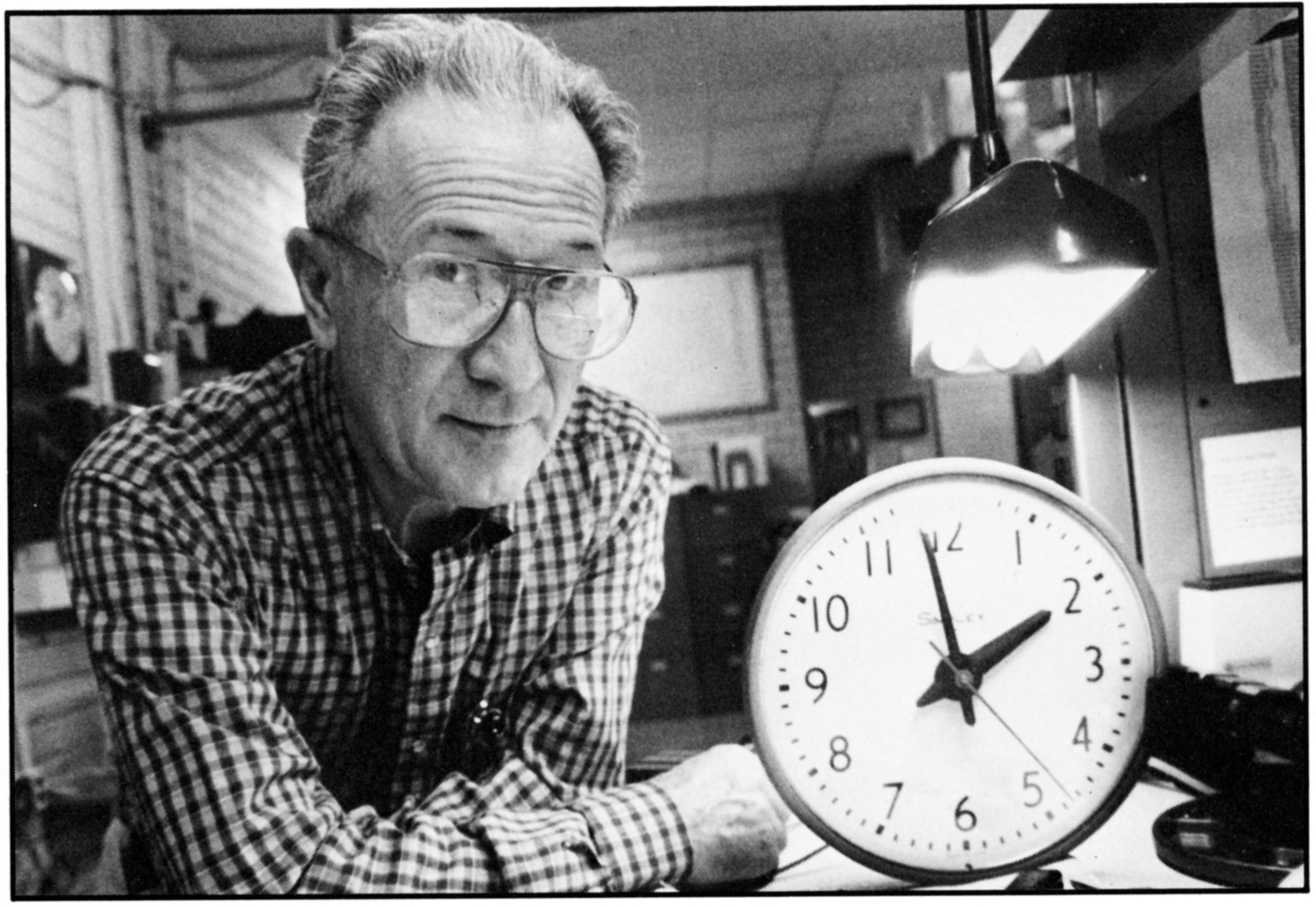
The tick-tock of 3,000 pendulum clocks might be enough to drive someone mad. But not UT’s longtime communications technician, Guillermo Rosales, who for decades managed the University’s campus clocks. It was just part of the job.
Maintaining the clock system at the time was a less-than-ideal manual endeavor, Rosales told the Cactus yearbook in 1991—especially during the biannual time change. “We had to go to most of the buildings and reset the pendulum clocks by hand. We did that for every clock,” Rosales said.
Aside from the twice-a-year need for a reset, the old clocks had quirks. “[The] master clocks and pendulum clocks had been working since 1932,” Rosales said. “We didn’t have new parts for these clocks because they were so old.” And when the aging clocks would inevitably break, the skilled Rosales would build new parts.
There were thousands of clocks on the Forty Acres back then, and Rosales cared for all of them, including the Tower clock. But the enterprising technician knew there must be a better way, so Rosales created a new campus-wide digital clock system. “Now all I do is change the time of the master, and that’s it.” Rosales said. The timekeeping transformation was celebrated by the University, and his legacy was revisited earlier this year in a story by Michael Barnes for the Austin American-Statesman.
The Tower clock, built by IMB in 1936, is not entirely on a digital system and requires manual care—a job that Rosales delighted in during his tenure. “I try to keep problems away from it by cleaning and oiling and keeping it shiny,” he told the Cactus. “I wish that when I retire, someone will put as much love into that clock as I’ve put into it.”