The School of Civic Leadership Receives a Major Investment for Its New Home
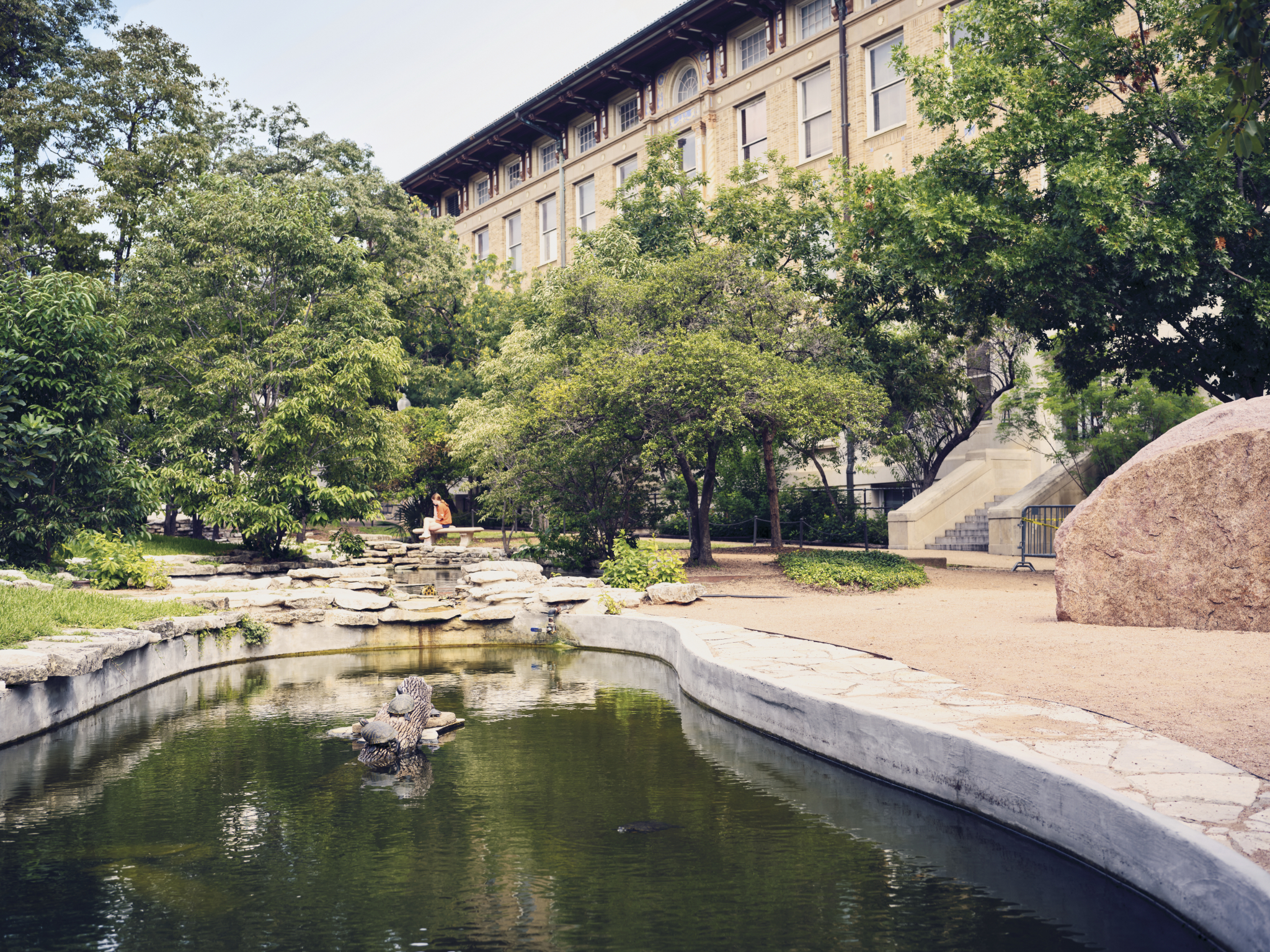
The University of Texas System Board of Regents is investing $100 million in a permanent home for the School of Civic Leadership. The school will relocate to the historic Biological Laboratories building, which will undergo a major renovation with the support of the investment. The project is expected to break ground in summer of 2026.
The new building is a welcome move for the school, which currently operates out of Littlefield House. “We’re busting at the seams,” School of Civic Leadership dean Justin Dyer, MA ’08, PhD ’09, says. The school is welcoming the first 100 students to its civics honors major this fall and plans to add 100 more students annually for the next four years. The students will attend classes in satellite classrooms across campus until the project is complete.
Dyer says anticipating the school’s growth will play a role in the design and planning of the building. “We want to have spaces for events, for lectures, and to have collaborative areas that bring faculty and students together in productive and fruitful ways.”
The move marks the end of an era for the historical Biological Laboratories, also known as “BIO.” Designed in 1924 by campus architect Herbert Miller Greene, the building has long housed groundbreaking scientific research. The investment from the Regents will support the relocation of existing programs into more modern facilities.
Dyer says the BIO building represents a thoughtful time in architecture, and he hopes the renovation will not only honor that era, but reflect the mission of a civics education. “I hope that we can design the building to stand as a reminder to students about why they’re here, why the School of Civic Leadership exists, and that it points faculty and students to something beyond themselves,” Dyers says.
Established by the Board of Regents in 2023, the School of Civic Leadership offers classes in civics, history, economics, political philosophy, and law. In addition to its civics honors program, the school will soon roll out programs including a minor in philosophy, politics, and economics in collaboration with the College of Liberal Arts. The school is expected to hire 20 tenure or tenure-track faculty by 2026.
“This investment will bring renewed purpose to one of our most historic campus buildings as home of the top civics program in the country,” said interim president Jim Davis, BA ’96, at the announcement ceremony in May. “It will be exciting to see how our students and faculty use this building to impact our state, nation, and the world.”
CREDIT: Matt Wright-Steel