Before a Longhorn's Play Was a Hit on Broadway, It Was a Hit in the Classroom

Breaking through to Broadway is a level of theatrical prestige reached by a talented and lucky few. And for playwrights, the odds of making it to “The Great White Way” are especially slim given that only about 30 shows run throughout a season, many of them revivals or long-running hits with no certain closing time.
So, for Kimberly Belflower, MFA ’17, to land her play, John Proctor is the Villain, on Broadway is impressive. But for the play to rack up sold-out shows, national awards, and a movie deal (with Tina Fey and Marc Platt producing) is quite an extraordinary feat for the Longhorn playwright.
The New York Times called Belflower’s work, “thrilling and urgently necessary.” Variety crowned it “the best play of the season.” And the Tony Awards bestowed it with an impressive seven nominations, including “Best Play.”
Commissioned by the Farm Theater’s College Collaboration program in 2018, each role was originated by college students who were a close age match for their characters. Set in a rural Georgia town in 2018, the play follows a group of girls in their junior year of high school, coming of age and navigating friendships as the #MeToo movement unfolds, and scandals implicate the trusted adults around them. All the while, they are reading Arthur Miller’s 1953 play The Crucible in English class and reinterpreting the canonical play’s characters—such as the titular John Proctor—and its representations of integrity and witch hunts.
For Belflower, working with college students meant the script development process had a built-in flexibility: “I find that college-aged theater artists are so game, they are so willing to just dive in headfirst, they want to play and experiment ... it feels very scrappy and immediate and fun.”
Now a professor of playwriting at Emory University, Belflower wants to do more. “Educational spaces are so untapped as resources for new play development. I’m trying to get more of my playwright friends to come develop work at Emory, to use our spaces, and to use our students and local theater actors,” she says.
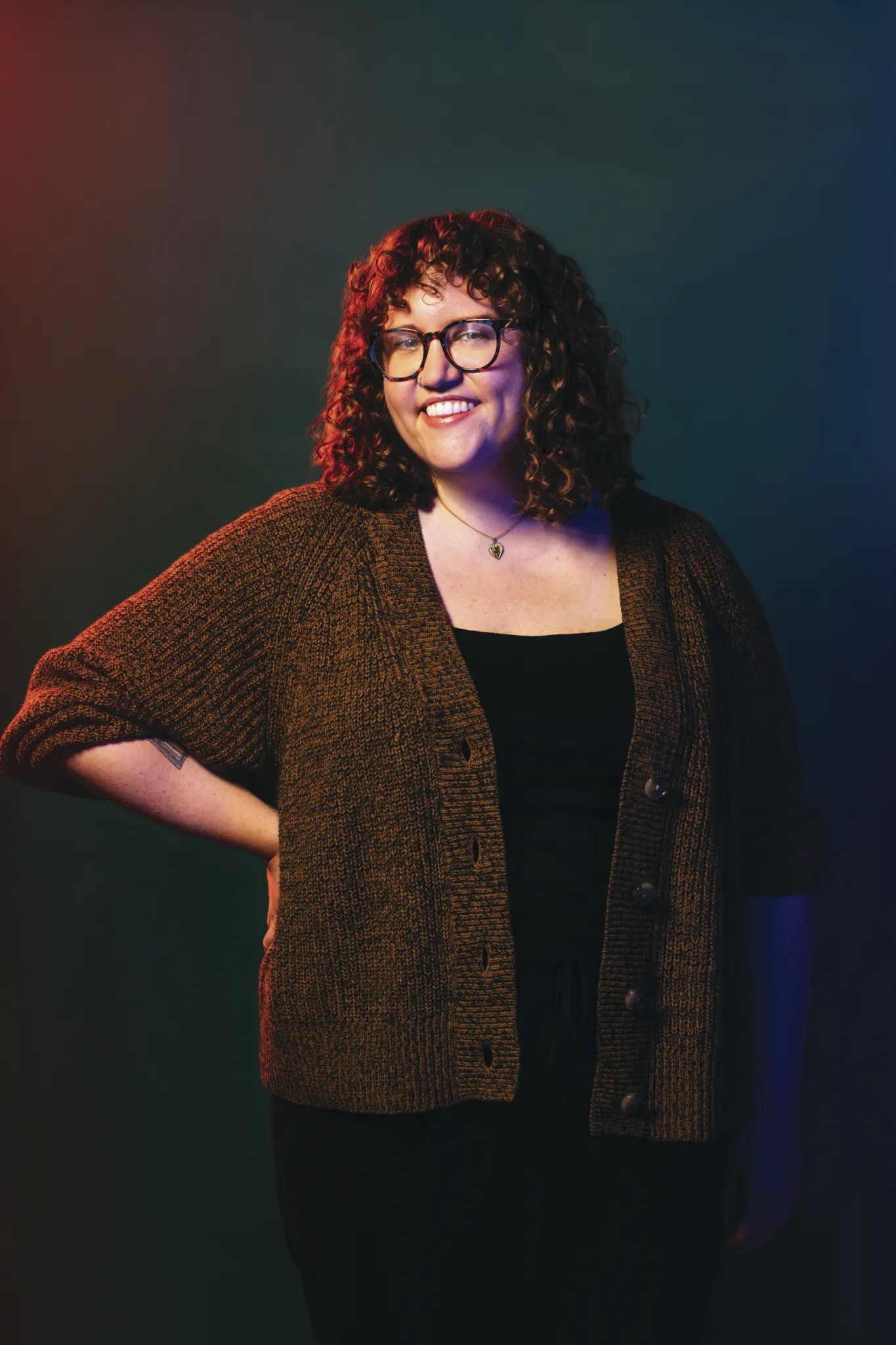
Her enthusiasm for working with college students and in university spaces has roots in her time at The University of Texas. MFA playwriting students work with undergraduate actors to produce original plays for the biennial Cohen New Works Festival and annual UT New Theatre Festival. “I remember, some of the other playwrights were like, ‘Well, I really need two 60-year-old actors,’ and I was like, ‘Well, all of my characters are teenagers, so this works out great for me,’” Belflower laughs.
Kirk Lynn, BA ’93, MFA ’04, Life Member, an associate professor of playwriting and directing at UT, says that in the Cohen New Works Festival, “the students themselves select the work.” When Belflower was a student, he recalls, she collaborated on a piece that centered on young women’s fandom, and the ways girls’ interests are often dismissed. Fittingly, it was “a piece that maybe a bunch of grumpy old men professors would not have picked for the season,” Lynn recalls, but through the process of selecting and developing works that spoke to their shared experiences, “the students found their own voice; they learned to write about the community they wanted to speak to.”
John Proctor is the Villain still had to go through a metaphorical crucible before reaching Broadway. And as the play developed, it changed. “At the first production, the play had an intermission, then in the second production, I was still revising, and I cut 15 minutes, so we didn’t have to take an intermission anymore,” Belflower says. “There are entire scenes that have been cut. There are character arcs that have been really refined and changed.”
Then, the pandemic surged, and the theater industry all but shuttered. “There was this moment when professional theater was in this really precarious situation where we didn’t know when things were going to come back or how much they were going to come back,” Belflower says. “And it felt very scary.”
But college campuses were reopening, and theater programs needed work to produce. Even before the pandemic, word had spread among educational theater spaces that John Proctor is the Villain was a timely play with a lot of roles for young people.
With inquiries from colleges coming in, and professional theater on pause, Belflower decided to “open the floodgates and let schools do it.” In doing so, she bucked the usual route of withholding the rights to the script until a professional production had been staged. Her play didn’t premiere in a professional theater until 2022, when it was staged by the Studio Theatre in Washington, D.C.
Belflower has no regrets. “Everything felt so undependable back then, and I think it ended up being the best thing for the play,” she says. “Being on Broadway now, almost every time I go to see the play, I meet someone who worked on it at their college, or at their high school, or they saw a local college production, and it’s built this grassroots fan base.”
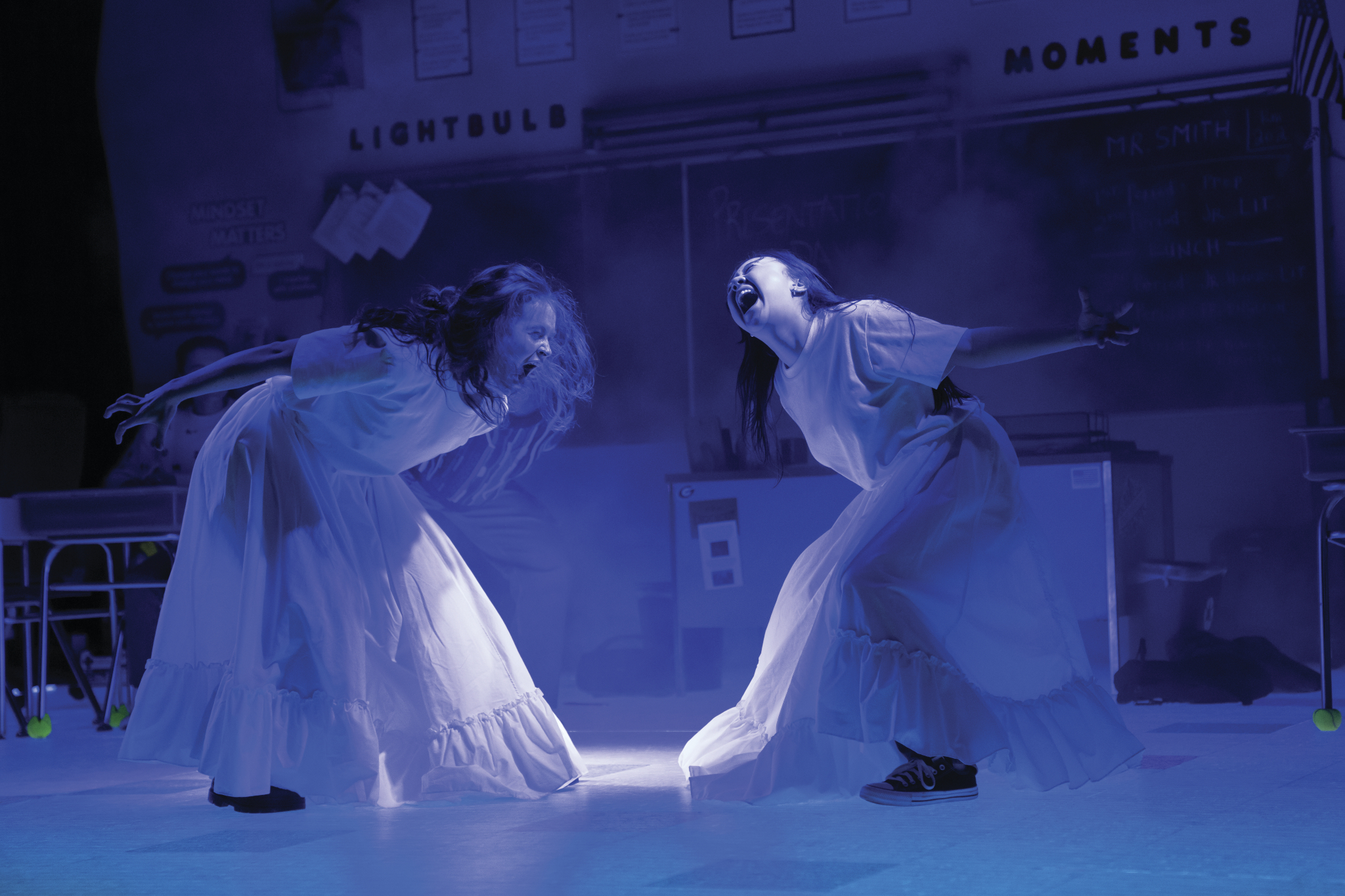
Belflower isn’t surprised that the play resonates with national audiences. “It’s been done in schools in the south and the west, in New England—I think that clued me in that it was going to work with a broader commercial audience.”
Indeed, the play opens a national conversation. Just as the characters in the play are processing #MeToo through the lens of The Crucible, Belflower’s John Proctor is the Villain offers an opportunity to process unfolding moments in American culture through fiction by raising questions about “interesting and chilling instances of history repeating itself.”
It’s this kind of exploration and questioning that the UT playwriting program champions. “The central tenet of the playwriting program is that we’re inquiry-based,” says Lynn. “We don’t teach that there’s one way to write plays. Rather, we help the students form the kind of questions that they want to answer artistically.”
CREDITS: JULIETA CERVANTES (2), LOLA SCOTT