A New Pub Puts Women's Sports Front and Center
It’s been a remarkable year for women’s sports on the Forty Acres.
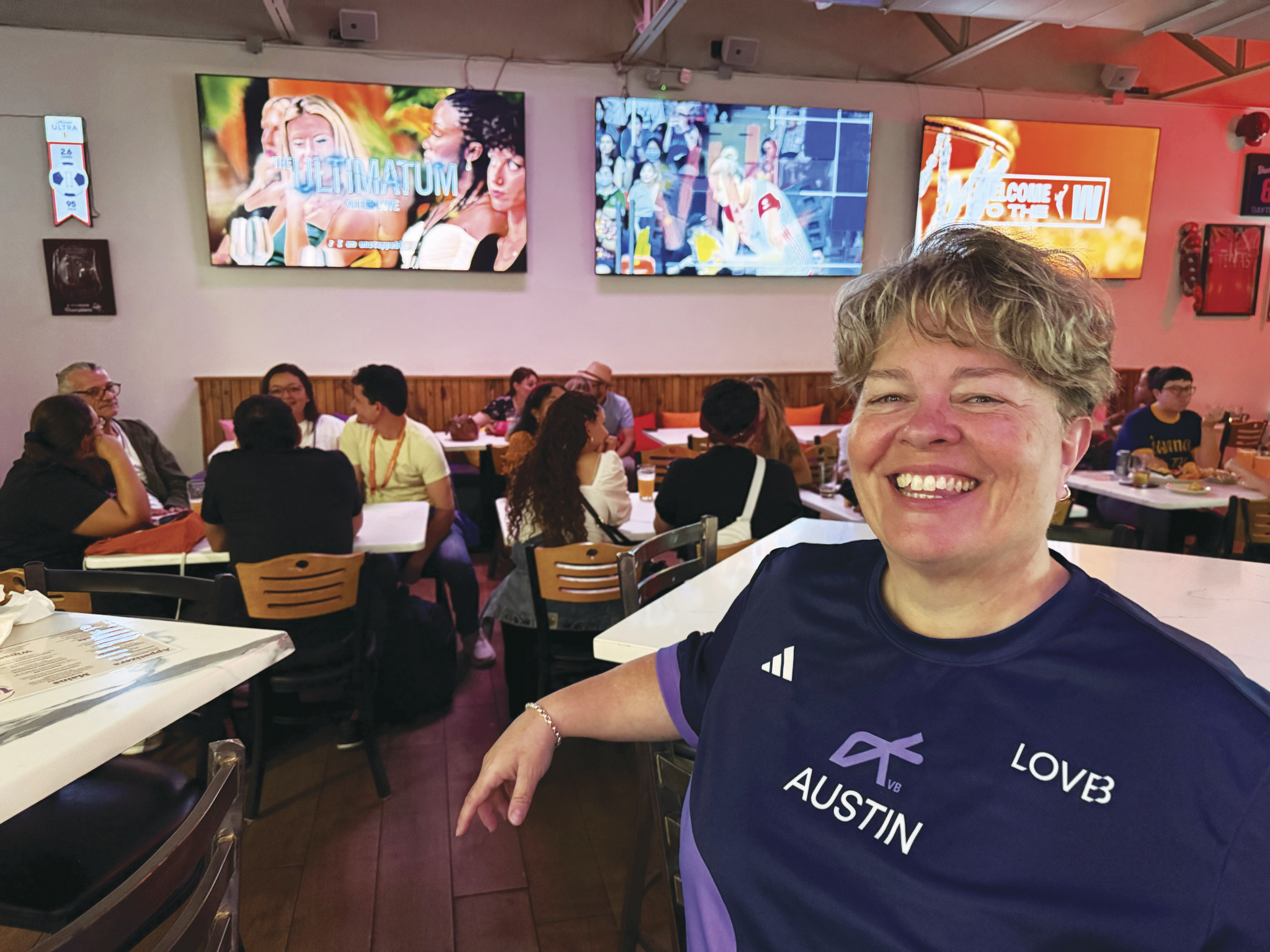
Texas Softball won its first NCAA Women’s College World Series, dominating rival Texas Tech in a best-of-three series. The women’s basketball team reached the Final Four for the first time since 2003, beating TCU in the Elite Eight to get there. Two women’s soccer players who excelled with UT in 2024 went pro, with Mia Justus, ’24, joining the Utah Royals and Lexi Missimo, BS ’24, becoming the face of the Dallas Trinity, a brand-new USL Super League team. And on March 19, a women’s sports bar called 1972 opened on the Drag, providing fans a place to gather, watch, and revel in the burnt orange glory.
For co-owner Debra Hallum, opening and operating the sports bar is a second act. She transitioned from 30 years of corporate management to transform her love of sports into a new vocation. In 2022, Hallum and her wife, Marlene du Plessis, learned of a new bar in Portland, Oregon, focused on women’s sports, called Sports Bra, and were immediately intrigued.
“As much as we love sports, and living in a sports town, we thought, Oh my goodness, this would be amazing,” Hallum recalls thinking about how the concept might work in Austin. “We weren’t sure what the bar was going to show at the time. There weren’t a lot of women’s sports on television. So as much as we loved it, we said, this would be a great idea. Let’s watch and see what happens.”
What followed was a ripple, if not an outright wave, of women’s sports–focused bars opening across the nation. When Sports Bra opened in 2022, the business was touted as the first of its kind. Since then, nearly a dozen more women’s sports bars have opened—from Long Beach to Brooklyn. And more are on the way.
Meanwhile, both the Women’s National Basketball Association (WNBA) and National Women’s Soccer League (NWSL) franchises were shattering viewership records and drawing historic crowds.
The zeitgeist led Hallum and du Plessis to take field trips to two of those new women’s sports bars—Rough and Tumble Pub in Seattle and Whiskey Girl Tavern in Chicago—to refine their vision of what an Austin women’s sports bar could be.
When the couple’s realtor alerted them to a West Campus restaurant for sale last year, requiring considerably less investment than they’d projected to create such a space in Austin, they decided the time was right. They set upon a whirlwind remodel that started in early February and finished just in time to open for March Madness.
“It was an aligning of the stars,” Hallum marvels, noting that the Longhorns’ tournament run helped keep the new venue’s indoor capacity of 85 (plus a covered back porch to accommodate overflow) “packed and crazy” in its first few days of operation.
1972 is named for the year that Title IX set the transformation of women’s college sports in motion, which Hallum heralds as “significant” despite taking some schools years to implement it. That spirit of creating opportunity extends to the menu, created by chef Allison Hugunin and executed by chef Mitzi Shaw, and the bar offerings, featuring female brewers and distillers, with signature cocktails such as the Jody (Conradt), Billie Jean (King), and Simone (Biles) honoring women’s sports pioneers with a Texas connection.
(King’s famed 1973 “Battle of the Sexes” tennis match with Bobby Riggs happened in Houston’s Astrodome, Hallum explains, adding, “Come on, she’s just an icon. She gets her own drink no matter where she’s from.”)
Lifting up local women’s sports and lesser-known women’s sports are priorities for the couple. Du Plessis, who grew up on rugby in South Africa, even moonlighted with the Austin Valkyries rugby team for a few months upon her moving to Austin in 2001.
Local teams including the Austin Outlaws (tackle football), Austin Rise (soccer), and Austin Torch (ultimate frisbee) already have attracted watch parties at 1972. Haller is also hoping to grow interest in League One Volleyball, a fledging pro league that includes a Spurs Sports & Entertainment–backed Austin team with several former Longhorns on its roster.
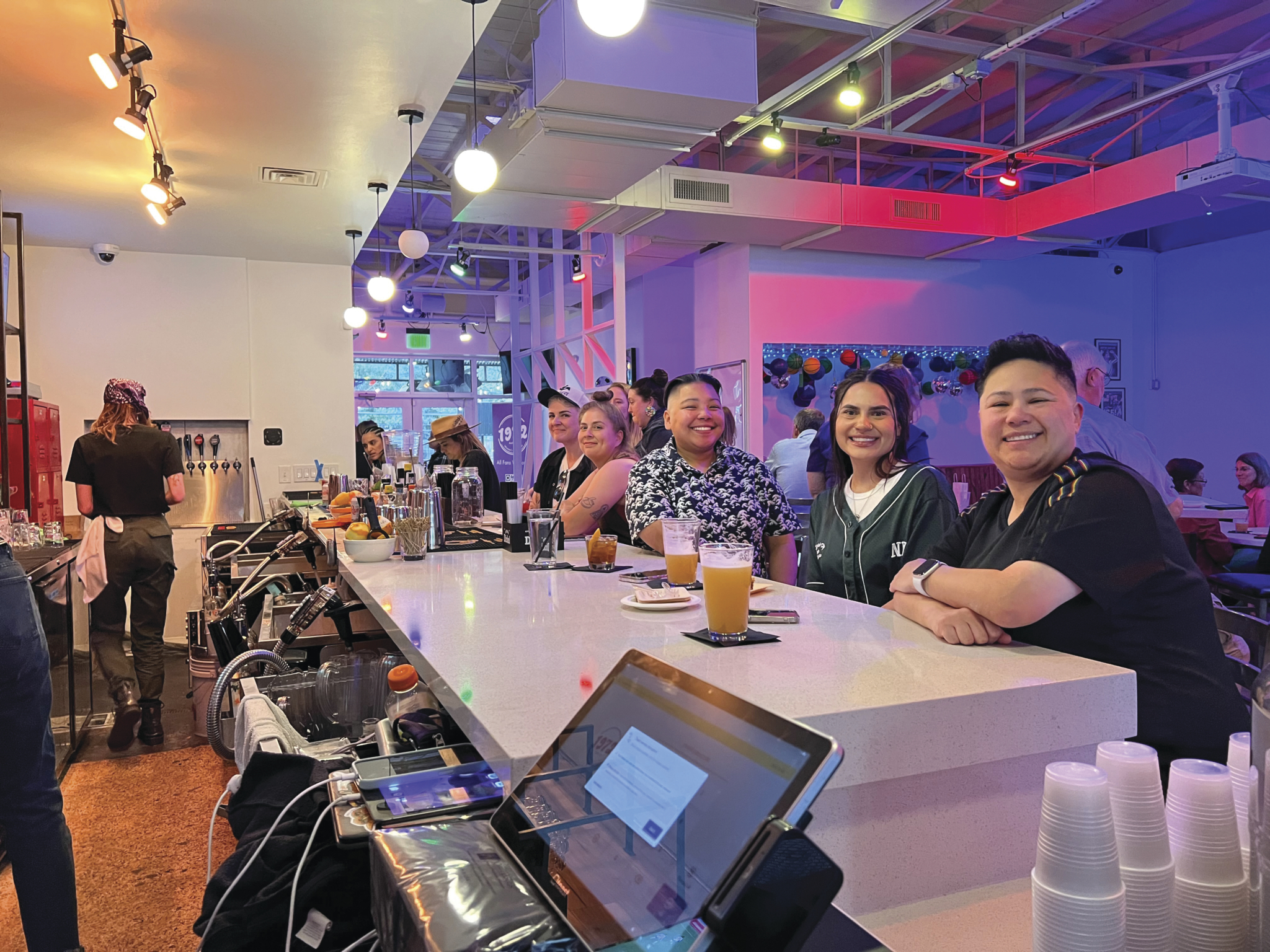
For Hallum, as she learned from A Bar of Their Own owner Jillian Hiscock during a Twin Cities visit to prep for 1972’s opening, finding streams of women’s sports and securing licenses to air games is a challenge that sets women’s sports bars apart from that focus on men’s sports.
“Those main networks that people watch every day, they have really stepped up, and they show more content today,” Hallum observes, noting that the landscape’s changed considerably since Sports Bra first opened.
It’s still not as easy as finding men’s sports on cable or streaming, but networks such as the new Whoopi Goldberg–led All Women’s Sports Network and leagues like the NWSL are making it easier for 1972 to put women’s sports on its five screens by making the content more accessible.
Cassie Livingston, who treks about 75 minutes to 1972 from Harker Heights, says she likes the bar simply for “being able to watch women’s sports without having to ask if they’ll turn it on.”
And Rhonda Fanning, who works across the street from 1972 as a radio producer, notes, “I come here even if I don’t know what’s going to be on because I’ll be surprised by discovering a new sport.”
That wide access to programming comes just in time, as the Longhorns prepare for what is expected to be another stellar year of women’s athletics.
UT’s strong women’s sports program and loyal fanbase remains central to 1972’s plans—even when those games involve rivals who attract their own local fans to share space with the Longhorn faithful.
Hallum laughs about the recent NCAA softball championship, which brought both UT and Texas Tech fans into their space as the teams progressed through the tournament—and then, when they met in an epic final series, filling 1972 with a crowd divided in red and burnt orange sides for all three games.
“They would yell and scream when they had something great and positive happen,” Hallum says of both fan bases, who rollercoastered their way through the series yet bonded over the fact that a Lone Star State team would inevitably raise a trophy. “They were talking to each other … making friends, meeting people, nothing harsh or angry about it. It was just a lot of fun.”
CREDITS: Krissi Micklethwait, Courtesy of 1972