UT Paleontologist Discovers Fossils in the Caverns of Central Texas
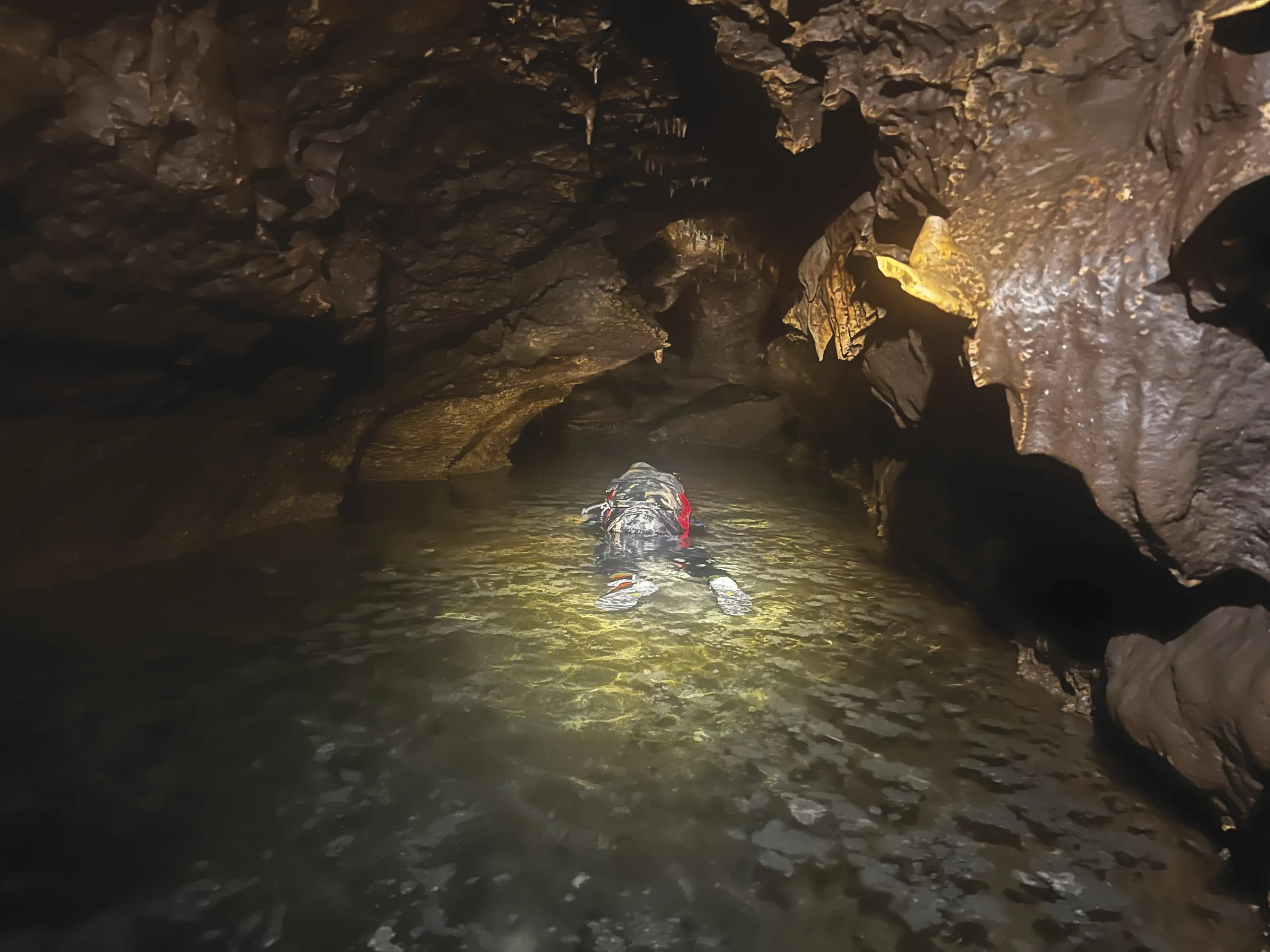
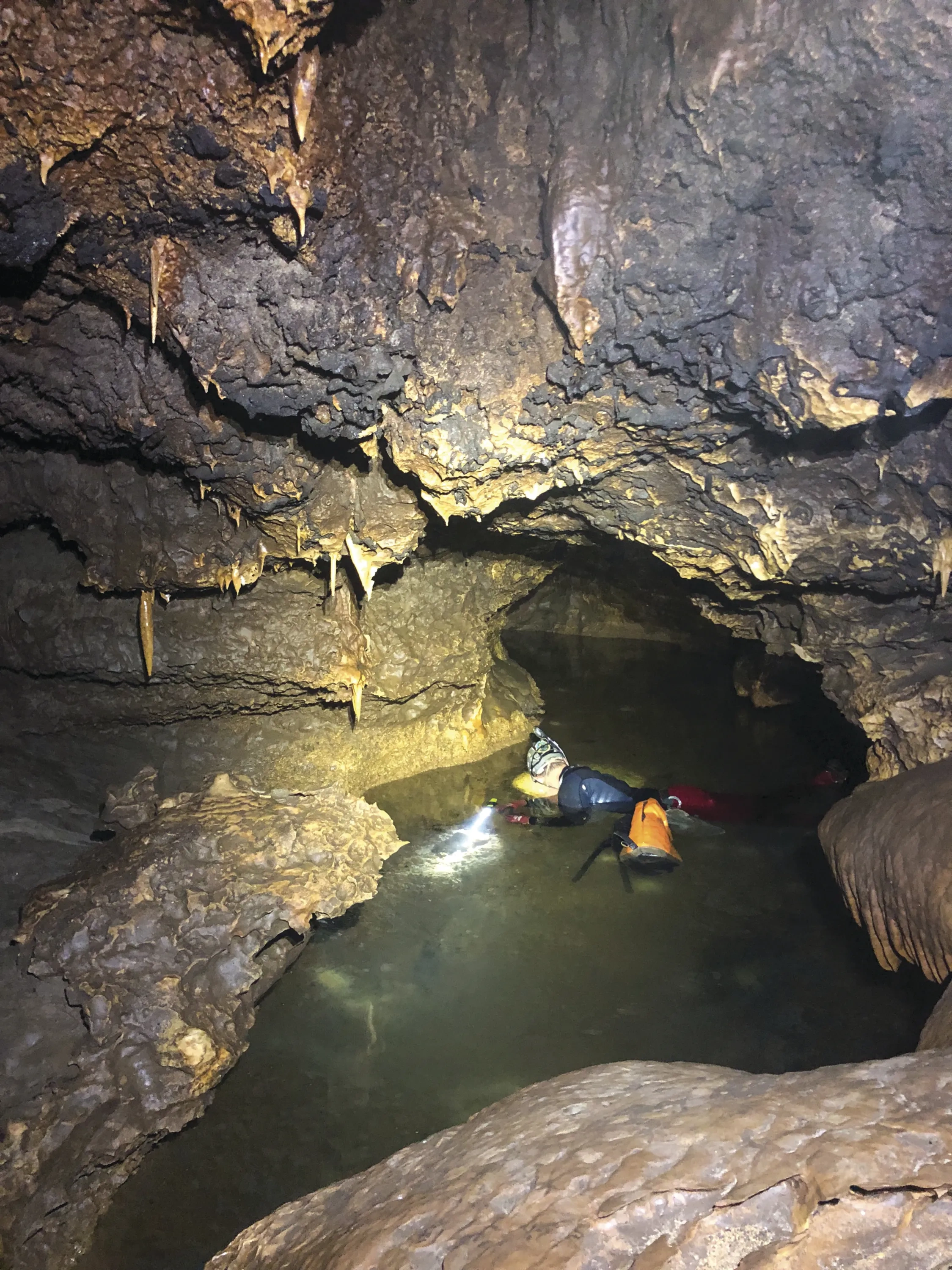
On a summer afternoon in 2022, John Moretti’s phone flooded with photos of fossils strewn about an underground cave system. The messages were from John Young, a colleague and spelunker, who was trying to convince Moretti, PhD ’25, a vertebrate paleontologist, to help him explore Bender’s Cave, home to an underground stream on private property in Comal County. Young kept pushing until Moretti finally agreed. “One trip,” Moretti said.
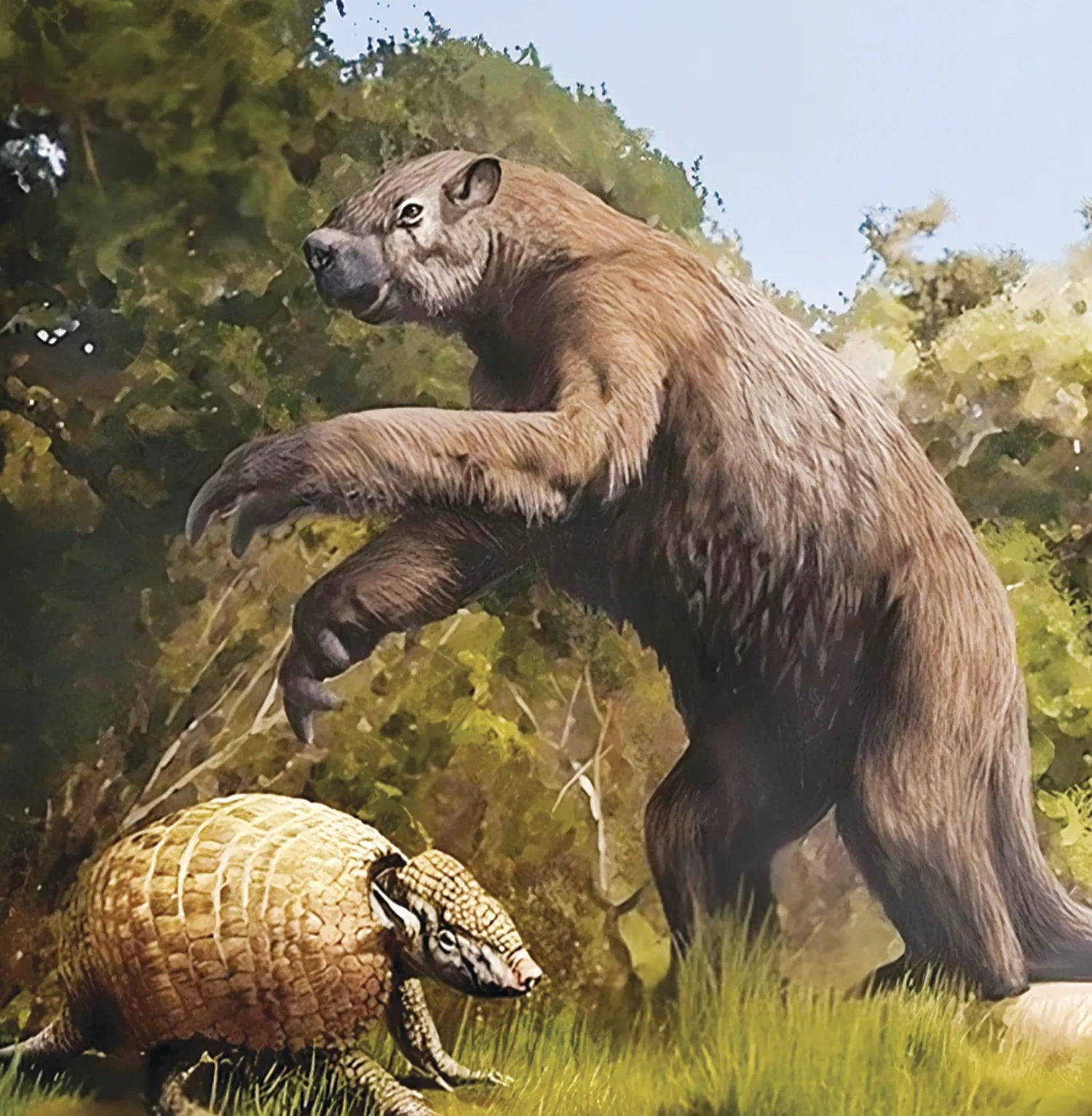
That one trip turned into a series of six underground adventures from 2023–24, with Young and Moretti snorkeling through the subterranean streams of Central Texas, including Bender’s Cave. It was there that they found fossils belonging to giant tortoises and lion-sized armadillos called pampatheres, which Moretti says were big enough to carry a 7-year-old child. Each of these animals lived more than 100,000 years ago during the last Ice Age and were known to be common in other regions of North America, but not what is now Central Texas.
This wasn’t Moretti’s first time finding Ice Age fossils in the Hill Country. Bones belonging to saber-tooth cats and mastodons are common here, but finding them mixed with the tortoises and pampatheres in one cave was something out of the ordinary.
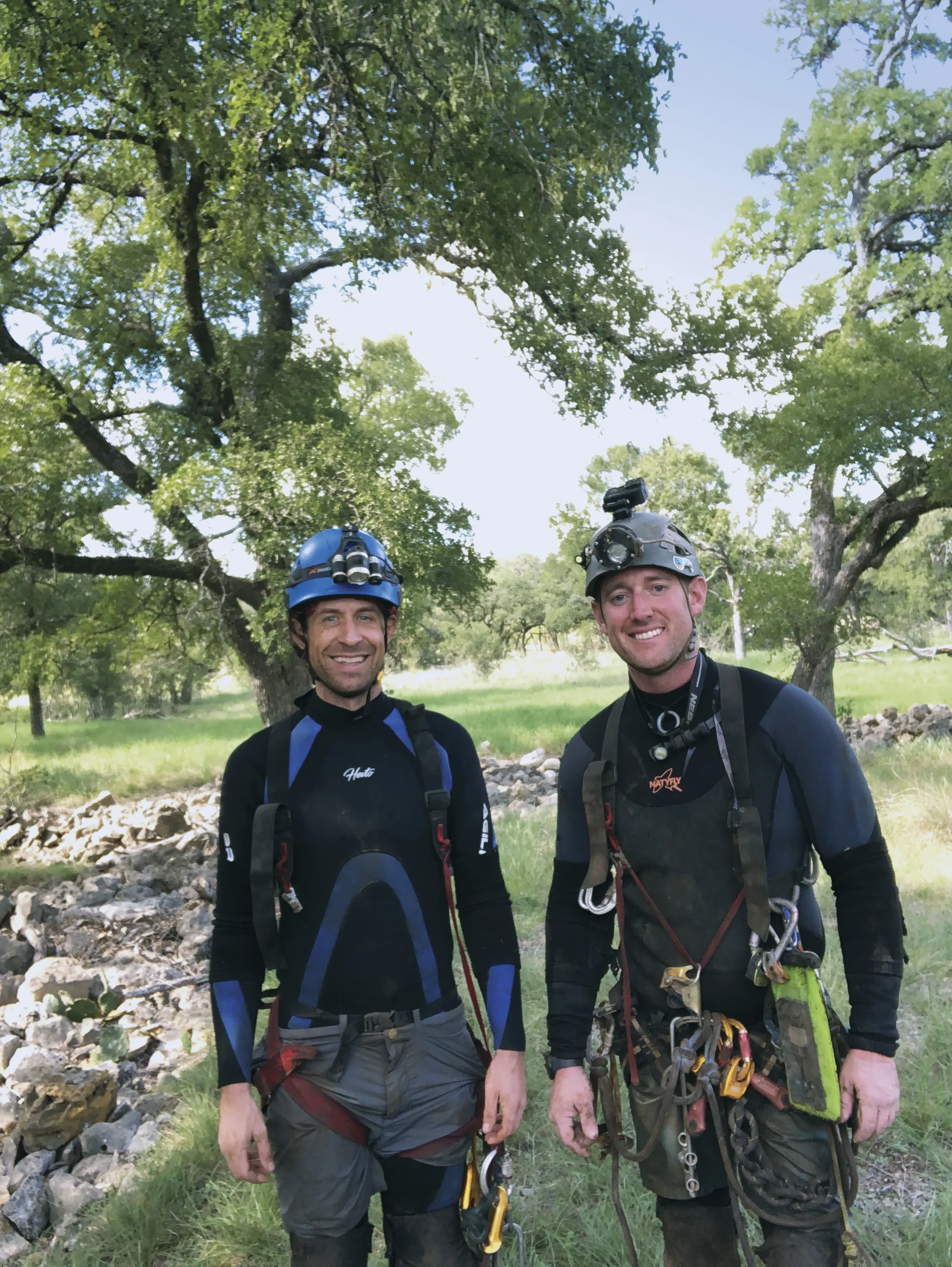
six trips to Bender's Cave as part of their recent
investigation.
“I wasn’t expecting there to be that many bones, and I wasn’t expecting to catch some of these animals that we’re catching,” Moretti says.
The University of Texas houses the Texas Vertebrate Paleontology Collections at the J. J. Pickle Research Campus, a trove of more than 2 million specimens that have been researched over decades by faculty and students. Isabelle Milford, BA, BS ’25, a research assistant and communications coordinator, became familiar with the collection as an undergraduate student and now helps introduce others to the massive fossil world that resides right here at UT.
“That’s part of what I’m trying to do now is to get people to know about this,” Milford says. “So many people have no idea that there are 2 million fossils in their backyard.”
These millions of fossils analyzed in research across the world are all part of the thrill for Milford, who, like many of us, spent childhood days scavenging the playground for tiny fossilized shells. With the tools centralized at UT, Milford now gets to share that joy with visitors as they see the skull of an Ice Age saber-tooth cat for the first time.
“It brings about this excitement that, to me, is always there, and John is always there,” Milford says.
The discovery of Ice Age, or Pleistocene, fossils in the depths of Central Texas is neither uncommon nor new, with records of fossil discoveries in caves throughout this region dating back at least 100 years.
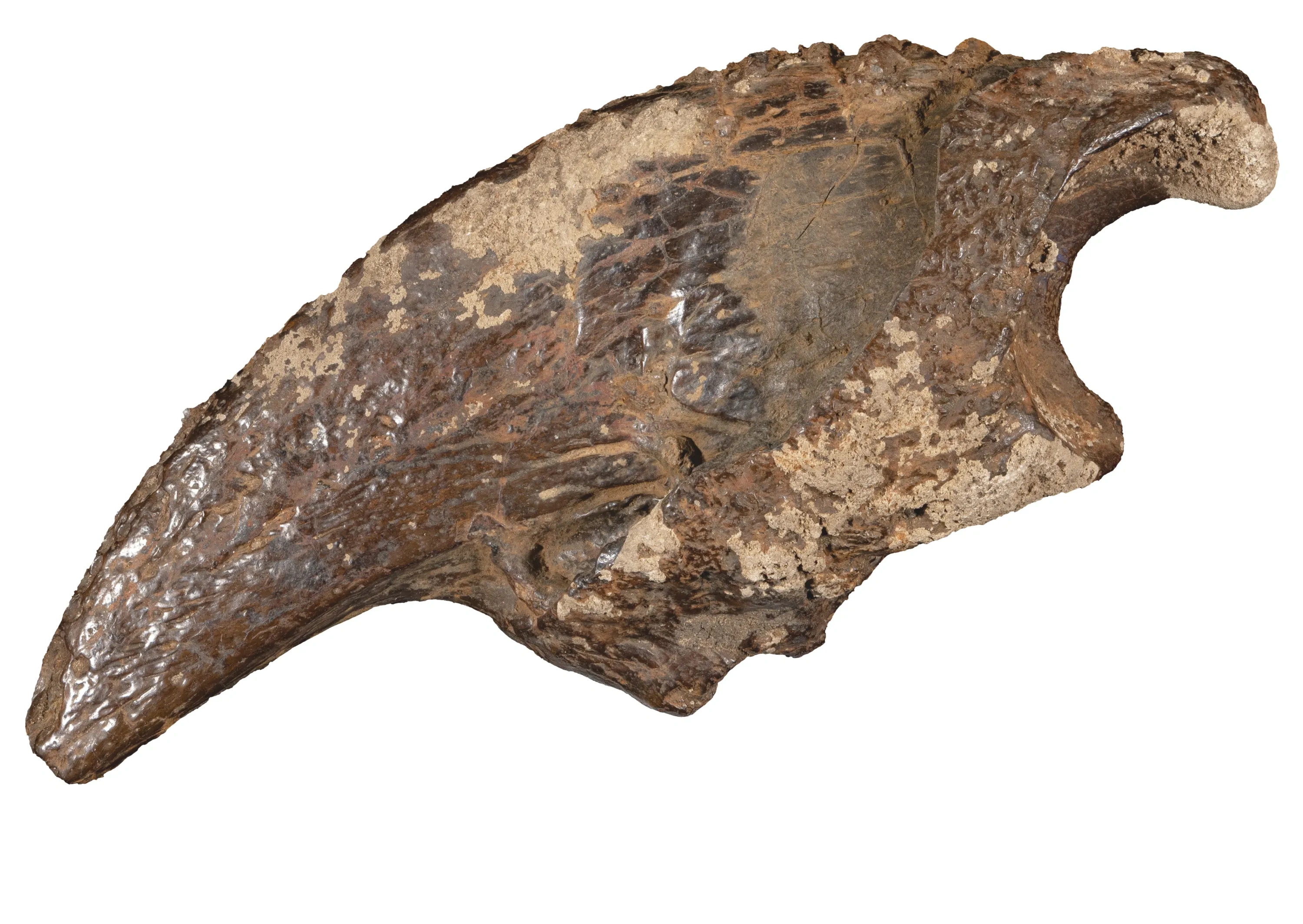
Megalonyx found in the cave.
“The research done on the caves was really influential, beginning in the 1960s all the way up to today, in shaping global understanding about when mammoths and saber-tooth cats went extinct and what the world was like as they went extinct,” Moretti says.
Despite this extensive record, past scientists were reluctant to venture into water-filled caves such as Bender’s due to the hazards posed by flooding and structural instability. Another hurdle researchers face is how the water affects the soil. Researchers like Young and Moretti rely on soil layers to help date fossils, with older layers at the bottom and younger ones on top. Flowing water can disrupt these layers and mix up the fossils that live within them, making it difficult to determine their age.
“We interpret time in a way such that if we find bones or other objects in one layer, they have some relationship with each other in time,” Moretti says. “Without that we don’t have a guide, and we would have to date everything with radiocarbon dating or some other system.”
Radiocarbon dating can determine the age of organic objects by measuring the decay of carbon-14 isotope, a radioactive molecule. Moretti and Young initially used this method but had to switch to another dating technique because of yet another obstacle the environment causes after thousands of years.
“The bones themselves are willing to exchange carbon with their surroundings,” Moretti says. “The carbon that the animal put into the bone may not be the carbon that we’re actually dating, if we date just the bone itself.”
The use of modern dating methods is one of several advances that distinguish today’s research from studies conducted 60 years ago. Caves that had previously been left alone because of danger or lack of evidence are now becoming sites for Moretti to snorkel through and find objects that he can bring back to fellow scientists.
“I get to talk to both my mentor and the 98-year-old paleontologist who preceded him, Ernie Lundelius,” Moretti says. “I get to talk to them both about [the findings], so they both get to interact with this new research, too.”
With the fossils at the lab for more research, Moretti and Young continue to explore caves in Central Texas with snorkel gear in hand, hoping to reconstruct the prehistoric environment in which these animals lived. Even more so, this research acts as a foundation for students to visit the collection and broaden their knowledge. While a saber-tooth cat probably didn’t befriend a sloth with a lisp like a certain 2002 animated film portrays, people can still get a glimpse into how paleontology helps the world understand the Ice Age for what it was, and what it means now.
“We need this historical record to really teach us what Earth is like,” Moretti says. “That extends far beyond the time frame of any one individual human.”
CREDIT: From top, John Moretti (2); courtesy of the University; adapted from artwork by Jaime Chirinos; John Moretti