UT Austin and MD Anderson Reach a Potential Breakthrough in Cancer Treatment
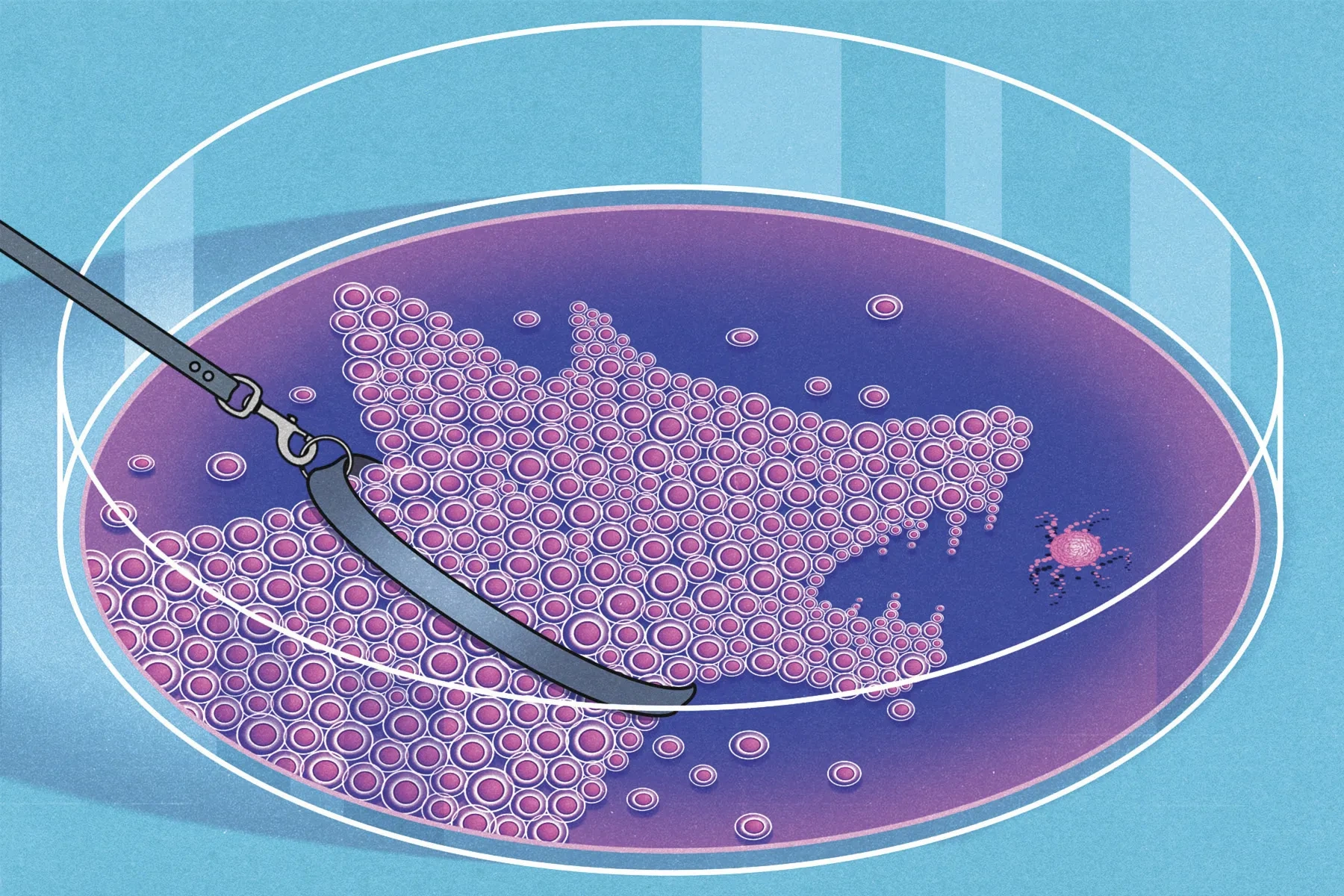
The cells in the human body divide and replicate at a rate of up to 2 trillion cells per day, a nearly inconceivable number. Cancer occurs when a single cell with some genetic mutation hijacks the cell replication cycle, bypassing the natural biological signals that stop division or trigger cell death. These excess, mutated cells pile up, sometimes in malignant tumors, and crowd out the body’s healthy cells.
Traditional chemotherapy intervenes with the cell cycle, often by damaging the DNA of the cancerous cells. Of course, the problem is that the drugs can’t always distinguish between cancerous and healthy cells, such as those in hair follicles, bone marrow, and digestive lining, which causes brutal side effects. Alternatively, immunotherapy works to strengthen the body’s natural mechanisms for identifying and attacking abnormal cells—that is, the immune system—though its effects vary more widely.
But researchers at The University of Texas and the UT MD Anderson Cancer Center may have found a fast-acting treatment that combines the effects and benefits of chemotherapy and immunotherapy. And it started with a surprise in the lab.
UT chemistry professor (and cancer survivor) Jonathan Sessler has been working for more than a decade on an experimental chemo drug called Compound 1, which was designed to kill cancer cells by causing a build-up of toxic molecules called reactive oxygen species. Scientists noticed, however, that this drug was also causing the same kind of immune response in mice that occurs when normal cells have been infected by a virus. What’s more, these cells remained primed to attack future cancer cells, even those that hadn’t been treated with Compound 1.
“Initially, it didn’t make sense as to why chemotherapies sometimes generated an immune response,” UT chemistry professor and former dean Brett Iverson, Life Member, said. “But now we can connect the dots. The cancer cells are acting like they’re infected.”
This phenomenon is known as “viral mimicry,” and this research suggests that viral mimicry may be the primary mechanism behind the antitumor response caused by other chemotherapies. “All of a sudden, cancer looks like a virus,” Sessler told KUT in an interview this spring. “We know how to attack viruses—we don’t know how to attack cancer very well.”
Matthew Levine, a graduate student in chemistry at UT, led the research, with Sessler and Iverson co-authoring the paper that was recently published in a peer-reviewed journal by the National Academy of Sciences. Professors Lauren Ehrlich at UT and Ronald DePinho at the UT MD Anderson Cancer Center were additional primary contributors.
With further research, the combined power of the body’s natural immune response and the added boost of chemotherapy could create opportunities to lower chemo doses all around. This would also make the development of chemo-resistant cancer cells less likely, with less exposure to the drugs.
“What’s most exciting to me is the clinical ramification that maybe you could be using less chemotherapy on patients to have a better outcome,” Sessler said. “Less might be more.”
CREDIT: Illustration by Dan Page