This Longhorn Built the Largest Spherical Structure on Earth
In the fall of 1989, Brian Falconer and a group of fellow University of Texas engineering students tried to solve a complex engineering problem using a stack of air mattresses that they bought for a dollar each at Walgreens.
They had been tasked with testing post-tension anchorage zones and bridge decks. If that sounds both complicated and daunting, you’re not wrong. As they were casting a concrete slab with an internal sleeve for a cable, which would ultimately support the weight of 15 cars, the students realized they needed a frictionless surface. They created one by floating the heavy piece of concrete on their half-inflated pile of plastic mattresses.
Thirty years later, Falconer, MS ’90, Life Member, would apply this type of creative problem-solving to build the largest spherical structure on Earth.
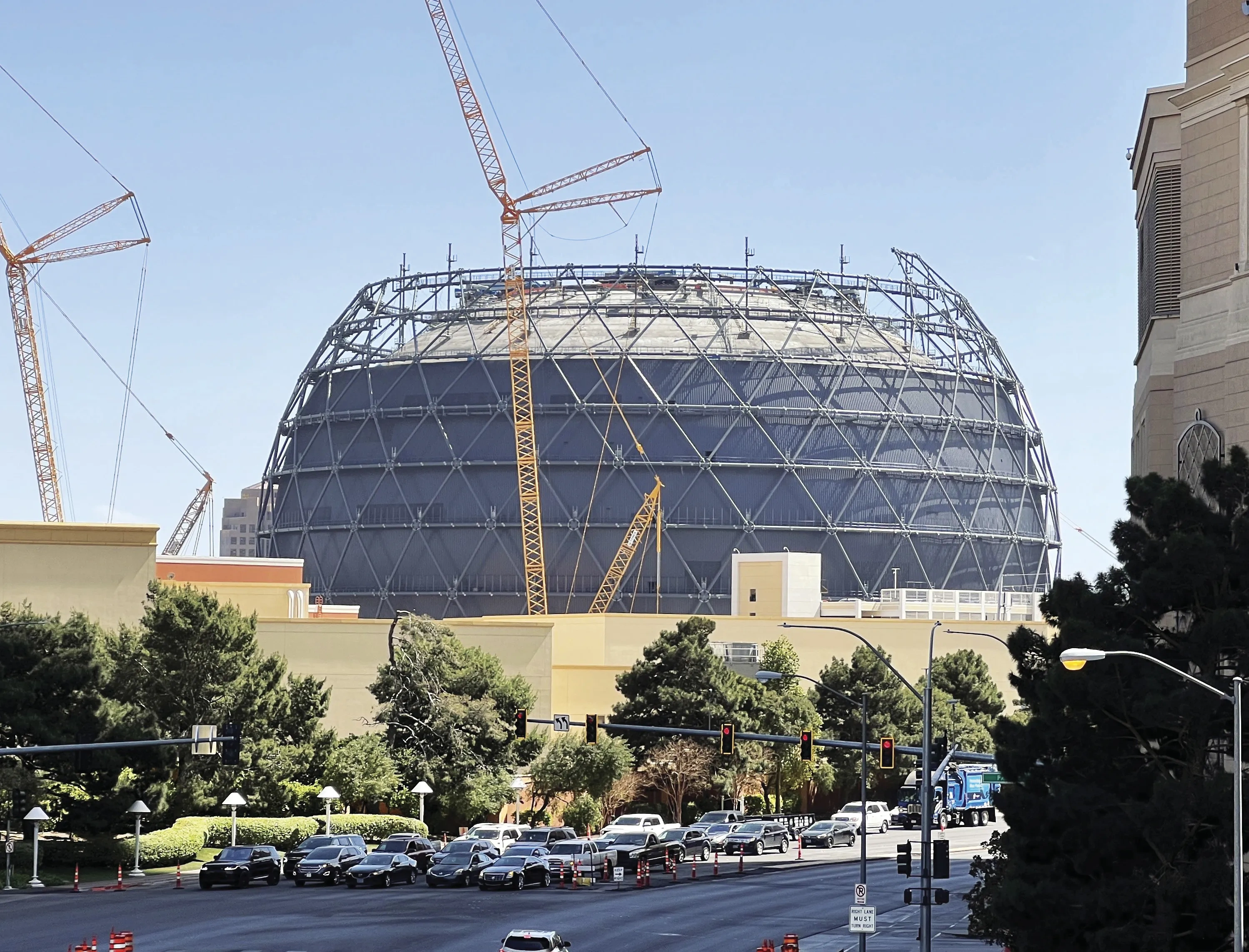
Located at the heart of the Las Vegas Strip, the groundbreaking entertainment complex known as the Sphere is a man-made marvel, where more than 17,000 attendees per show pack inside the unique geometry of, well, a giant sphere that stretches to the stunning height of twenty-four stories above Sin City.
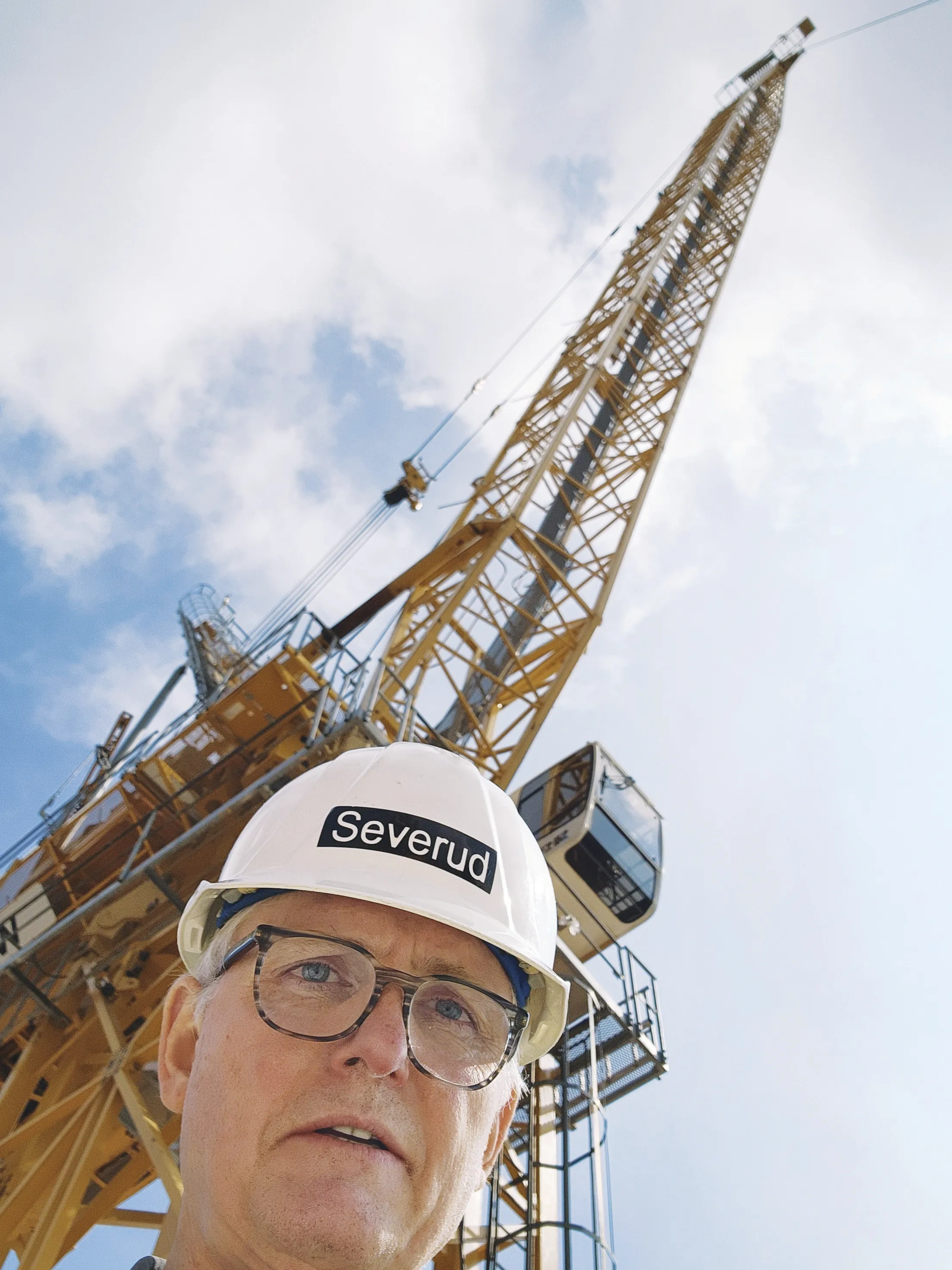
Falconer was the engineer of record for the Sphere. Retracing his steps on such an ambitious journey, a question comes to mind: How do you even begin?
First, Falconer says, someone has to have an idea. For the Sphere, that original spark erupted from the mind of entrepreneur and business giant James Dolan, who owns both the most famous American sports arena—Madison Square Garden—and the New York Knicks NBA franchise that calls the Garden home.
“Jim Dolan has an idea, and he talks about it with the architects and the structural engineers and the mechanical engineers,” Falconer says. “Then we all go off into our boxes, and we try to do what he originally was thinking he wanted to do. We all come back and we see, where do our ideas mesh and where do they conflict?”
Dolan’s vision for the Sphere was to create an “experiential medium,” rather than just a concert facility. Since opening in September 2023 with a sold-out, 40-show residency featuring the band U2, millions of ticket holders have climbed into haptic-enabled seats hugging the structure’s curving interior to experience an astonishing parade of technological innovation. A gigantic, continuous LED environment with a surface area the size of four football fields wraps the interior of the venue and displays perfectly focused, immersive 16K video, while hyper-directional audio specifically targets each guest through more than 160,000 individual speakers.
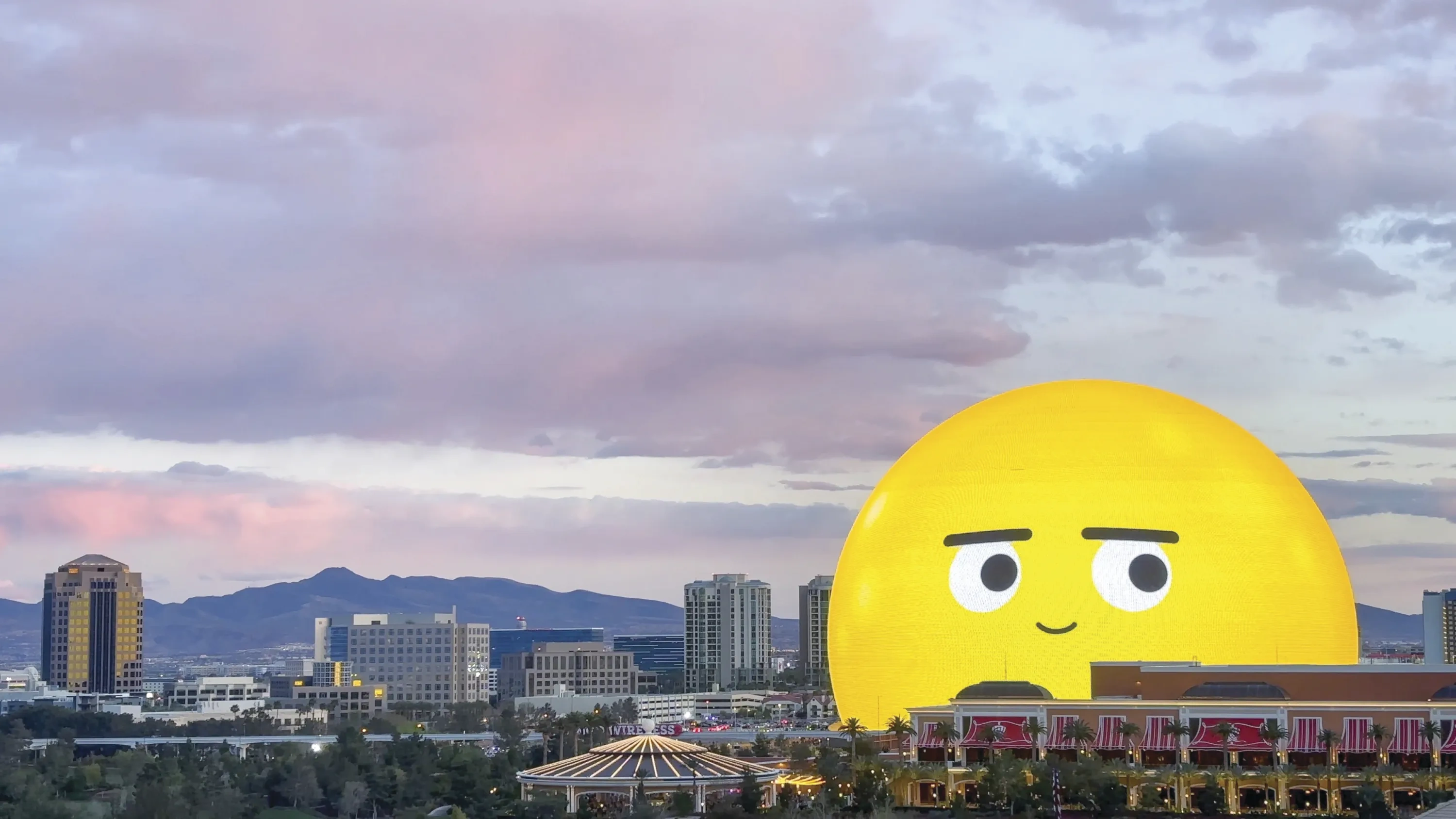
And that’s just on the inside. More than 1.2 million LED puck lights attached to the building’s exterior transform the Sphere into an instant landmark, illuminating the legendary Vegas skyline with inescapable images, such as a giant alien moon or a basketball or a smiley face emoji, all of which can be seen from space.
The unprecedented scope and enormity of such an undertaking left little wiggle room for off-target results. “When you’re designing an airplane, you’re constantly testing things, and even some test planes crash,” Falconer says. “When you’re designing buildings, you don’t get to do it four times. You have to really do it so that it works the first time.”
Falconer can deliver a soaring nine-minute soliloquy about the principles and practices of modern engineering with the gravitas and overspilling passion of a Shakespearean actor. Collaboration might be his favorite word.
He is quick to shout out the efforts of what he estimates to be more than 100,000 people who ultimately contributed to the Sphere project. “You might say, Pablo Picasso, he just did his own thing. He didn’t necessarily depend on other people to be able to do what he did,” Falconer says. “When you build buildings, it’s totally a collaboration. I guess you’d say it’s more like jazz.”
As a managing principal at Severud Associates, an industry-leading structural engineering firm where he has enjoyed a 35-year career, Falconer and his partners’ ability to execute spectacular concepts in the real world earns them opportunities to joust with many lofty creative challenges—from reenvisioning New York City landmarks such as Penn Station or the Museum of Modern Art, to building a geometrically perfect live entertainment mecca in the middle of the desert.
“You want to do the math, and then you want to go look at [the buildings] constructed and say, ‘I worked on that,’” Falconer says. “‘You see that bolt over there? I told them that they had to have seven of those. And it did what we predicted it would do based on the math.’ That’s why we’re engineers. It’s very nerdy.”
Even after decades of working alongside some of the industry’s top engineers at Severud, Falconer still turns to the people who helped shape him during his time at UT earning his master’s degree in civil engineering. While on the Forty Acres, he forged lasting relationships with both fellow students and faculty, many of whom he still stays in touch with. “Sometimes I’ll call them because I’ll have some problem that I think they’d be able to help me with,” he says. “And they do. They always do.”
If the geometric definition of a sphere is a perfectly round, three-dimensional shape, where every point on the surface is the same distance from the center, the Sphere team seems inspired to apply that notion to a broad developmental strategy—so that wherever fans are in the world, they are not far from a Sphere in action. Falconer says that talks of a global network of Spheres are underway, imagining potential locations from Abu Dhabi to Washington, D.C.
All this feels like quite a distance from solving a problem with half-inflated air mattresses in a UT engineering class decades ago.
“I always tell people, I am the luckiest and the most unlucky person in the world,” Falconer explains. “I’m lucky because I found what I wanted to do, and I get to do it. But on the other hand, what I do is kind of hard. And I might have chosen to do something less hard if I didn’t love it so much.”
CREDITS: From top, Shutterstock; courtesy of Brian Falconer; Severud