The Way Back: Music So Fine
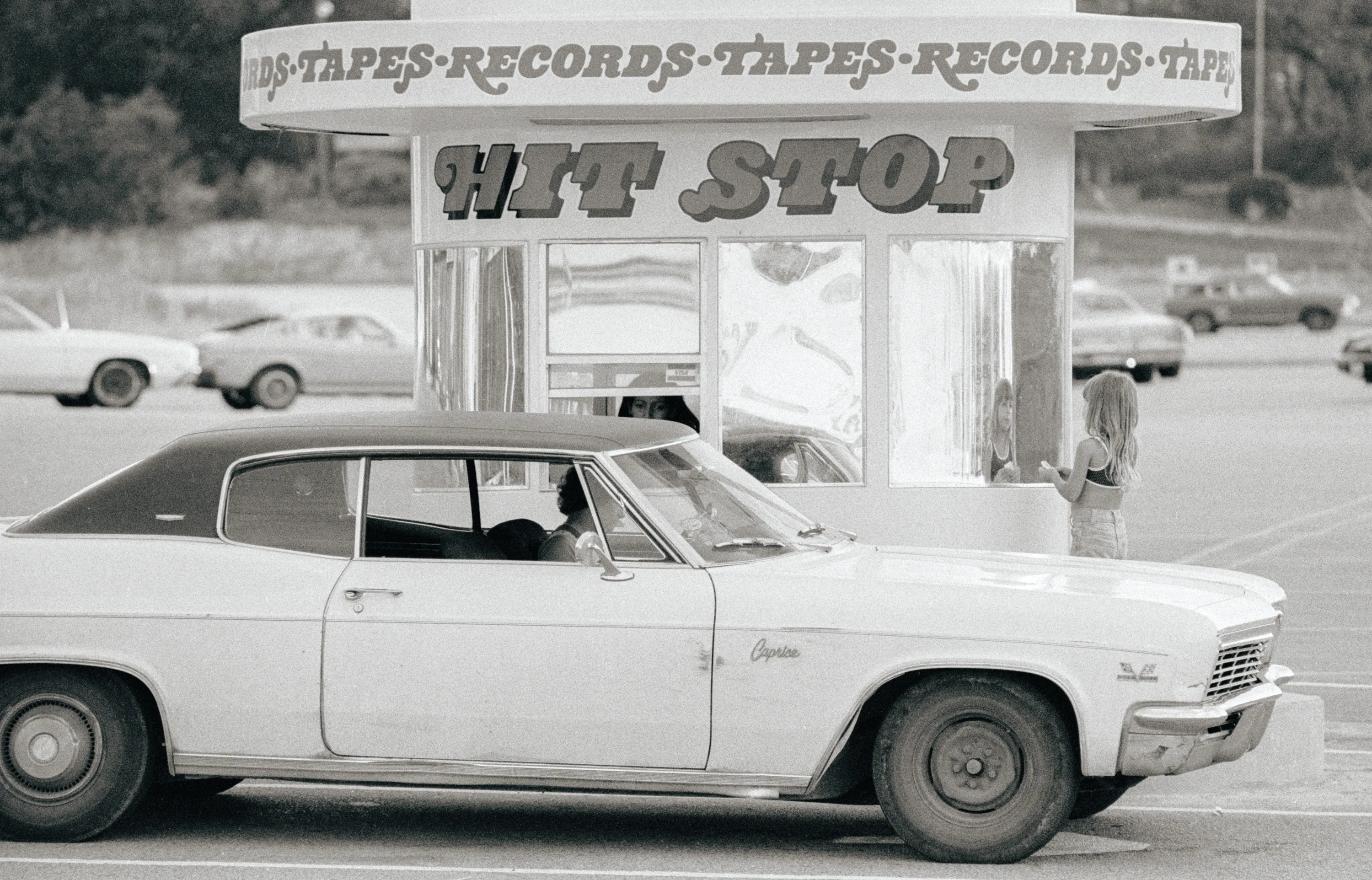
When the Alcalde first stumbled upon this photograph in the Texas Student Media archives, we struggled to find any evidence on the World Wide Web for the existence of the Hit Stop drive-through record store. How would they have had room for inventory, we wondered, as did several online commenters whom we petitioned.
The father-son duo behind the Hit Stop had already thought of that. “Our marketing indicates that 70 percent of all albums sold these days are in the top 40,” Robert Peerman Jr., BBA ’77, told the Austin American-Statesman, in a March 1978 clip that surfaced. “We will have those and the 20 below them,” he explained.
With a location at Oltorf and South Congress and another at Southwood Mall on Ben White, the Hit Stop model was inspired by the Fotomat film kiosks, where customers could drive up, drop off their film, and come back the next day for the prints. The Fotomats’ iconic yellow pyramid roofs were located in parking lots of shopping centers and strip malls across the country—as many as 4,000 of them by 1980.
“Our whole concept is convenience,” Peerman said, along with his hope to capture 10 percent of the Austin record-buying market. A 1979 Statesman ad suggests that the Hit Stop not only expanded, but rebranded to Boogie Thru, with the slogan, “Don’t just drive thru … Boogie thru!”
Boogie Thru closed in 1982, and vinyl records seem to have gone the way of film photography—which is to say, both have experienced a surprising resurgence in the last decade. Incredibly, prices for records appear to have stayed consistent with inflation, perhaps because 1978 was a record high year for vinyl costs.
The number one album in March 1978? Saturday Night Fever, the Bee Gees. “Here I am, prayin’ for this moment to last / Livin’ on the music so fine … ”
CREDIT: Mike Laur/The Daily Texan, UT Texas Student Publications Photographs, Dolph Briscoe Center for American History