For Decades, UT’s Student-Run Radio Station KVRX Has Introduced Listeners to What’s Next
It’s often said that football is the “front porch” of a University, the thing that everybody sees and knows, both on campus and across the country. But there are also side doors. As a high school kid in Marble Falls, Maile Carballo, BS ’26, formed her first bond with The University of Texas at 91.7 on the FM dial. Or rather, at KVRX.com.
Carballo discovered the station via the British band Yard Act, which played its first American gig on a KVRX-booked bill at Hole in the Wall during South by Southwest in 2022. Later that spring, while doing her math homework to the station’s live stream, she heard the DJ say something like, “If you’re listening to this right now, and you’re wondering, ‘Hey, how do I do what Leah’s doing?,’ you should call in.”
“And so,” Carballo remembers, “I called in, and was like, ‘I’m in high school. I would love to do this. And can I request a song?’”
She got her request (“Malmo,” by Mook, a band fronted by the actor Paul Dano) and she and Leah Rosenberger, BA ’22, Life Member, aka DJ Leah, followed each other on Instagram. Soon after that, Carballo made the hourlong drive to Austin, grabbed something to eat at Cava on the Drag, and got to hang out at the station. “[Leah] invited me to shadow her on her second-to-last show, which is pretty sacred, now that I understand what it’s like,” Carballo says.
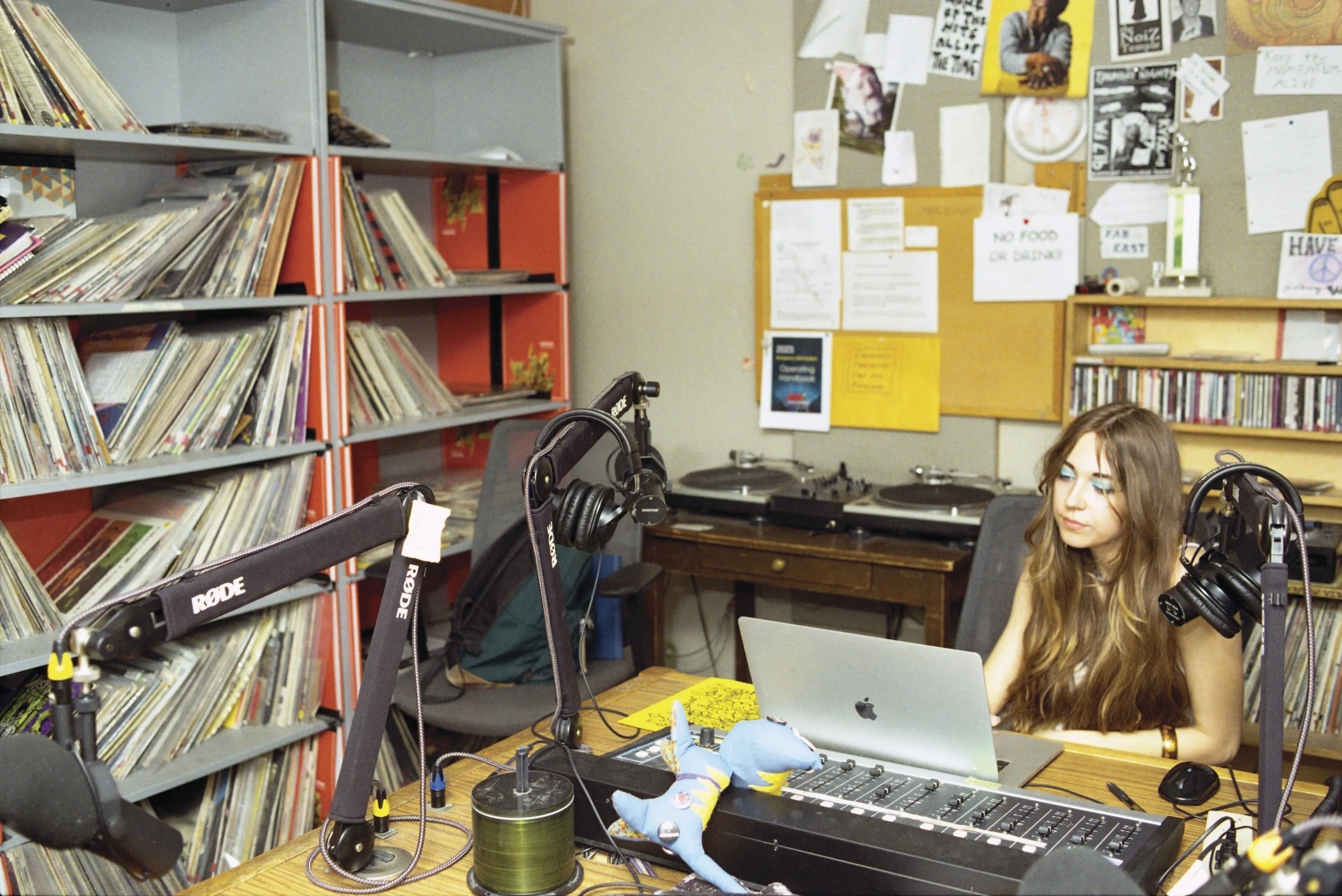
She understands what it’s like because the advertising major just finished her time as KVRX’s station manager, having worked her way up from graphics intern, graphics director, and external relations manager, while also spending four years on the air as DJ John F. Spinnedy. For Carballo and thousands of other students who’ve come through the studio on the top floor of the Hearst Student Media Center, KVRX is both a second home and the most formative part of their college experience. It’s also a crucial part of the Austin music scene, including for its long-running “Local Live” sessions.
“Having that beacon—a good radio station—when you’re young, at an age when you’re finding yourself, is so important,” Caballo says.
One might think the state of college radio in 2026 is dire, given both the general higher education budget crunch and changes to the way people consume news and entertainment. And indeed, some stations have gone the way of Rice University’s KTRU, which lost its FM frequency in 2011, was online-only for the next four years, and now has a low-power signal (with a broadcast radius of just five miles). But there’s also a sense that Generation Z is turning to that old standby of college radio (and physical media) as an escape from the algorithmic feeding tube of TikTok, Spotify, and other social media and music streaming platforms.
At KVRX, it’s the same as it ever was, with more than 200 staff members filling the airwaves (and internet) in service of the station’s longtime slogan: “None of the hits, all of the time.” This is not because its programmers and DJs are trying to be cool or obscure for the sake of being obscure; rather, they are fulfilling the original meaning of “alternative.”
“We think of college radio as stations with a particular musical profile, run by students,” says Katherine Rye Jewell, a former college radio DJ and professor at Fitchburg State University whose book Live from the Underground: A History of College Radio was published in 2023. “[They’re] places you can hear stuff that you don’t hear elsewhere on the dial. In a sense, it has a format.”
Or rather, a lack of format. But KVRX’s slogan is more than just a description of the way the station’s programmed. It’s also a philosophy, one that forces both the DJs and their listeners to think critically, do research, and experience new things. In other words, college radio is just like, well … college.
Before there was KVRX, there was KTSB. And before there was KTSB, there was STRF: the Student Radio Task Force, which was officially formed by UT students on April 11, 1986. That means this year is actually the 40th anniversary of KVRX, at least in the imaginations of STRF pioneers Sara Beechner, BJ, BS ’88, Life Member, and Kevin Tuerff, BS ’88, Life Member.
A Washington State native, Beechner worked at the University of Washington’s KCMU the summer after her senior year of high school. Tuerff lived in Houston and was a fan of KTRU, one of the nation’s most respected college stations. Then they both arrived at UT and found … nothing.
It was doubly shocking, really: that a school the size of UT didn’t have a student station, and that KUT, the University’s FM noncommercial outlet at 90.5 since 1958, was not for students. On top of that, Austin’s music scene—built on UT’s endlessly renewable supply of 18–22-year-olds as both fans and people forming bands—lacked any kind of FM home, left or right of the dial.
“There was so much live music,” Tuerff says, “but nobody was playing [Austin artists] on the radio.” KLBJ-FM had a history of playing local and underground music in the ’60s and ’70s, but it was ultimately still an AOR (“album-oriented rock”) station. KUT—then both an NPR affiliate and a place for music—was stodgy compared to stations like KTRU. Austin even suffered in comparison to, wait for it … Waco.
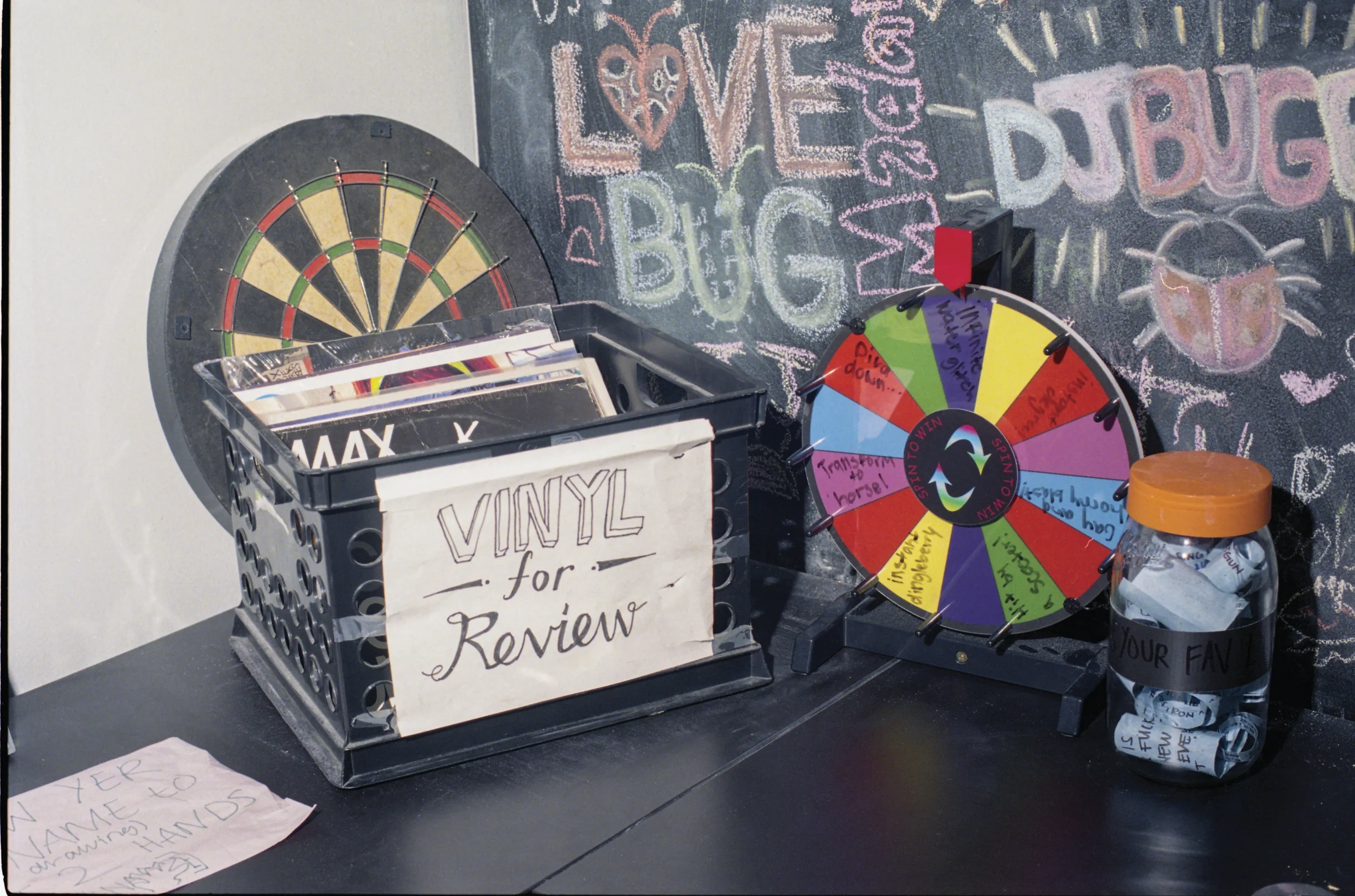
“A friend of mine from high school went to Baylor, and I went up and was on her radio station,” Tuerff remembers. “Like, come on! How can Baylor have a college radio station and not UT?” Then he saw an article in The Daily Texan about the formation of the task force, which Beechner; Kirk Launius, BA ’90, Life Member; and Mary Marcus, BBA ’95, Life Member; had assembled. Tuerff went to the first meeting.
Over the next two years, what became KTSB—named for Texas Student Broadcasting—took shape, developing on a parallel track with Texas Student Television. Like the Texan, both would receive funding from the Student Activity Fee and exist under the auspices of Texas Student Publications (now Texas Student Media). The first studio was housed in what had been the Varsity Cafeteria. The studio’s soundproofing was burnt-orange carpet repurposed from the closed-down Villa Capri Motor Hotel at 26th and IH-35. Keith King, BS ’84, BS ’89, the station’s second general manager after Tuerff, provided an old soundboard via KLBJ, where he worked as a DJ. In addition to music, KTSB had robust news and sports coverage, which were Beechner’s passion.
KTSB went on the air exactly two years after the first SRTF meeting, on April 11, 1988. Except it wasn’t on “the air.” The station’s first six years were spent on “cable FM,” the signal delivered both to dorms (which had only just been wired) and all over town via what was then Austin Cablevision. For both students and music fans, the process was a rite of passage—reading the instructions on a flier or ad in the Texan, getting over to Radio Shack to acquire a coaxial cable splitter, and connecting that branched-off coax to your stereo receiver. (Ironically, this is how most people now watch and listen to everything, albeit through high-speed modems.)
It would be another six years before KTSB became KVRX, sharing—after much discussion and negotiation—91.7 FM with the community radio station KOOP, as is still the case today (with both stations going around-the-clock online).But it has been “none of the hits, all of the time” almost since the start. “We’re quite proud of that,” Tuerff says. “Even though the name of the station changed, they kept our slogan. The formatting was all decided some 40 years ago.”
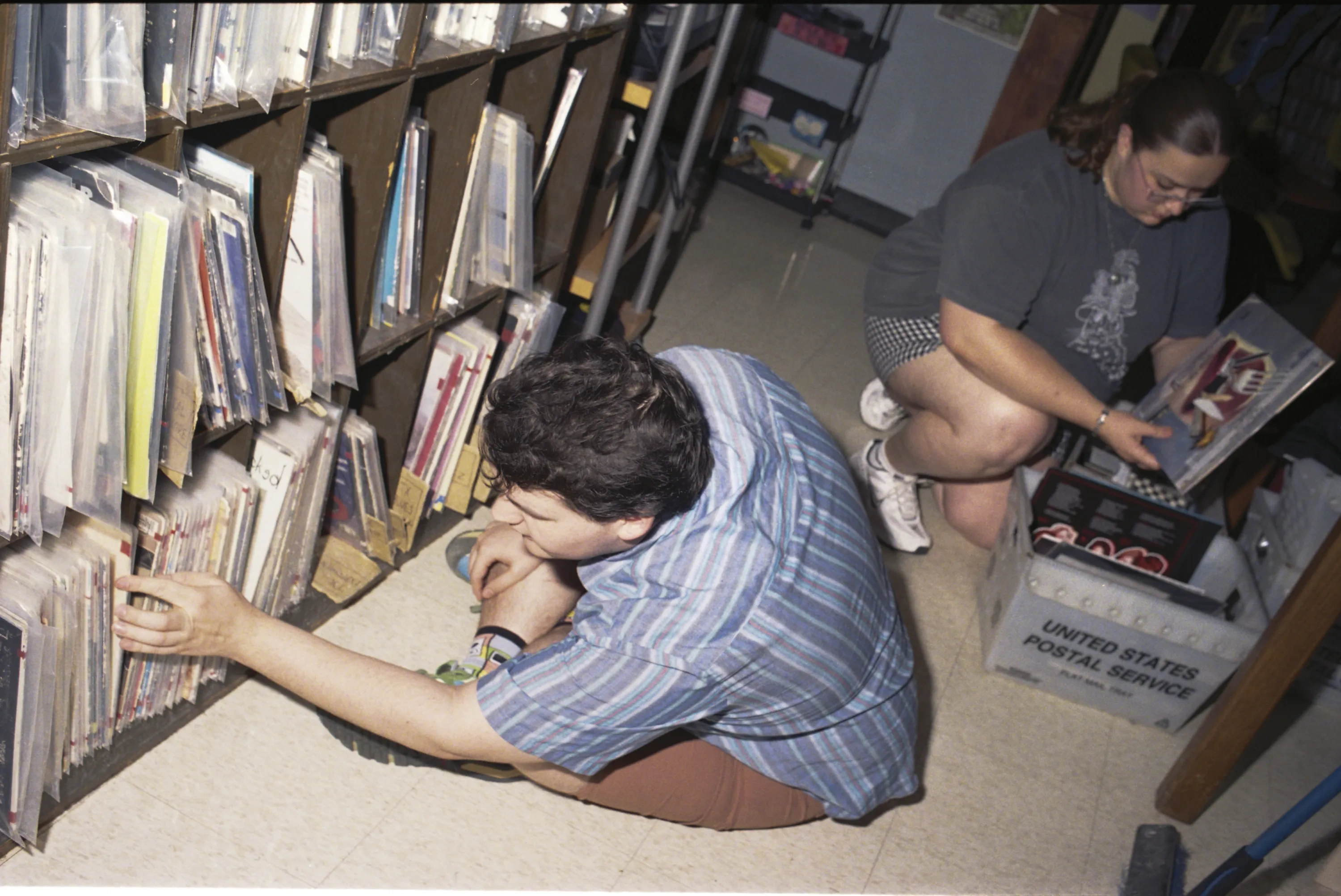
A rule that every DJ has to play at least two Texas artists per hour also dates back to the start and remains a hallmark. As current KVRX staffers Cassidy Schultz and Hailey Higdon—their on-air names are DJ hippiestank and DJ microfiche, respectively—explain, all DJs doing their first hourlong freeform show after their initial training have to keep not only the slogan in mind, but also the “5-5-2” rule: One must play five different genres of music and five songs from the “new bin” (whether physical or virtual), as well as those two Texas artists.
But what exactly are “the hits”? For a long time, the programming philosophy at both KVRX and other student stations was largely intuition. As a band got big—R.E.M. in 1986, or Nirvana in 1991, for instance—with airplay on MTV and commercial stations, their music would leave college radio. Some stations might abandon them entirely; others might move on to deeper cuts in order to be more “alternative.” Things also changed for KVRX with the 2013 arrival of KUT’s music-only spin-off KUTX, which is more adventurous than KUT was in its news-and-music days.
Carballo also works part-time for KUTX as a graphics producer, and the two stations collaborate on a hour of programming during Rick McNulty’s Friday night show “Left of the Dial,” with guest DJs from KVRX going “Way Left of the Dial.” (“Left of the dial,” referring to the noncommercial frequencies below 92 FM, has long been shorthand for college and public radio. Now, both names are anachronistic. There’s no “dial,” and 98.9 KUTX is actually to the right.)

from a weekly deep listening session, April 22,
2026.
KUTX is also where Carballo first heard the band Yard Act—but you won’t hear them on KVRX now. The aesthetic and ideological arguments about what is or isn’t too popular to play on college radio could be a radio show (or dissertation) in and of itself. But in 2026, those arguments are settled by hard data. At KVRX, once a band or artist reaches an average of 250,000 monthly listeners on Spotify, they’re moved on to the “blacklist,” and Yard Act has surpassed that number. (For foreign language music, the cut-off is 500,000.)
That also means that Austin’s most enduring indie band, Spoon, with more than 1.3 million monthly listeners, is on the blacklist. Never mind that frontman Britt Daniel, BS ’93, was a DJ at both KTSB and KVRX. Daniel’s passion for the station was such that after graduation, he got around the student-only staff rule by registering for courses such as racquetball and basket-weaving, which he would later drop while staying on the air. This trick enabled him to stick around until the station finally went FM in November of 1994.
Admittedly, Daniel can also get around the blacklist by showing up for an interview when the band puts out a record, as he did when Spoon released 2022’s Lucifer on the Sofa. He wouldn’t have it any other way.
“I always loved that KVRX had that spirit,” Daniel says. “I took pride in that spirit when I worked there.”
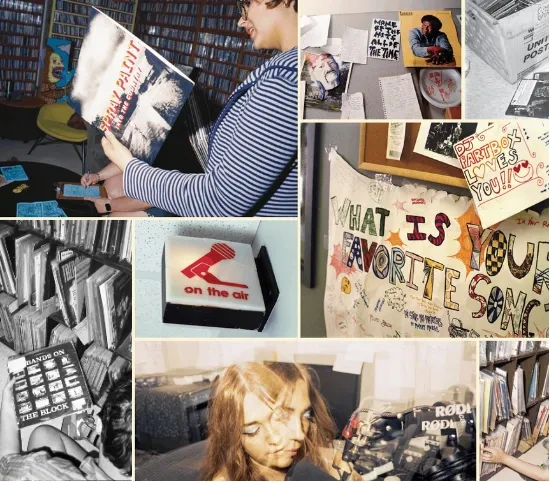
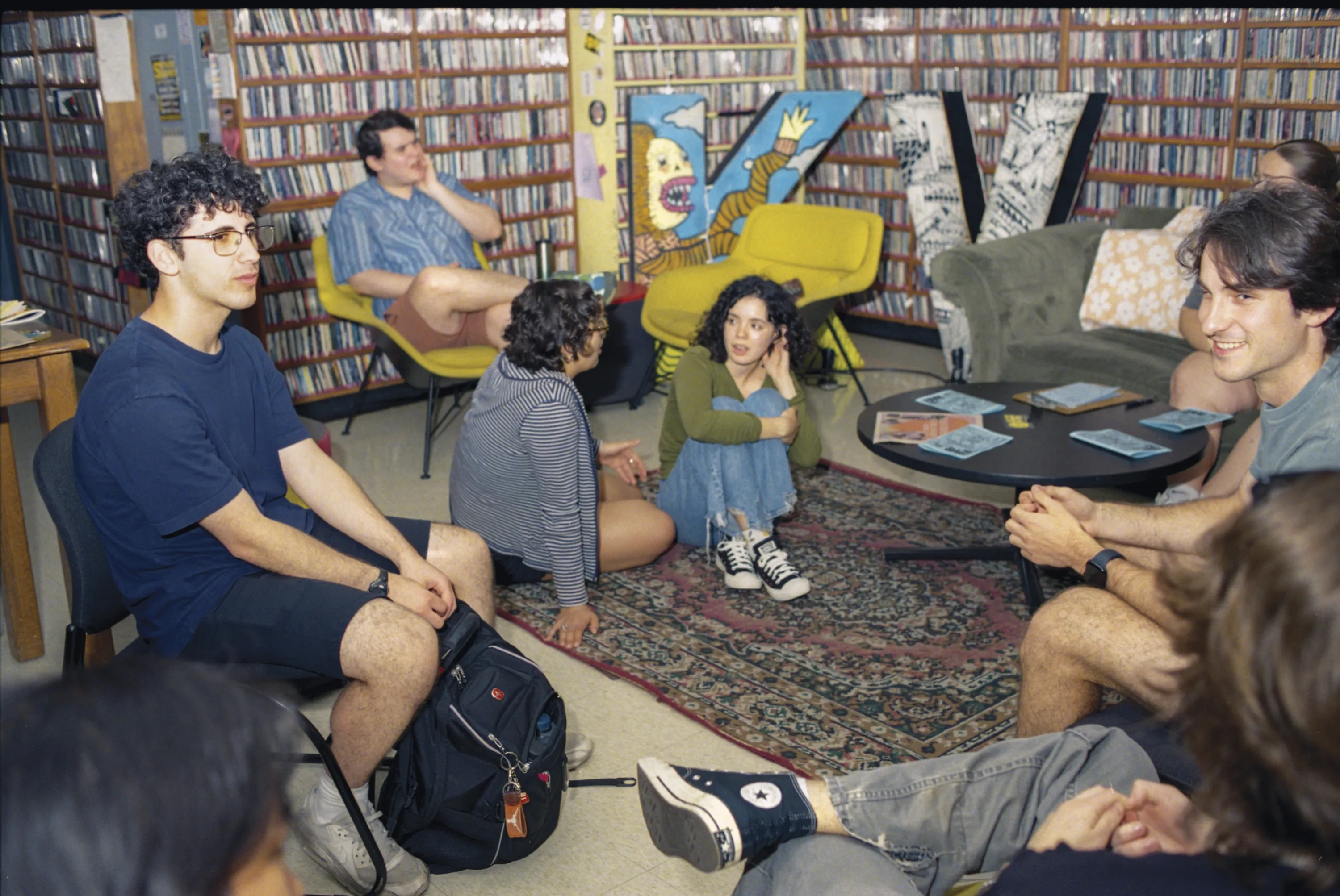
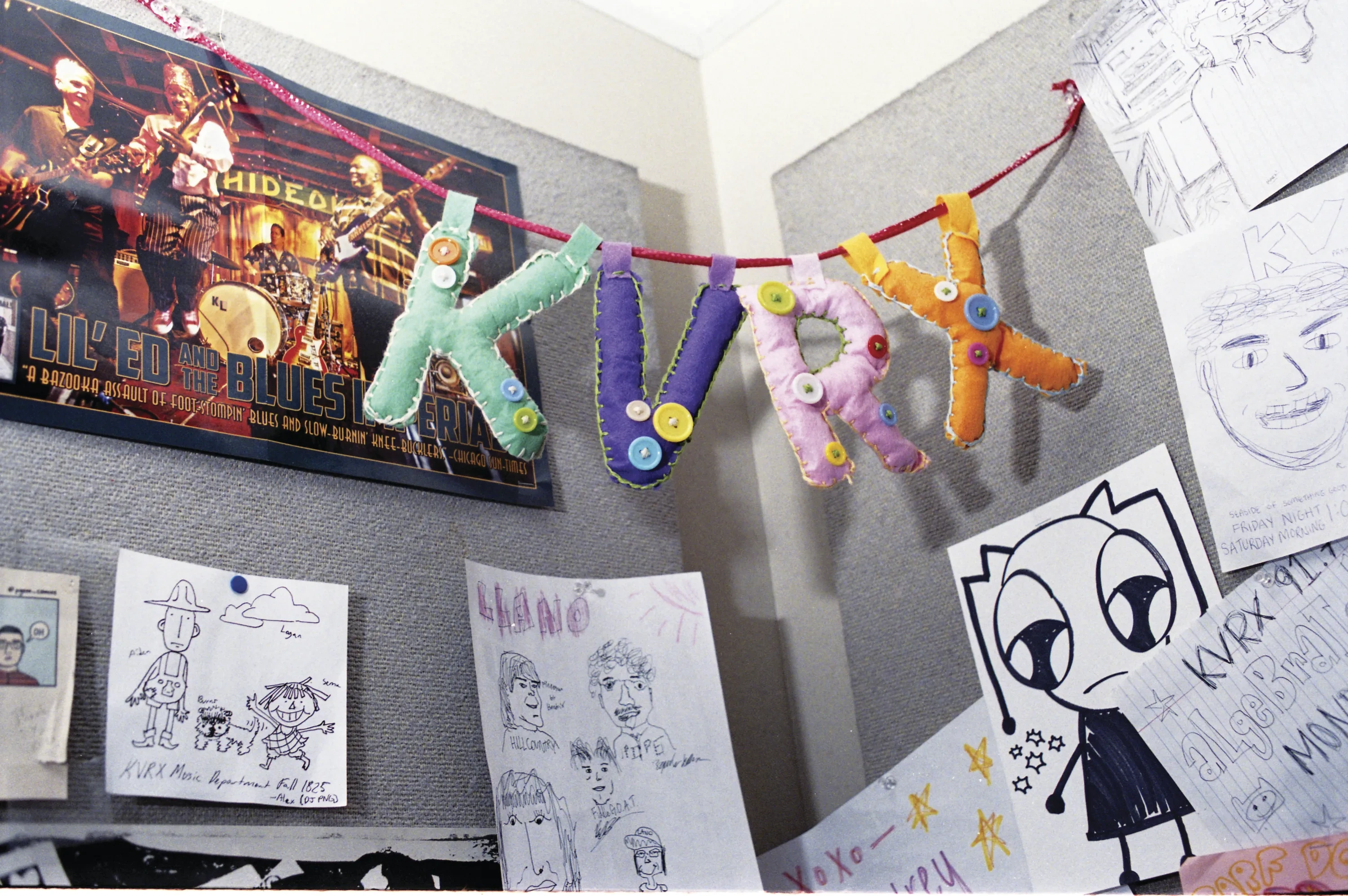
On a recent Wednesday night at the corner of Dean Keeton and Whitis, a few dozen KVRX staffers were gathered in the station lounge for their weekly “deep listening” session of one album, as well as other station business. Graduation was approaching, which means Carballo would soon be succeeded by a new station manager, and the staff was also voting on year-end awards. At other meetings, they might comb through new music to decide what goes into rotation, while rejecting a depressingly high number of AI-created tracks. Where some stations have gone to full digital libraries, there are still thousands of CDs on the walls and shelves at KVRX, with vinyl (both the station’s and from DJ’s personal collections) also in the mix.
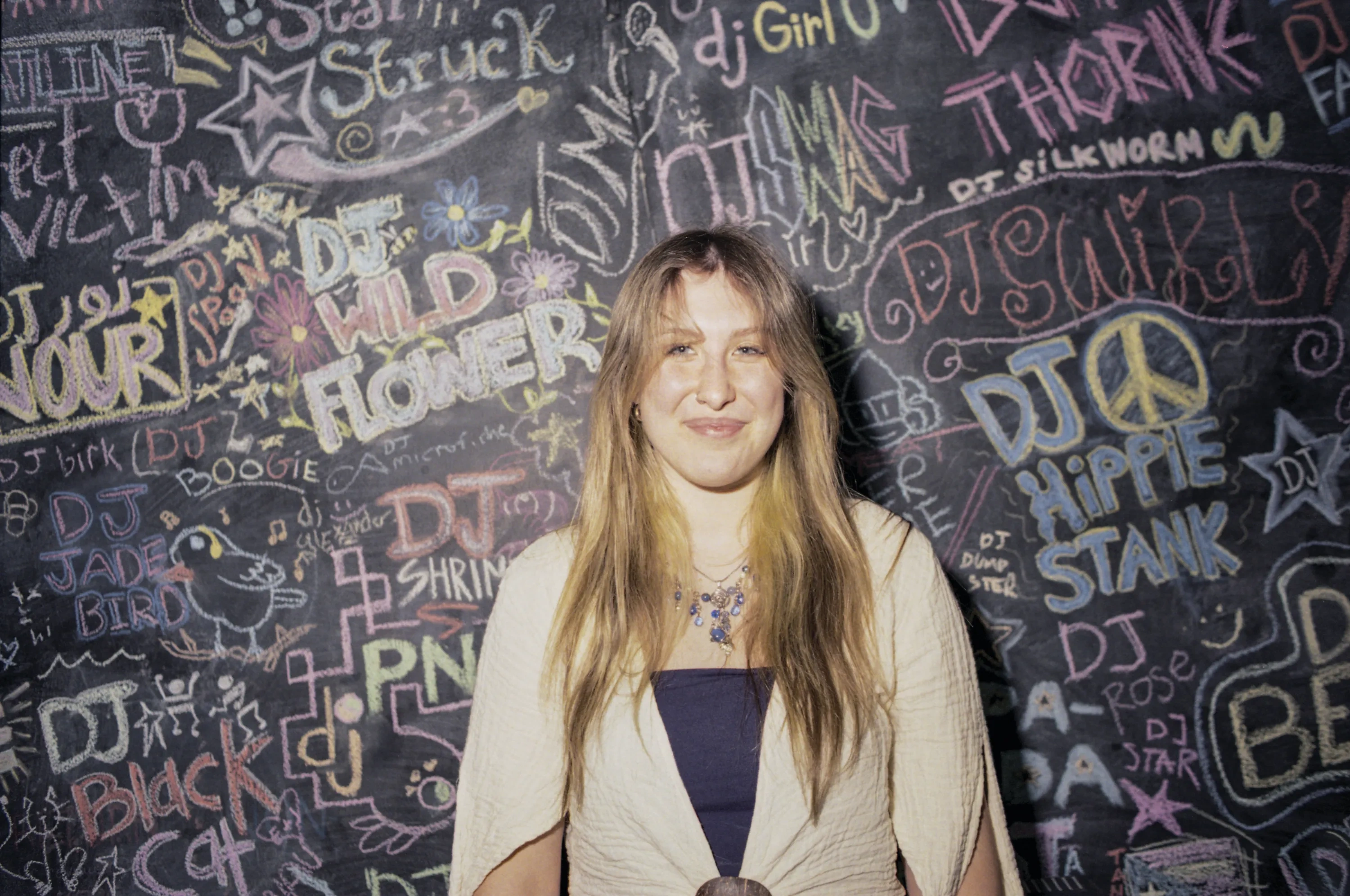
Inside the control room, Claudia Bieniek, BA ’26, aka DJ Wildflower, was pulling a double shift. Also KVRX’s programming director at the time, her most recent regular show was “Cycles of Rebirth,” featuring heavy doses of psych, prog, and other weirdness, as well as live tarot readings. But for several weeks in this, the last semester of her senior year, she worked KVRX directly into her liberal arts education, hosting an all-Polish show, “Polskie Radio,” as a bespoke extra-credit project for POL 326: Third Year Polish (students in the class are asked to engage with the larger Polish community or culture in some way).
A government and psychology major with triple minors in Polish; anthropology; and law, justice, and society, Bieniek did firsthand research on Polish music during a summer abroad in Krakow and studied its communist-era music scene in an anthropology class. She also asked her parents for suggestions. And thus, there she was on the air, announcing a 1972 track by Skaldowie, a popular Krakow band that was on tour in the U.S. when martial law went into effect in Poland in 1980. “The lead singer decided just to stay in the United States,” Bieniek told the KVRX listeners. “The rest of the band members went back. And that ended the group. They did have some reunion tours after that in the 2000s.”
If play-everything-freeform is the heart of college radio, specialty shows—organized by theme, genre, format (i.e. all-cassette or all 7” vinyl) or whatever else—are its creative lifeblood. DJ microfiche just wrapped up a show called “How Did I Get Here,” diving into music, both new and old, from different cities around the world, including Olympia, Washington, and Melbourne, Australia. DJ hippiestank had a regular music show (“obscure rock and prog tunes”) as well as “Poetry Church,” where she and another DJ would read and discuss poetry, both well-known and by students. Another DJ, Alexander Funk (who goes by DJ Funk, though he’s never done a funk show) hosted a film music show, a “genre of the week” show, and for three semesters, the station’s polka show.
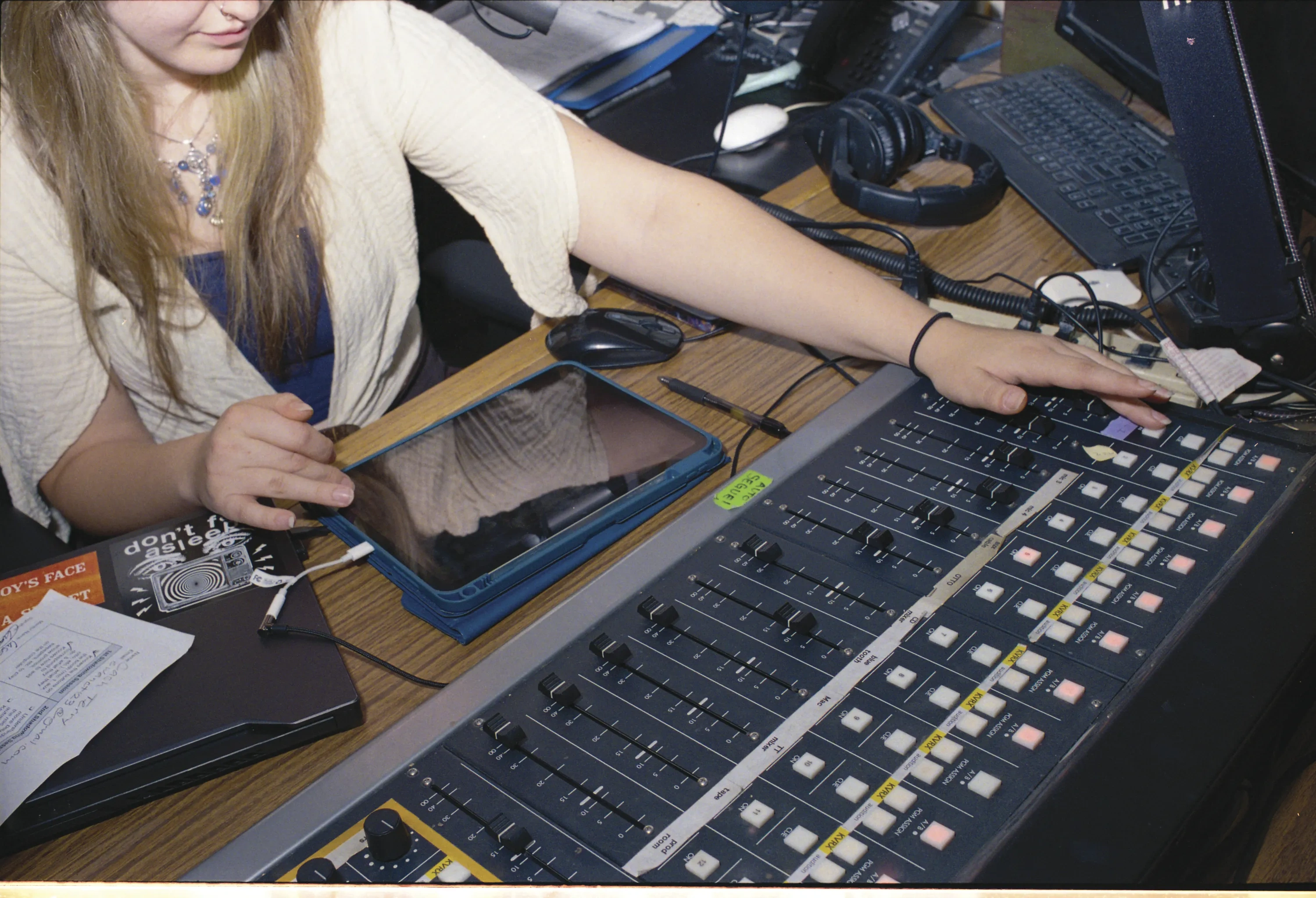
And of course, sometimes one might tune in and hear a random college sophomore free-associating effusively about their lunch—another quirk of college radio that very much predates social media. “People in general listen for the eclectic, offbeat nature of KVRX,” Carballo says.
Where some students, like Carballo, show up at KVRX ready for training before they’ve even registered for classes, others stumble upon it through tabling, or find out via word of mouth. That was the case for Alexander Ibarra, aka DJ PNG, who took over “Far East to the East,” a long-running, multi-genre Asian music show, this past year as a freshman. “I was like, This is going to make me a more interesting person,” he remembers thinking about the station. “And it’s delivered. I think I have become much more multifaceted since I came here.”
Dillon Aitala, BA ’26, was destined for KVRX, even if he didn’t always know it. Both a music fan and a musician, he’s also a legacy: Sarah Beechner’s son. But his mother didn’t push him down this path. “I was always aware of my mom’s involvement when she was at UT,” Aitala says. “But I never really understood what college radio or student broadcasting were.”
Aitala eventually came to realize KVRX was both full of kindred spirits and a place to learn the independent music business. The only problem was that he spent his freshman year at UT San Antonio. But the minute his transfer application was accepted in the summer of 2023, he trained as a DJ, eventually becoming KVRX’s booking director. (He also lived and booked shows at the legendary Pearl Street Co-op.) His on-air name? DJ Beechner, in homage to his mother. “I thought it was cool to carry on the legacy and the name,” he says.
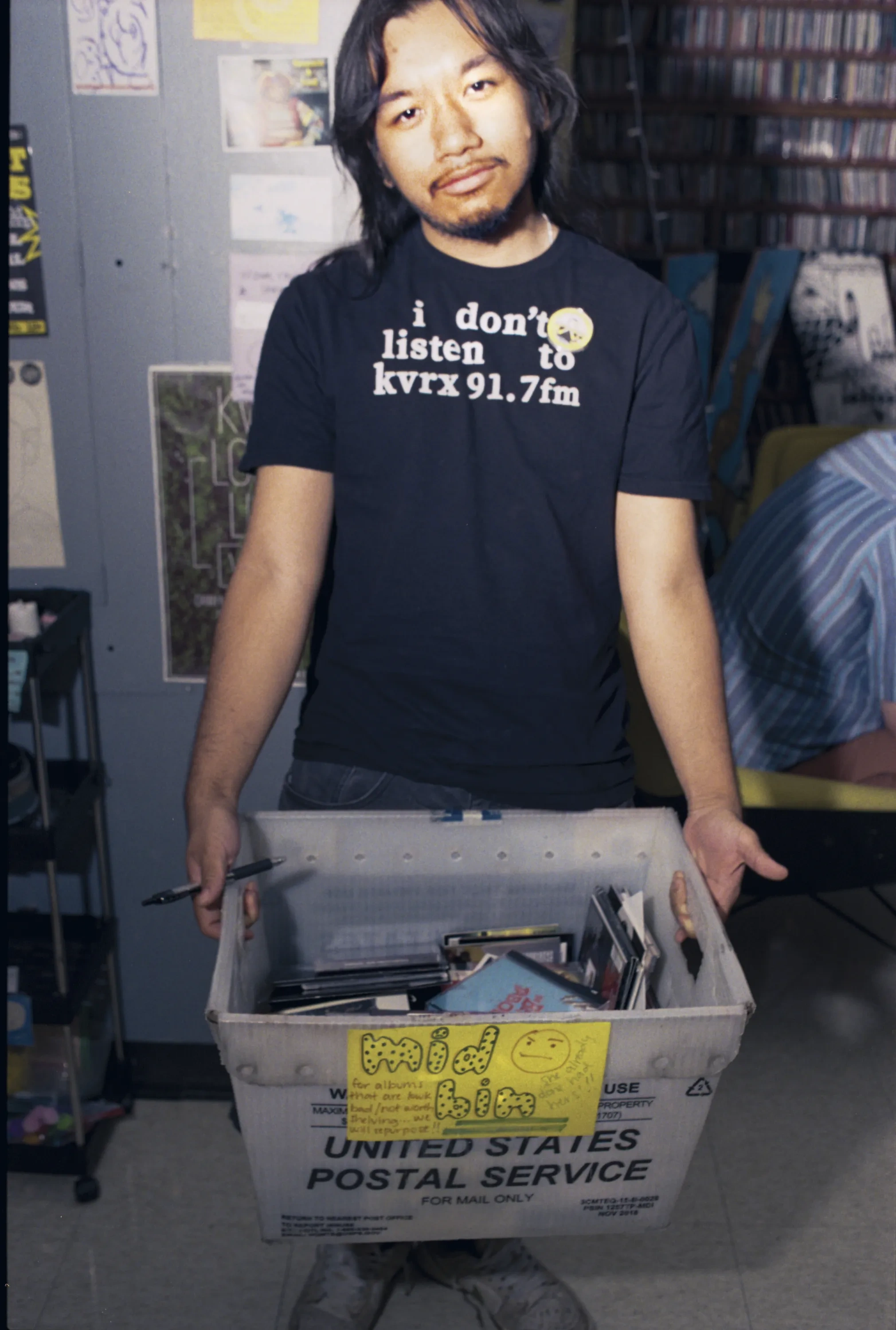
Aitala’s own band, Grocery Bag, is in rotation at the station and has performed a “Local Live” session. Their garage-psych sound has also caught the attention of Austin Psych Fest (the band just played the most recent festival) and the international music scene. And while Aitala doesn’t even want to think about it, with Grocery Bag’s next big gig being the first weekend of ACL Fest in October, it’s possible that someday his own music will “graduate” from KVRX.
Aitala’s experience is a reminder of how much KVRX means and matters beyond The University of Texas. Most listeners are actually off campus. But that’s part and parcel of the University’s mission to the greater public: Noncommercial radio frequencies in general, and college radio specifically, are a community asset, just like the Blanton, the Ransom Center, Texas Performing Arts, and, yes, Arch Manning. It also seems perfectly fitting that KVRX shares its building with a plaque honoring Daily Texan alumnus Walter Cronkite, ’33, Life Member. You trusted Cronkite to show you the world through TV news. You trust KVRX DJs to do the same with music.
“People love learning from DJs and getting to have, like, that buddy to share a song with at a moment in time,” Carbello says. “You’re speaking into the void, essentially. But people are listening all the time.”
Jason Cohen, MS ’92, Life Member, is a former KTSB DJ.
CREDIT: Photographs by Sandy Carson