This Sports Psychologist Prepares Athletes For the World’s Biggest Stage
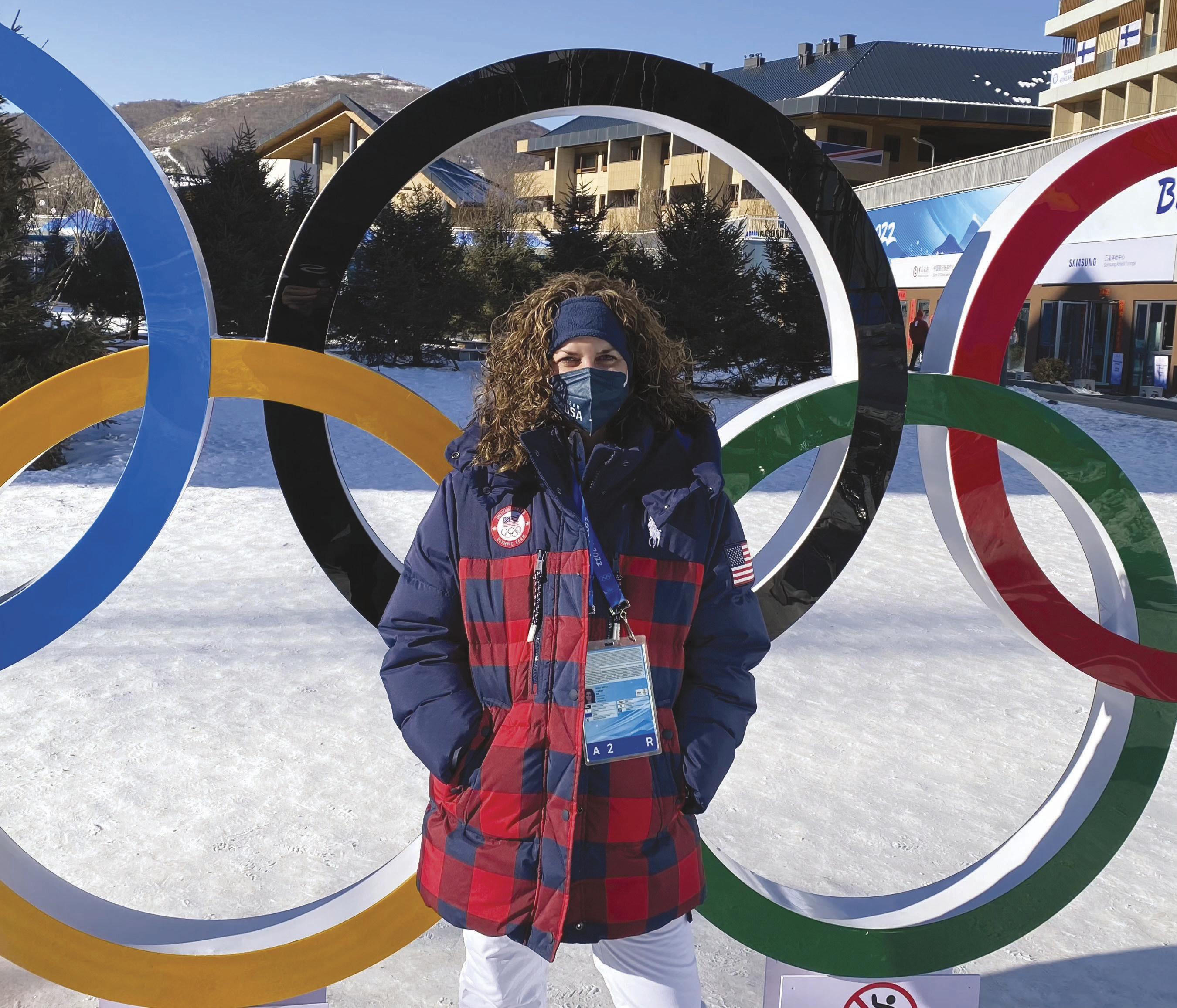
When Jessica Bartley was playing goalkeeper on a club soccer team during her high school days in Richardson, she dreamt of playing for the Longhorns. But a string of injuries, including a significant rotator cuff injury, plus broken ribs suffered in an on-field collision with another player, changed her plans. “I remember wearing a sling to the prom,” Bartley recalls. “I’d always wanted to play in college, but I just kept getting injured. That’s when I had this interest in working with athletes with injuries.” Describing herself as “lost without sports” when she arrived on the Forty Acres, Bartley found her footing through her experience working for Texas Athletics and, later, through a social work internship that shifted her focus to helping athletes like herself overcome adversity. “Building mental health programs looked very, very different back when I was habitually getting injured,” she says.
Bartley, BA ’05, MS ’07, Life Member, leaned into that need and built a career helping premier athletes navigate the physical and mental roller coaster of professional sports. She now serves as senior director of psychological services for the United States Olympic and Paralympic Committee (USOPC), leading a team of 18 mental health professionals who travel the globe to major competitions.
“We’re around to support all the athletes,” Bartley says. Her team meets with competitors before events to help them navigate pressure and emotions, and they stay close afterward—whether the outcome is exhilarating, overwhelming, or heartbreaking. “We’re there for anything leading into, during, and after,” she says.
Over the past six years, Bartley has helped prepare Team USA for the global stage through unprecedented challenges, including a Summer Olympics in Tokyo that was delayed and reshaped by a worldwide pandemic, a tightly restricted 2022 Beijing Games, and the most recent Winter Olympics in Milan and Cortina—where figure skaters Alyssa Liu and Ilia Malinin embodied the extremes of what athletes experience in the kiln of competition.
Bartley’s path to the high-impact role began years earlier, after she graduated from UT and headed to the University of Denver to earn a second master’s degree in sport psychology and then completed a doctorate in clinical psychology. Her initial work took her to Ohio State University and the University of North Carolina, where she increasingly worked with college athletes who doubled as Olympians.
“I started working with a lot of track and field athletes on their mental health and mental performance, and I got asked to start traveling with USA Track & Field,” she says. “From there, I was introduced to more and more sports, and more and more athletes.”
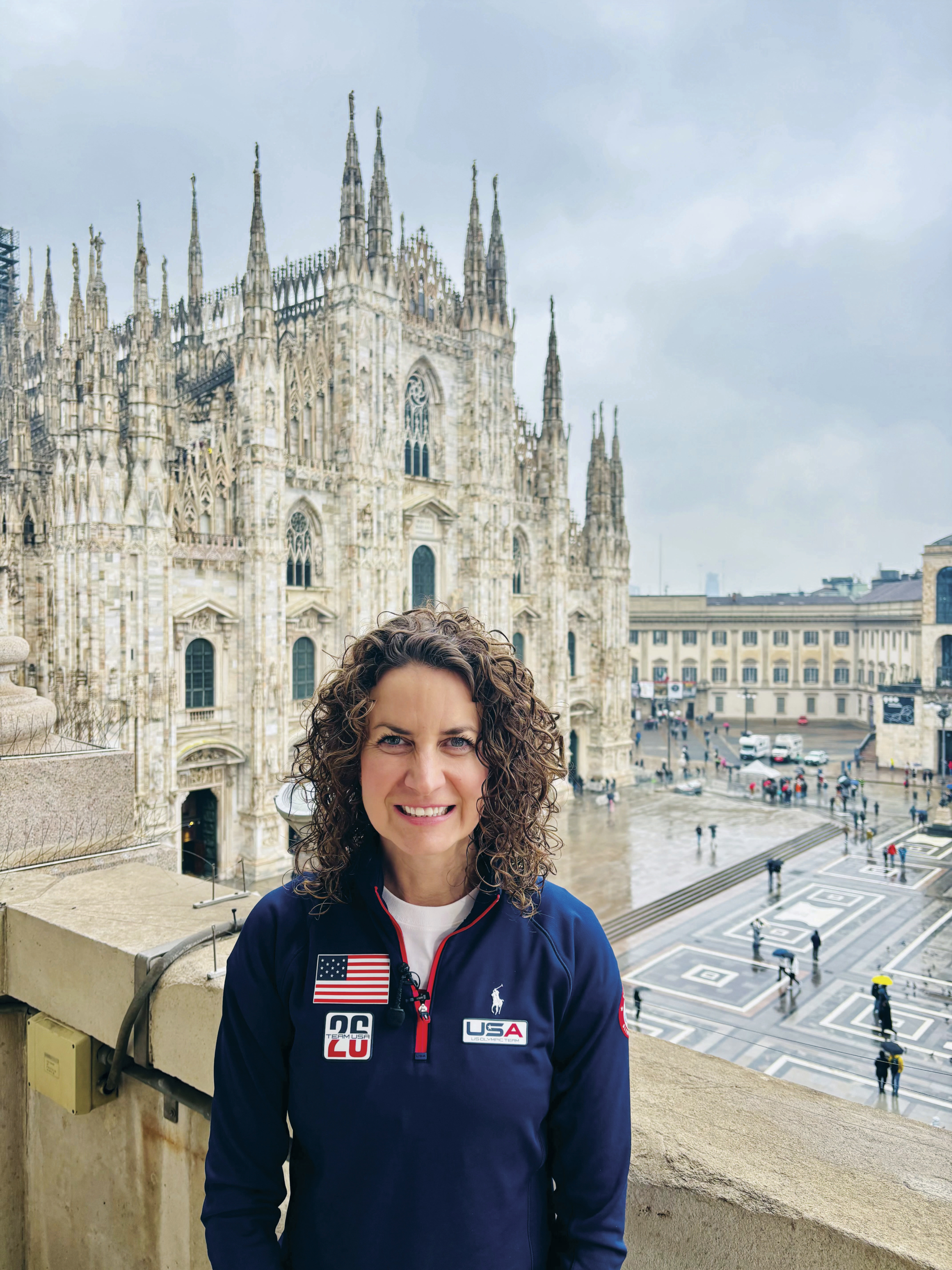
In 2016, she began teaching at the University of Denver, just over an hour’s drive from the USOPC Training Center in Colorado Springs, and began contracting with USOPC that year. She then became more involved in the wake of the USA Gymnastics scandal in 2019 that put athletes’ mental health on the front burner.
By September 2020, she’d become a USOPC employee, working with athletes just as global sport was beginning to bounce back from months-long, COVID-triggered shutdowns. Over the next year, she and her team used visualizations and virtual reality devices to help athletes understand what the Tokyo Olympics would look like, preparing for a competition where the typical boisterous audiences—including their family members—still couldn’t assemble. That carried over to the ’22 Winter Olympics in Beijing, which Bartley characterizes as “more restrictive” as COVID concerns persisted.
With the Milan games now behind them, Bartley’s team is already preparing for the ’28 games in Los Angeles, the first on American soil since Salt Lake City in 2002, and the first summer gathering since Atlanta in 1996. While they steeled athletes for an Olympics devoid of its usual crowds in 2021 and 2022, they’ve shifted to preparing competitors for even more eyes on them than usual.
“We call it the home-field advantage,” Bartley says. Though athletes will be in an Olympic Village that will feel more familiar, more accessible to friends and family, and even in familiar time zones, she points out there’s a flip side for Americans competing in the U.S.
“You’re probably going to have more family and people who want tickets, and you’re probably going to have more distractions,” she says.
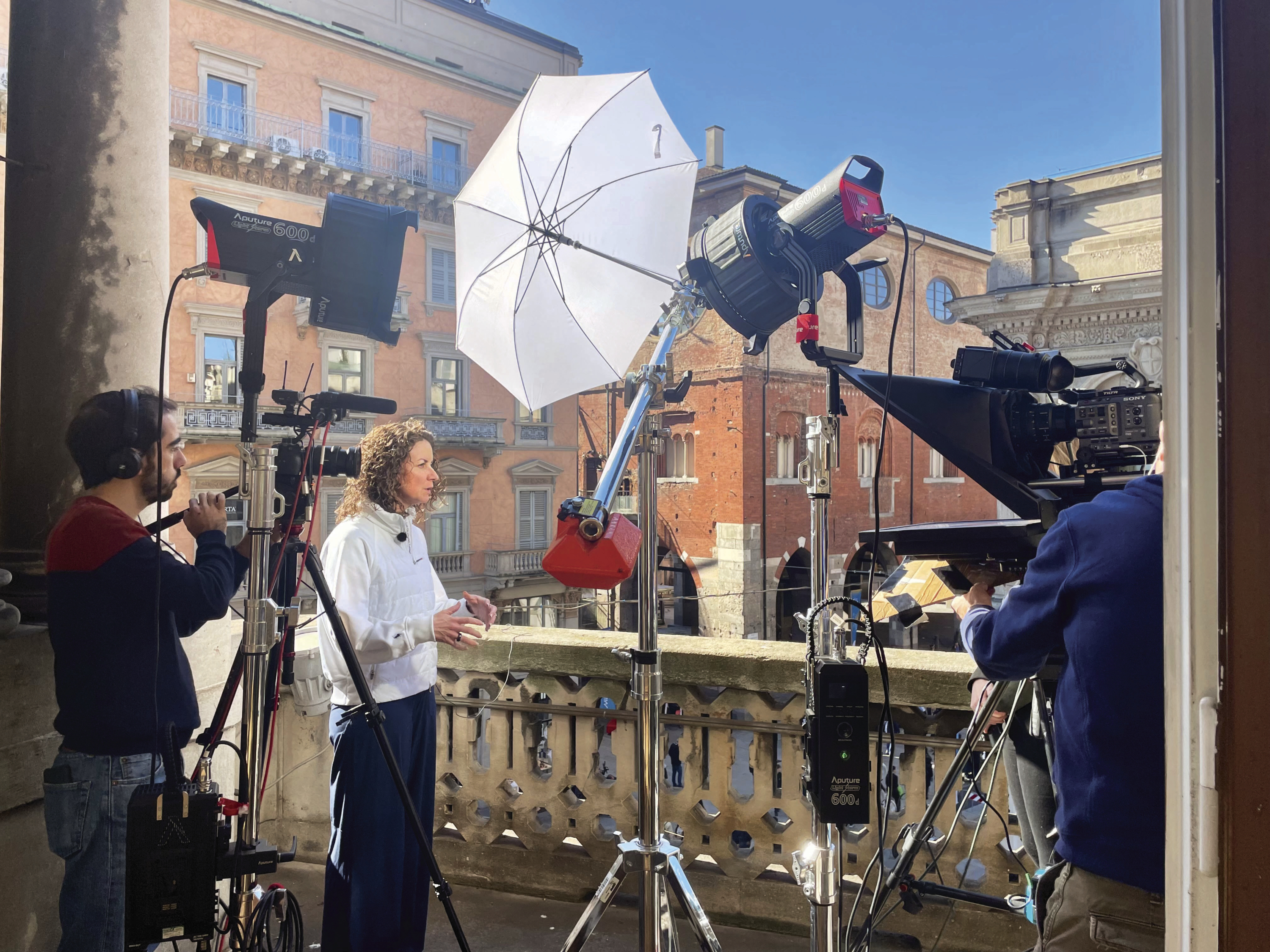
As the Milan games underscored, social media had considerable influence on mental health—even for triumphant athletes like Liu, who saw follower counts multiply in the wake of her winning. Body image also comes into play for athletes; Bartley notes that 56 percent of the U.S. athletes who competed in Italy grapple with a body image-–related issue.
She says that while the U.S. is still a front-runner in attending to athletes’ mental health, she’s recently participated in gatherings with colleagues in other nations to share best practices—carrying the ethos of the “swifter, higher, stronger—together” Olympic motto to their work.
“It’s cool to think about the impact we’re having globally,” she says, drawing inspiration in part from her three children—ages 8, 5, and 3—and envisioning the world they’ll live in.
“I love the reach that my position has and everything we’re building,” she says. “We can hopefully be a good example, in not only the United States, but the rest of the world, as organizations are starting to think more about mental health.”
CREDIT: Courtesy of Jessica Bartley