The First Movie Studio in Texas
A new book co-written by a UT professor tells the story of a moving-picture studio outside San Antonio in the early 20th century. Determined to make the most authentic westerns possible, a Manhattan company filmed there for a little over a year and created more than 70 single-reel films.
By Kathryn Fuller-Seeley and Frank Thompson
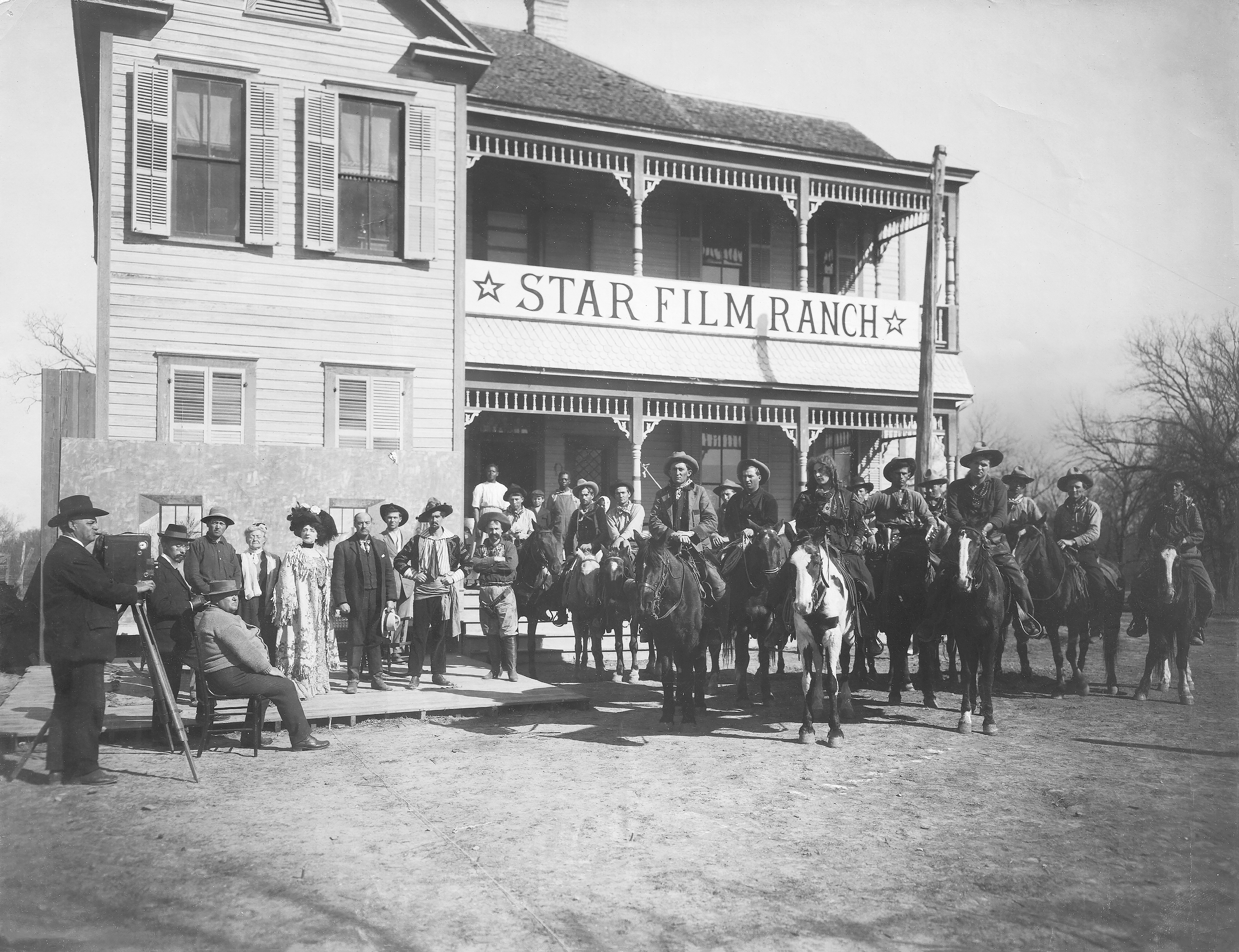
The Méliès Star Film Troupe’s Early Days in San Antonio, January 1910
Gaston Méliès sent his troupe to Texas for four months of film production in late December 1909, but he did not accompany them. Instead, he remained behind at the New York City office to manage film print duplication and sales. He designated the Star Film Company’s director, Wallace McCutcheon, and assistant manager, Paul Méliès, his son, to oversee operations on location. The two men arrived in San Antonio on January 2, 1910, and immediately began searching for a ranch property to serve as their studio.
Meanwhile, 10 actors and crew members, led by theatrical company manager Carl Anderson, boarded the Mallory steamer Brazos in New York City on December 29, 1909, bringing with them trunks of camera equipment, costumes, props, and rolls of linen on which to paint interior scenery. They landed at Galveston Harbor on January 5. An additional small group followed them to south-central Texas by train.
McCutcheon’s Big Production Plans
On January 3, 1910, a San Antonio Express reporter interviewed McCutcheon and Paul Méliès at their downtown hotel. McCutcheon, who did all the talking, waxed enthusiastic about the Méliès company’s production plans, predicting that their films would serve as advertising for San Antonio by featuring the city in movies that would be shown everywhere. He was careful, however, not to suggest that they expected the city to fund this advertising. “We are not asking any financial aid of San Antonians,” proclaimed McCutcheon. “San Antonio was selected by our firm because we learned it was the land of sunshine and would afford us a great deal of scope for our operations—that is, in at least getting in eight hours a day.” He explained that there was a lot of work to do—local cowboys and horses to hire and a studio to set up. McCutcheon assured the reporter that they would begin production within the week.
Wallace McCutcheon was one of the oldest hands in the movie business, having been involved with moving pictures since the Edison studio began operating in 1895. The ensuing 15 years had seen astonishing growth in the industry, with a torrent of development and innovation as films evolved from novelties—some lasting only a minute—to increasingly elaborate dramatic and comic productions. In 1910, the length of American films was being standardized at 1,000 feet; depending on the speed of projection, which could vary from theater to theater, this resulted in moving pictures that ran from 11 to 15 minutes. Film historians have described how American motion picture production—which had been just a few years earlier a casual arrangement of cast and crew headed by a cameraman who shot street scenes, tableaux, and brief narratives off the cuff—was now becoming a more organized system headed by a director who oversaw the production, working from plot outlines or scene descriptions. Instead of being improvised on the set, films were produced with written scenarios. The one-reel film had become the standard length for film releases for production companies belonging to the Edison Patents Trust.
McCutcheon espoused a mixture of older and current perspectives on methods of film production and narrative complexity, explaining to the San Antonio journalist that while American moviemaking was changing, there was no single set of best practices to follow. “Nowadays every picture must have a story to make it popular,” McCutcheon told his interviewer. Recalling the production practices of 1902, he said, “There was a time when you could show pictures of beautiful scenes, but that time is going by. What is wanted now is action, and the story or plot of the play must be simple enough that it might be grasped by any of the spectators.” In emphasizing narrative simplicity, McCutcheon may have been considering that the one-reel action pictures of the time, which he intended to produce, would have few explanatory intertitles to elucidate the film plot. Within a year or so of McCutcheon’s confident statements, there was more upheaval in production as new developments (such as two- and three-reel films, moving cameras, numerous dialogue intertitles, and more sophisticated editing) enhanced the complexity of American productions.
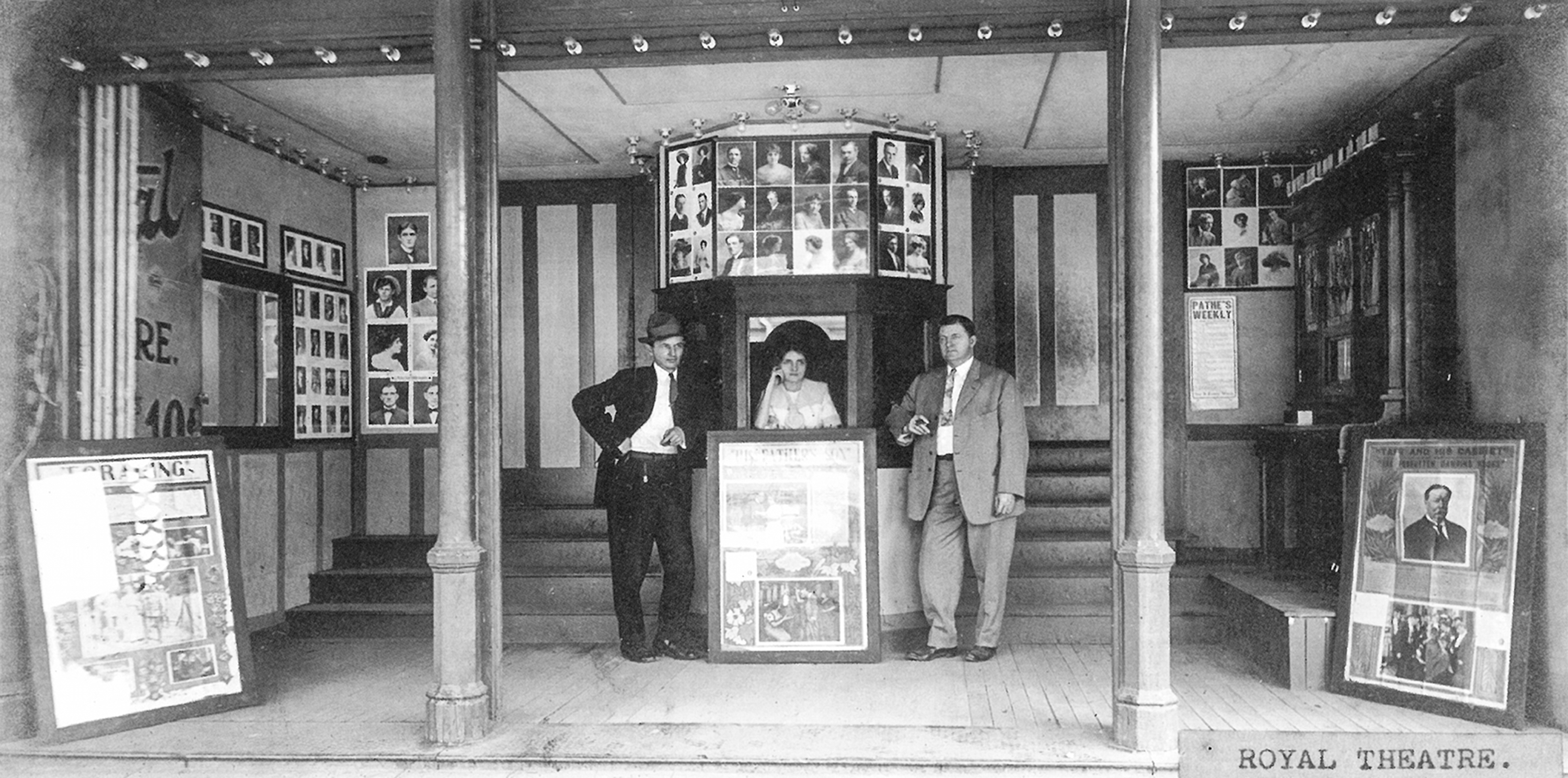
To the reporter, McCutcheon stressed the importance of written film scenarios, which were becoming more common in American filmmaking. This sheet of information, even if brief, described details of the action to guide the director and actors. He explained, “A moving picture, you know, is written just as is any other play, or, I should say, the scenario thereof is so made. Our actors must rehearse this, and as soon as they become proficient the picture is taken.” This was another change that had occurred during McCutcheon’s filmmaking tenure. When he started in the movie business, the camera operator was responsible for production of the film. Now, in 1910, elaborate scenarios were becoming more common in American filmmaking. This too was an improvement over earlier techniques, such as the simple charts that cameraman Billy Bitzer drew for new director D. W. Griffith on the back of laundry shirt cardboards when they started their collaboration at the Biograph studio in 1908.
According to McCutcheon, among the Méliès Star Company’s first planned productions was to be a documentary-like film covering the entirety of the San Antonio environs, with all the area’s scenic and dramatic possibilities. He told the reporter:
We are now having written the story of San Antonio by an author with whom Americans are familiar and who is familiar with the history of this city and its achievements. The staging of this picture must necessarily take in many of the points of interest and will, of course, include the Alamo. We appreciate that a great amount of work and many rehearsals will be required to fulfill our aim in this respect. Before we attempt to put this picture on a film, we shall wish to have it witnessed first by those who are interested in San Antonio and are familiar with the city. We want something historically correct, and there will be ample romance therein. It will be, on the whole, one of the greatest films of the year and one we believe . . . will appeal to the masses.
The Méliès Star Film Company Troupe in Galveston
While McCutcheon was regaling San Antonio reporters with stories of the group’s goals, 250 miles to the east, 10 other members of the Méliès company arrived on January 5 at Galveston Harbor aboard the steamship Brazos. Company manager Carl Anderson held forth to waiting newspaper reporters from Houston and Galveston about their grand plans for the troupe to immediately shoot a film. His description of what that movie would look like was both ambitious and old-fashioned, similar to the earlier type of movie production described by McCutcheon in which melodrama was combined with scenic tableaux of local attractions. The Galveston journalist related to his readers the story of Anderson’s fanciful but thwarted production:
Galveston Harbor was to have figured in a thrilling drama Tuesday—the beautiful maiden, closely pursued by the deep dyed villain, rushing madly down the gangplank of a Mallory steamer just as the boat docked—the hero leaping to the docks and throwing the villain into the bay just as the fair damsel faints into the arms of her father, who is waiting for his wandering girl to return. Then there was to have been a lover’s stroll down one of the oleander-lined avenues of Galveston and an automobile jaunt along the beach. All of this was to have been, but wasn’t—merely because the sun failed to shine.
Rain—and Anderson’s impractical plans—prevented the filming of these hastily plotted scenes at Galveston Harbor that day. The stage manager provided his interviewer with additional colorful coverage, suggesting further plots of Texas-themed films: “Mr. Anderson said that he might work up a picture commencing at a Spanish ball in San Antonio, bringing in a tilt with the Rangers, switching over to Austin where the beautiful heroine rides her cow pony up the Capitol walk into the governor’s office, and winding up in Galveston with the cowpuncher and his dame escaping to South America on a tramp steamer.” Given that Anderson was more experienced in theatrical than film production, his ideas for plots were often far more ambitious than the small Méliès company could realistically hope to produce in early 1910. He was also the first to mention plans to make an Alamo epic:
Among the plans for the winter in Texas is the production of a spectacular film depicting the siege of the Alamo. If the consent of the proper authorities can be secured this picture will be taken in and around the Alamo in San Antonio. The actors will be made up and costumed in accordance with the period. There will be a mob of “supes” carefully drilled, who will furnish the Mexican army and minor characters, and the leading parts will be taken by the best actors in the company. It is not known whether permission will be given for the use of the Alamo for moving picture purposes, but if so the story of the famous old landmark will not only be perpetuated in song and verse and story and painting, but in canned drama.
He went on to note that in addition to the challenge of securing permission from the authorities, they would have to devise a way to keep everyday people from walking into the film scene and gawking at the camera.
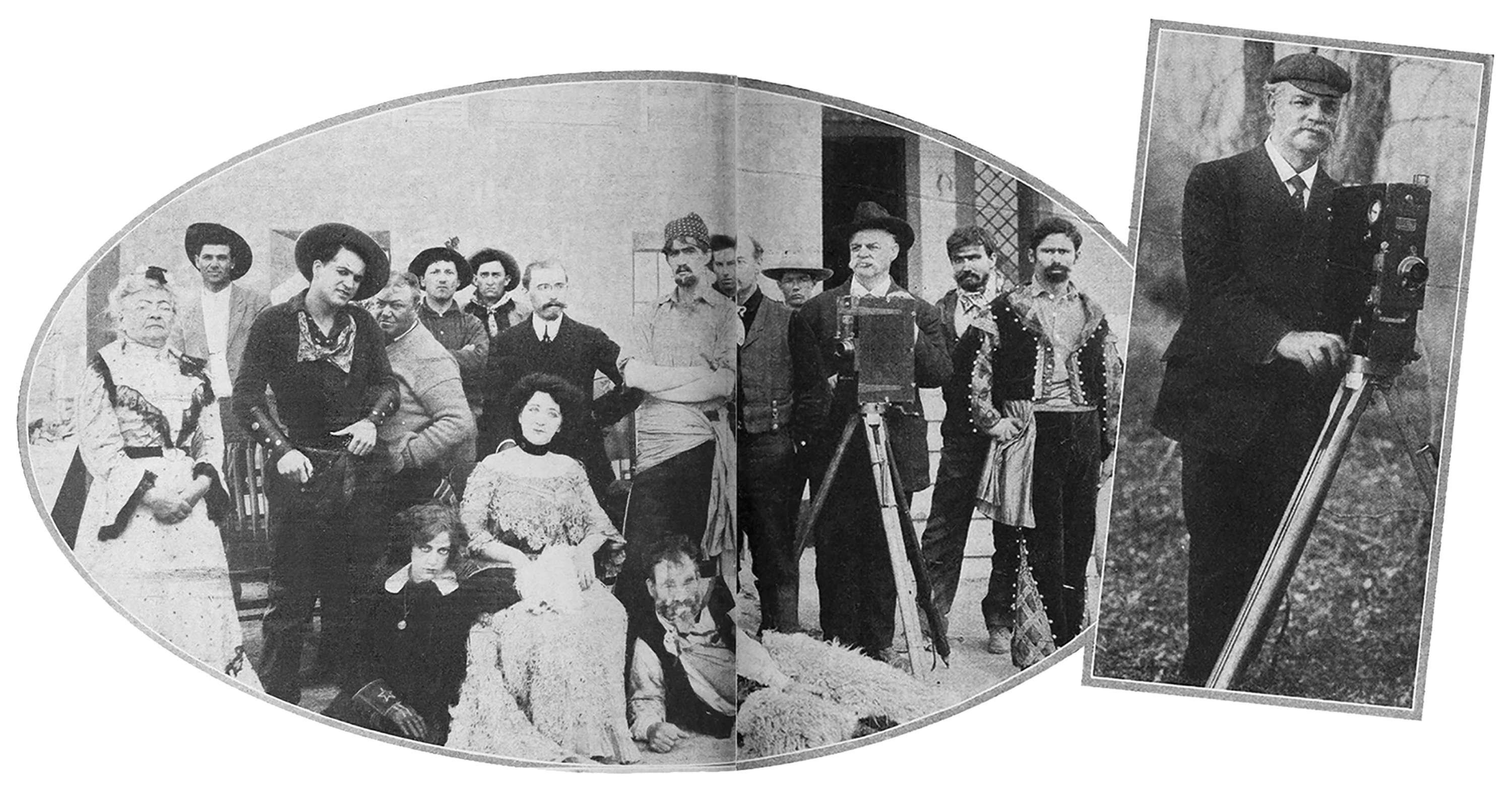
Accompanying the big-talking manager Anderson on the steamer were the company’s camera operator, William Paley, and his wife, Ada, as well as artist Horace Siller, who would paint backdrops and provide whatever other scenic design was required. Actresses Dolly Larkin, Kitty Blanchard, and Estelle Seaberry and actor Francis “Frank” Ford were the principal performers, along with several other actors whose identity time has obscured—Wallace Scott, Richard Knowles, and Henry Bannon. An article in the Houston newspaper also listed additional troupe members, identified only as Miss Haskins and Mr. Nelpe.
Anderson provided details about how diligently the filmmaking company would have to work during its four months on-site, noting that significantly more labor was required to make films on location than to be part of a traveling theatrical company. The troupe’s biggest challenge would be to meet Gaston Méliès’s dictate that they must produce 2,000 feet or more of film per week. Méliès saw this accelerated schedule as the only way to make the venture profitable. To Anderson and McCutcheon, more familiar with the older ways of filmmaking, a week’s total work might equal 200 to 400 feet of exposed footage. The Edison Patents Trust had contracted with the Méliès company to release 1,000 feet of film, a completed reel, every Friday. Completing two such releases each week was going to be a tall order.
While many of McCutcheon’s and Anderson’s comments harked back to their familiarity with earlier conditions of filmmaking, one topic was controversial to discuss in the contemporary American film industry. Both spokesmen referred to the company’s performers as “stars.” Anderson, coming from the theatrical world, was comfortable with the promotion of prominent performers. In early 1910, however, the major American film companies that were gathered into the Patents Trust, such as Biograph and Edison, were adamantly against the promotion of individual actors in their films. It was not until March 25 of that year that independent film producer Carl Laemmle, a rival of the trust who was trying to create competitive leadership in the industry, set up a publicity stunt around his recently contracted actress Florence Lawrence. It was alleged that she had been killed in an accident in St. Louis, so when she appeared in person at the city’s train station, hundreds of fans went wild. This widely reported event propelled Lawrence to new film stardom. Nickelodeon audiences had known Lawrence only as the “Biograph girl” and then the “IMP girl,” but soon she was billed by her own name.
The topic of billing moving picture players was widely debated within the film industry, and the Méliès group did not necessarily support the patent trust’s ban. Despite the determination of trust firms to keep actors anonymous, Anderson acknowledged the primacy of movie fans desiring to see favorite film players in driving the growing popularity of the movies:
The patrons of many moving picture theaters have learned to recognize each member of the cast in films manufactured by certain concerns, and to have favorite actors and actresses. There are “stars” in each troupe, and the habitué of moving picture shows has learned to look for the face in each film. Therefore, every company attempts to maintain the same cast, because once a company builds up a good reputation with a certain troupe, and the people learn to recognize the faces, it is as if they went to see a stock company in a change of program each day, and it is not good policy to change the producing company’s cast. A few years ago, people paid no attention to this. If they thought anything about it, they probably wanted a change of faces. Now they wish to have the same company, the same faces, in each picture.
For their hard work, these Méliès “stars” received only four-month contracts paying them $100 per week. Nevertheless, hewing to trust member company practices, Méliès publicity refused to identify performers by name. Only when J. Stuart Blackton of the Vitagraph company helped start the first fan publication, The Motion Picture Story Magazine, in the spring of 1911 were Francis Ford, Edith Storey, and other Méliès company performers identified and promoted.
Reporters’ Visits to the Newly Acquired Star Film Ranch
On January 6, 1910, The San Antonio Light and Gazette warned its readers of the strange happenings on city streets that would soon be occurring in an article titled “Not Cranks or Crazy Persons—They’re Moving Picture Actors.” Reporters also interviewed McCutcheon for updates on the troupe’s plans. He and Paul Méliès had rented what they called the “Green House” and 20 acres of land across the San Antonio River from the Hot Wells Resort and within walking distance of two of the five San Antonio missions, San José and San Juan. McCutcheon continued to emphasize that they were organized and ready to begin. McCutcheon explained that the company had purchased film scenarios from commercial authors and brought along at least 20 of them, including A Race for a Bride, Branding a Thief, An Indian Tragedy, and Pepita the Rancher’s Daughter (several were produced that winter). He claimed that the company’s actors would come up with additional scenario ideas. He also assumed (incorrectly, it turned out) that the interior shots could be taken in the small barn made over into a studio. Without expensive lights, however, this was impractical, if not impossible. In fact, the indoor scenes were shot outdoors on a small wooden stage built in front of the ranch house, with the walls for the sets painted on canvas.
The idea of a major Alamo film was starting to come together in their plans, and McCutcheon related, “Our masterpiece . . . will be San Antonio with a scenario by a New York author. It will deal with every famous event in the history of the early days—particularly the Alamo story. All our actors are skilled in this sort of drama. They are versatile character men and women and our costumes and settings will be made up of the ‘genuine’ article—troopers, cowboys, Mexicans, and the townspeople in the costumes and characters of the period.” Finally, McCutcheon reiterated Anderson’s urgency about how quickly the company would have to become fully productive: “We are obligated to turn out 2,000 feet of film—that may be anywhere from two to six stories—in a week, to justify the great expense of this trip … approximately the weekly cost of this trip will be $2,000.”
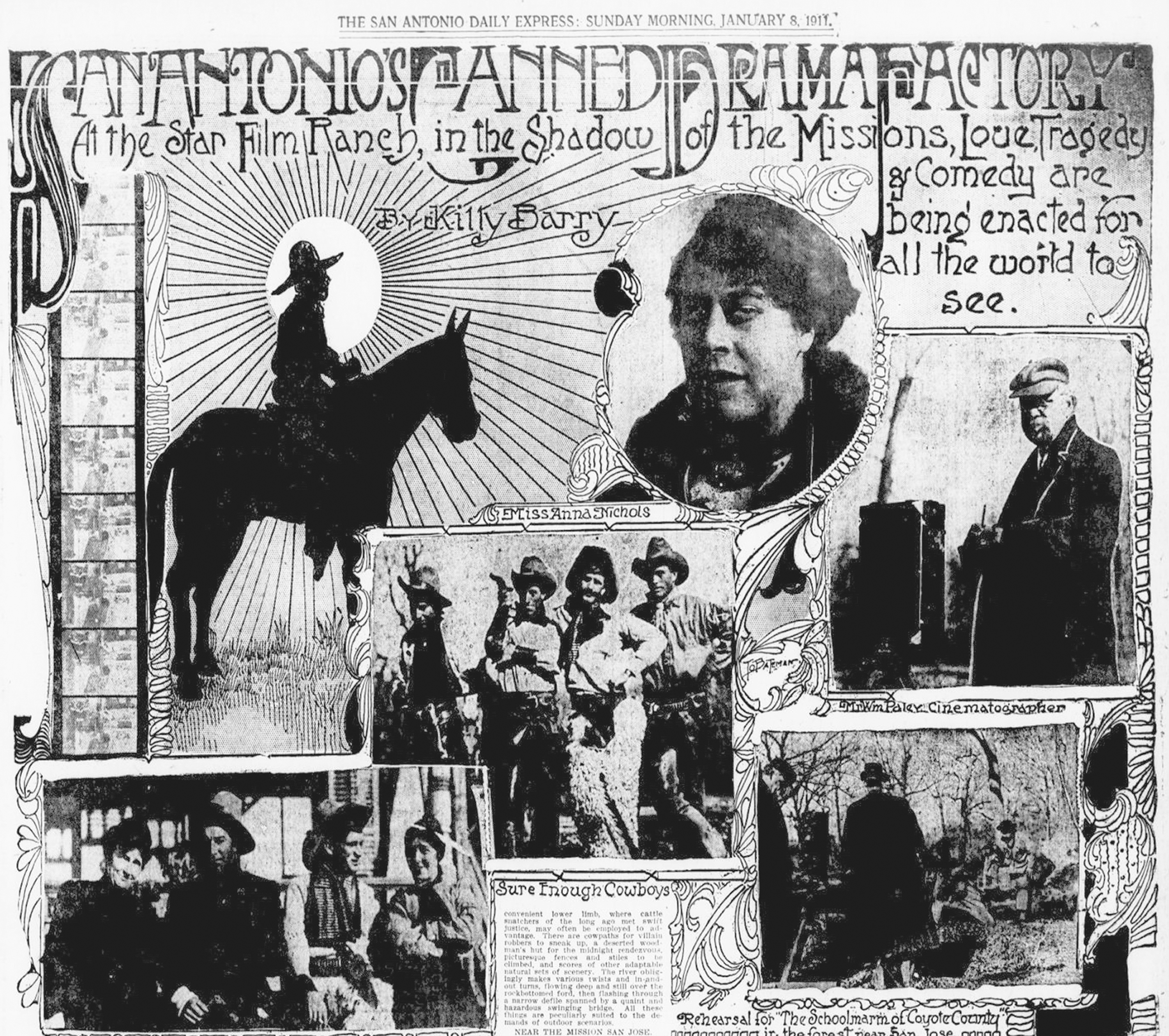
A Rocky Start
McCutcheon had confidently told reporters that filmmaking operations would be in full swing by January 10, but an unusual period of cold, gray weather, along with construction issues, prevented the commencement of production. On January 16, a San Antonio Light reporter briefly checked in at the Star Film Ranch and spoke with Carl Anderson, who admitted that filmmaking was still delayed. The reporter noted that the company “is about settled down and early next week he and his company will commence to enact their parts.” Alamo film plans also remained in limbo. “Mr. Anderson will call on Mayor [Bryan] Callaghan someday next week and make an effort to get a permit to reproduce the siege of the Alamo. It is thought that this battle will be pulled off at daylight some morning in order that there will not be many people on the plaza and who would not step in when the battle is raging and spoil the scene by ‘rubbering’ at the man working the camera.”
Nearly a month elapsed without further press coverage on the Méliès company’s activities. Then on February 13, news in both the San Antonio papers and the film industry trade journals announced that Wallace McCutcheon had suddenly left the company and returned to New York, because of either ill health or a better job.
Two existing group photos taken of the Méliès troupe include McCutcheon, indicating that they were shot before February 13. Both feature Francis Ford wearing the same Mexican costume, so they were probably taken during the filming of The Seal of the Church. This was the company’s fourth completed film, released on April 28, 1910, making it likely that this was McCutcheon’s final production with the troupe.
As work continued following The Seal of the Church, there is no evidence that Carl Anderson was still managing the troupe either. They were suddenly rudderless. Assuming leadership duties was actor Hector Dion, who had extensive acting and directing experience on the New York stage and had worked at the Vitagraph film studio. The census record of workers residing at the Méliès Star Ranch on April 8, 1910, lists Dion as director/manager of the “film factory.”
The San Antonio Light reporter had jested in January, “At any rate, when the company gets in full action there will be many rumors of hold-ups and murders being committed in the city and vicinity and things will pick up in the neighborhood.” Among all the false confidence and bad news, this item was true. A comment on the Light’s editorial page on February 13 noted, “Since these moving picture film people have picked San Antonio as the scene for their thrilling rescues and bloodcurdling deeds, no wonder the police station telephones are kept busy by alarmed women who are seeing things that rival the scenes of the days of the Indian and the plainsman.”
Excerpt adapted from The First Movie Studio in Texas: Gaston Méliès's Star Film Ranch by Kathryn Fuller-Seeley and Frank Thompson, © 2026, published with permission from The University of Texas Press.
CREDITS: Kathryn Fuller-Seeley Collection