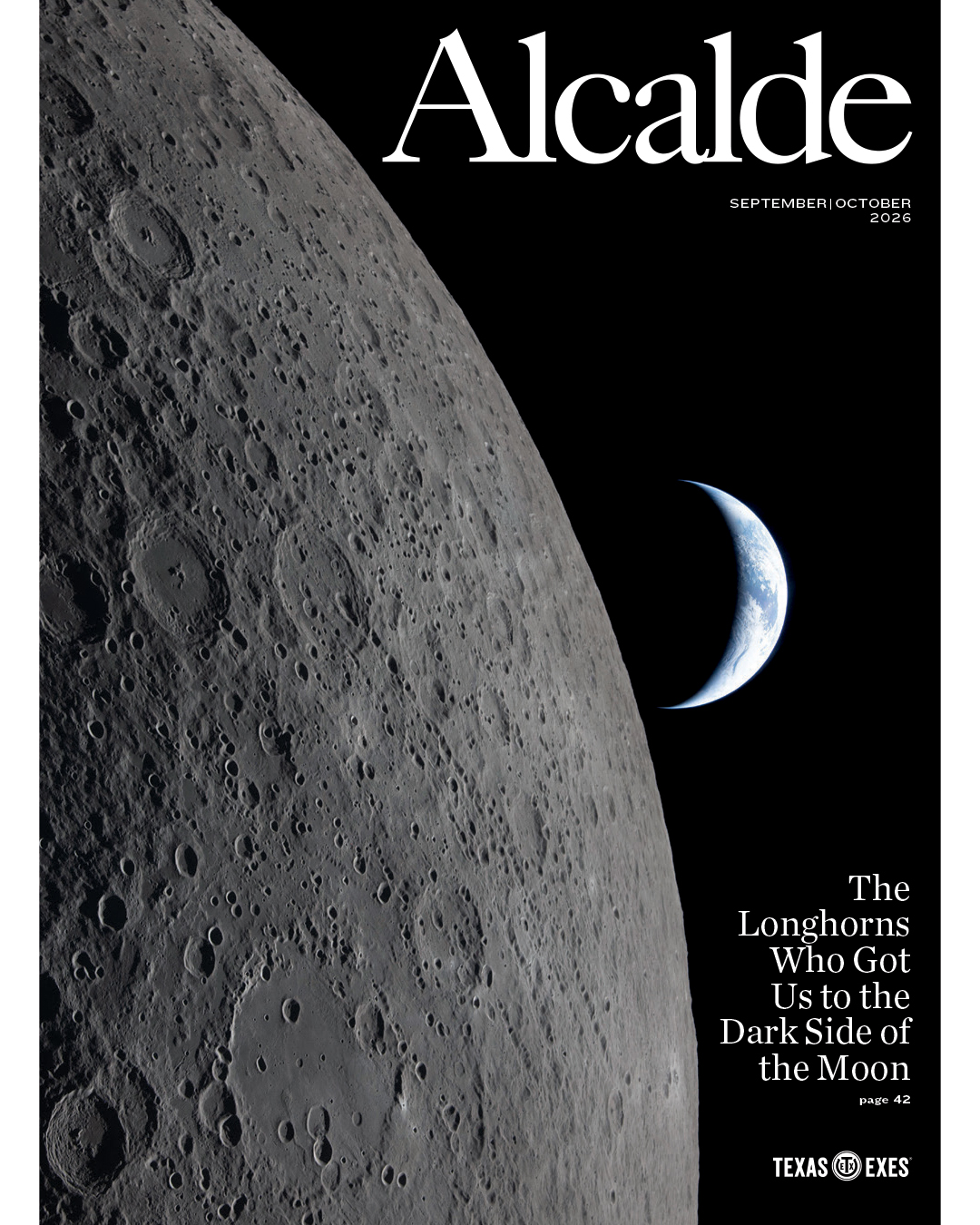
The Longhorns Who Got Us to the Dark Side of the Moon
Lily Schueppert didn’t get to see the moment that the Artemis II mission left the Earth from the Kennedy Space Center in Florida. Unlike the 18 million people who tuned in to U.S. television broadcasts, or the 10 million people who viewed NASA’s livestream, she didn’t watch the launch until she got home from work that night.
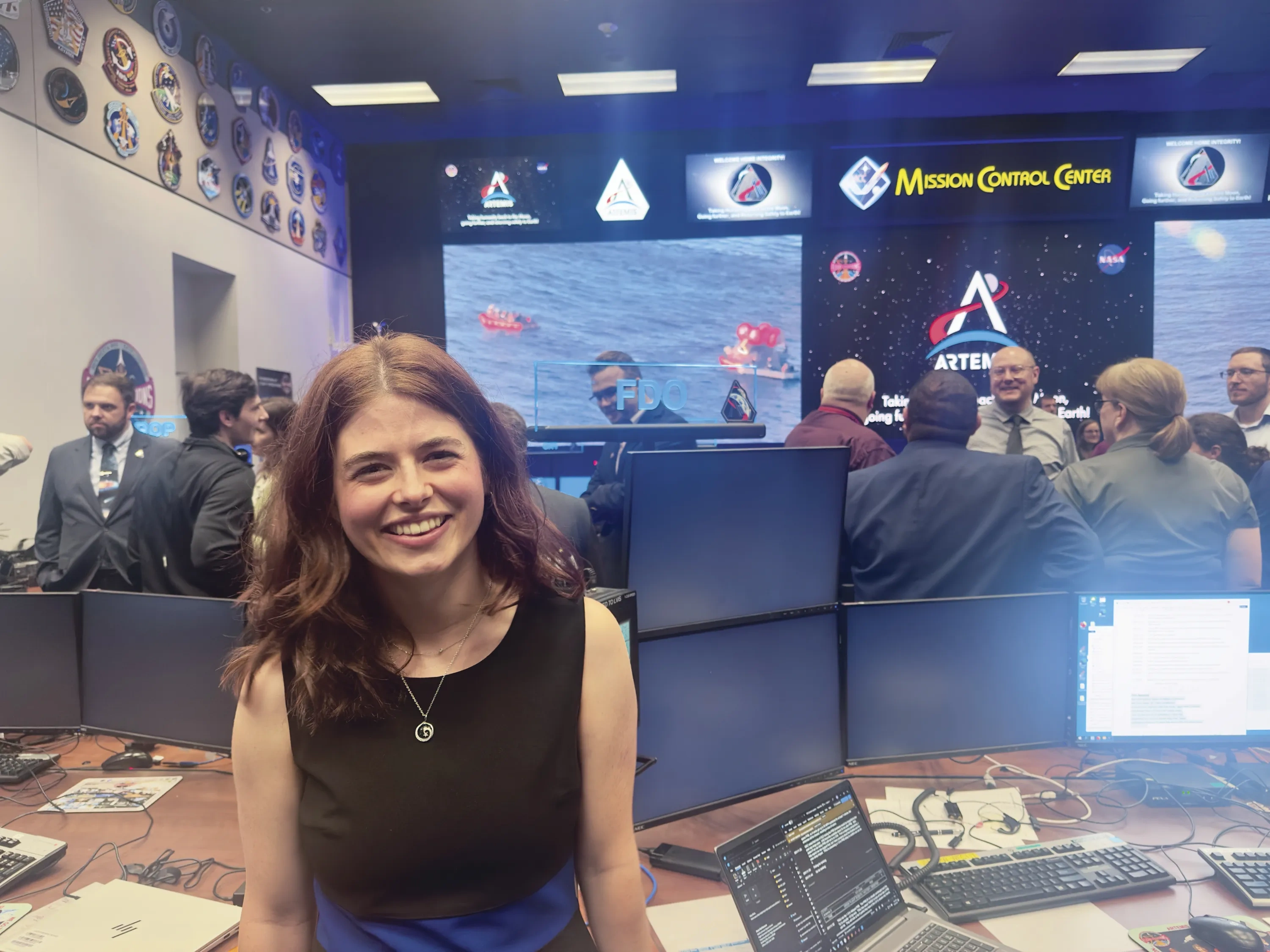
That’s because, at the crucial moment of liftoff, Schueppert, BS ’24, had her head down at her desk in Mission Control, manning the software she’d built to automate calculations for the spacecraft’s trajectory based on its exact time of launch.
“I saw the rocket. I saw the engines light up,” she says. “We saw fire, checked to see that the launch time was locked on our display, and then it was immediately, Okay, this is go time.”
Schueppert is a flight dynamics officer at the Lyndon B. Johnson Space Center (JSC) in Houston, where she grew up with an insatiable interest in space.
“When I was a little kid, [my dad got my younger sisters and me] these tiny little model rockets,” she says. “I remember standing there with my dad, and I was so, so nervous. And then I watched it fly into the sky. I’ve joked a lot that, as I’ve gotten older, I need to keep launching bigger and bigger things in order to keep chasing the same rush.”
Schueppert is part of a strong contingent of Texas Exes who followed childhood dreams through UT’s engineering programs and then on to the National Aeronautics and Space Administration. It’s hardly a surprise, given the University’s status as ground zero of the personal computer revolution, and with the “home of human space flight” at JSC just a jaunt down US 290. But not every NASA-bound Longhorn had their sights set on space from the beginning.
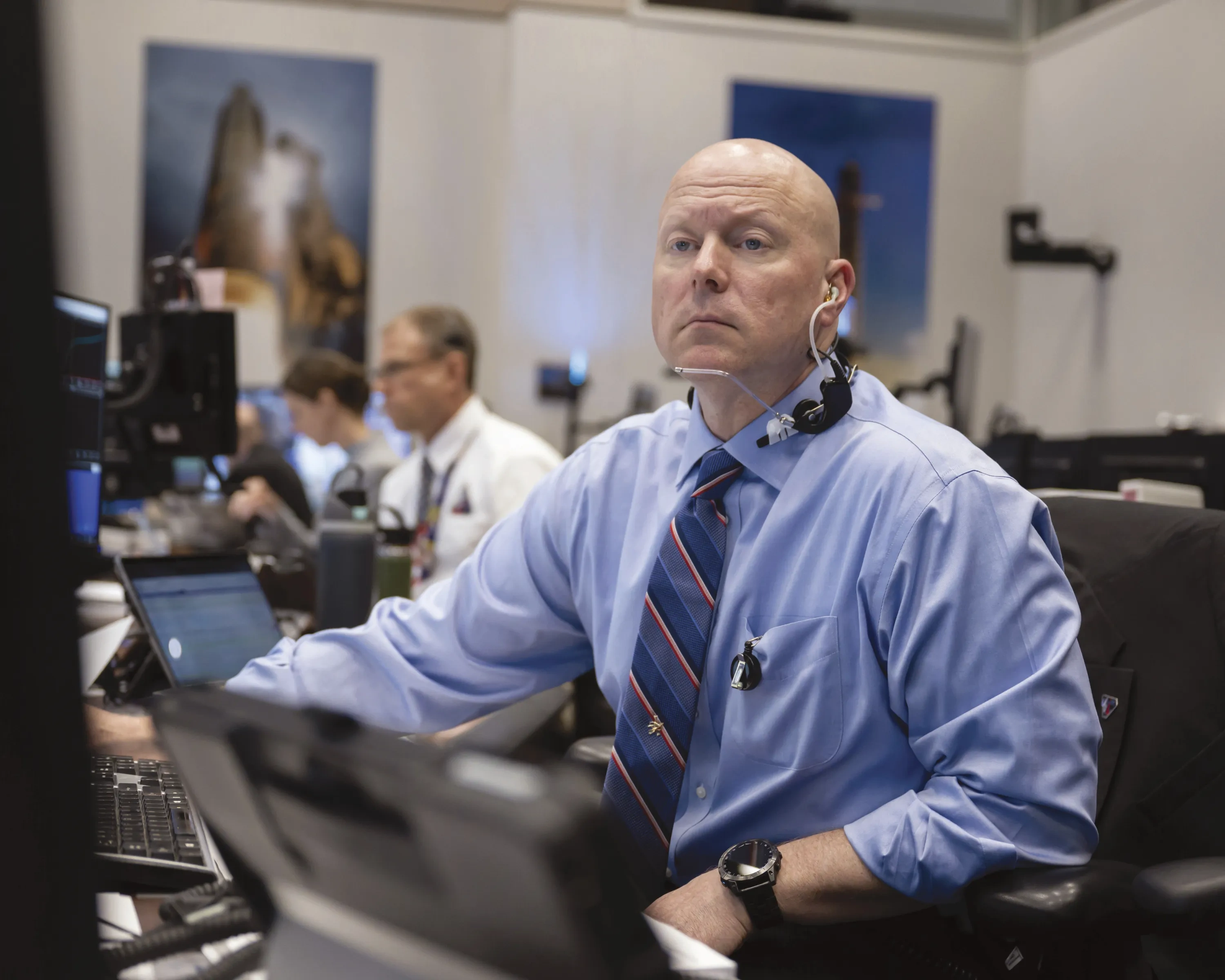
Born in Austin and raised in Pflugerville, Judd Frieling remembers his dad bringing home a RadioShack TRS-80 Model 2 computer from his job at an accounting firm. Soon, Frieling was teaching himself how to code in BASIC (an early programming language) and taking apart garage door openers to see how they worked.
After graduating from the Cockrell School of Engineering, Frieling, BS ’96, Life Member, enrolled in Navy Officer Candidate School with plans to become a pilot. A deceptively humble physical characteristic stood in his way: droopy eyelids. With the potential to obstruct his vision, it was enough to keep him from the cockpit. “It wasn’t funny at the time,” he says, “but in retrospect, it all worked out great.”
Frieling made a nimble pivot to NASA, where he began his career in the early days of the International Space Station as an Onboard Data Interfaces and Network officer—which is to say, he did the computer stuff. As a flight controller, he worked on 20 Space Shuttle missions before becoming a flight director in 2011. Not long after earning the prestigious title, NASA selected him to join the JSC Mission Control team.
“I thought the Shuttle and the Station would go on forever—at least for my whole career,” Frieling says. “Never in a million years would I have guessed that I would be part of [a lunar mission].” He would eventually train as an ascent/entry flight director, the role he played for the first, uncrewed Artemis mission in 2022. And this year, he led the ascent flight control team for Artemis II.
Frieling and NASA’s chief flight director, Emily Nelson, BS ’98, share more than just an alma mater. Both had fathers who were early adopters of computers, inspiring an interest in science and technology. Both are musicians: Frieling was in the Longhorn Band, serving as drum major his senior year, while Nelson grew up playing piano and viola. And both didn’t always picture themselves working at NASA.
As chief flight director—one of only a handful of people in the Administration’s history to hold the position—the buck stops with Nelson. She manages 31 active flight directors and directors-in-training for all human spaceflight missions out of JSC. If a flight director in Mission Control is authorized to make whatever decision necessary to preserve the safety of the astronauts, one of Nelson’s jobs is to make sure the team is more than prepared to meet those life-or-death moments.
“We obviously prepare for the mission that we have planned, but more importantly, we prepare to be surprised,” she says. “We prepare to not know. We prepare to go and figure it out ... If I think that my being there is going to make a difference in the success of a mission, then I didn’t do my job correctly.” And on the afternoon of April 1, 2026, Nelson, Frieling, and their teams had a big decision to make.

The Artemis II crew were already aboard, and a crowd was gathering at Cape Canaveral under clear skies, despite spotty rainfall and cloud coverage that morning. Back in Houston, the men on Schueppert’s team had gotten their pre-launch haircuts to look good for the cameras. But less than two hours until the launch window, word came through from the Kennedy Space Center (KCS) that the Flight Termination System (FTS) was a no-go.
“I fully thought that it was going to cause us not to launch that day,” Frieling says. The FTS allows engineers to send a self-destruct signal to the rocket in case of emergency, protecting civilians on the ground from debris.
“Why would we go?” Schueppert remembers thinking as she got ready for work that morning. “Why would we go on our first launch attempt?”
After some quick thinking—a KCS console operator remembered an old piece of hardware from the Shuttle days that was still in storage next door at the enormous Vehicle Assembly Building—there was still another problem, this time with a battery on the Launch Abort System, which works in tandem with the FTS.
“It actually turns out that we had seen the [battery indication] in previous wet dress rehearsals, and we had never logged it,” Frieling says. “Eventually we all figured out the story, that it was just an obvious sensor issue, and that we’d have no problems.”
Just one minute after the launch window opened, Artemis II entered terminal count, the last 10 minutes of the countdown. “Everything looked really good, and the countdown kept going,” Schueppert says. “I kept thinking it was going to stop, and it just kept going.”
T-minus three minutes to launch. The thin, white plume of water vapor was still steadily billowing from the fuselage, but the launch pad was quiet. Inside Mission Control, Schueppert realized it was going to happen.
“My heart rate went way up,” she says. “I was like, Oh. Oh, this is real. We’re going in three minutes. It’s going in just a second. I took 10 seconds to have that very heightened emotion, and then it was just fully calm.”
Frieling was also in a flow state. “That comes from a lot of experience with ascent/entry operations, a lot of simulations, and knowing that my team is absolutely top-notch. I had full faith that if there was a problem that we could solve, we would solve it, 100 percent.”
After so much silence—it seemed like 50 years of it—a spark. Then a roar of light and sound shook the ground. The rest happened quickly and perfectly.
Schueppert watched it all back on her phone from her couch later that night with a bowl of mac and cheese. Finally, she let herself cry.
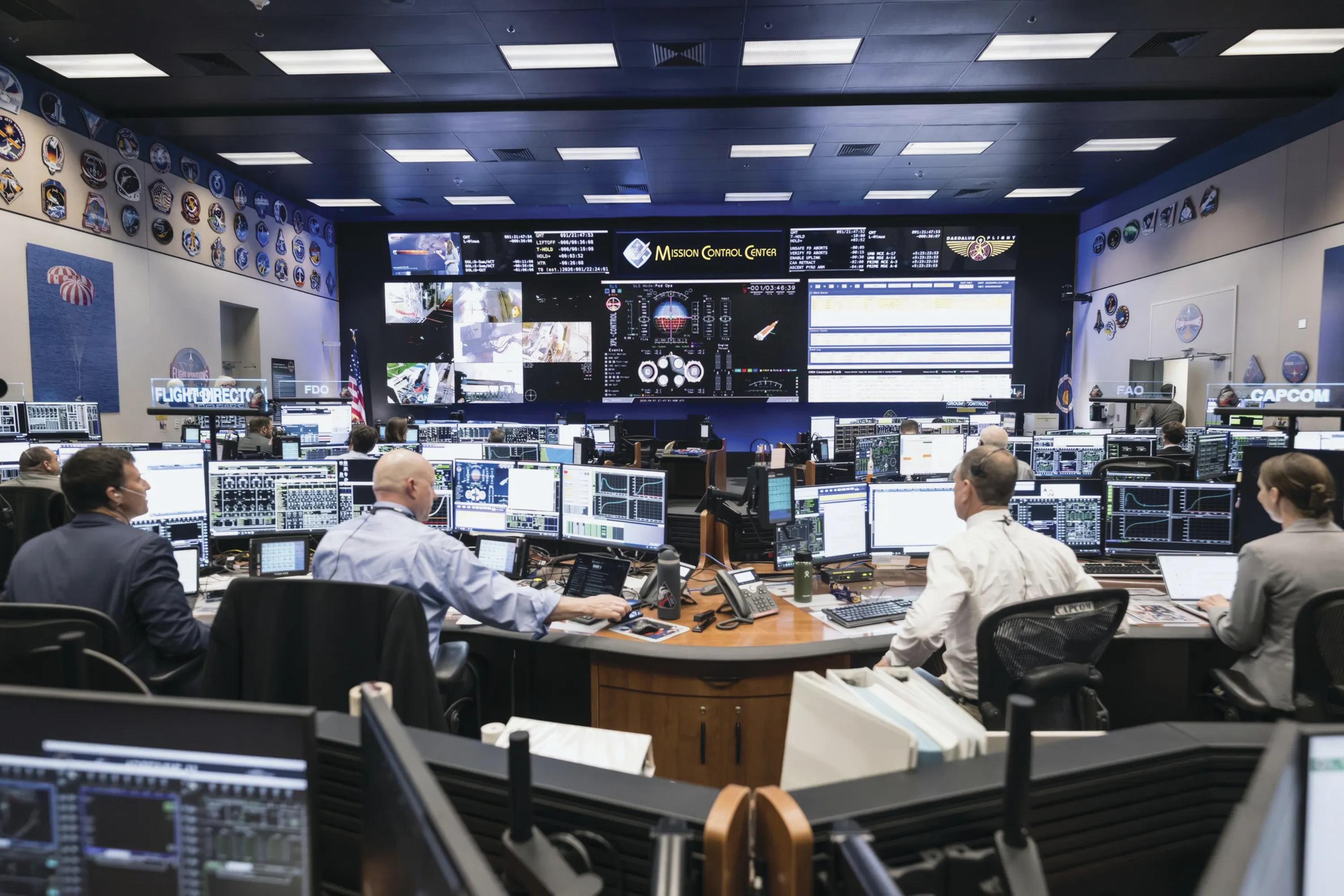
NASA had entire binders of contingency plans. For the first two days of the mission, there were two retrofire officers—the role responsible for navigating the spacecraft home in any kind of emergency—on shift at all times, one of whom was sometimes Schueppert. But no one at the Administration anticipated the level of public interest in Artemis II.
An estimated 27.17 million people watched live TV coverage of the landing. As of publication, footage from NASA’s reentry and splashdown broadcast has reached almost as many views on YouTube (24 million). New viral moments (the Nutella jar?) captivated the internet each day.
“During the mission, I don’t know that we had any idea,” Nelson says of her awareness of the online frenzy. “I knew I was getting texts from a number of people I hadn’t heard from in many, many years.”
“I don’t do social media,” Frieling says. “So I, like many other people, did not understand what a big deal this was to the general public.”
While the engineers took care of the astronauts, the general public was the domain of Anna Schneider, BJ ’19, Life Member, a journalist by training turned lead public affairs specialist for all NASA human spaceflight programs. From around 7 p.m. to 4 a.m., Schneider voiced the live mission commentary, which her team streamed 24/7 throughout the mission.
For Schneider, the work is in her blood. Her parents met while they were both working on the Space Shuttle program. “I credit NASA for my existence,” she says. “My dad was an engineer, and my mom worked on the finance side of things. So I grew up around space.”
Her experience managing the City of Austin’s public affairs response during the COVID-19 pandemic (and as an editor and breaking news reporter at The Daily Texan, of course) uniquely prepared her for the high-stakes environment of Mission Control.
“You talk to pretty much anyone I work with, and they’re like, ‘You’re cool as a cucumber, no matter what we throw at you,’” Schneider says. “But I think it’s just about understanding the overall goals and priorities [of an organization] and being able to communicate what we’re doing to the average American, and why they should care.”
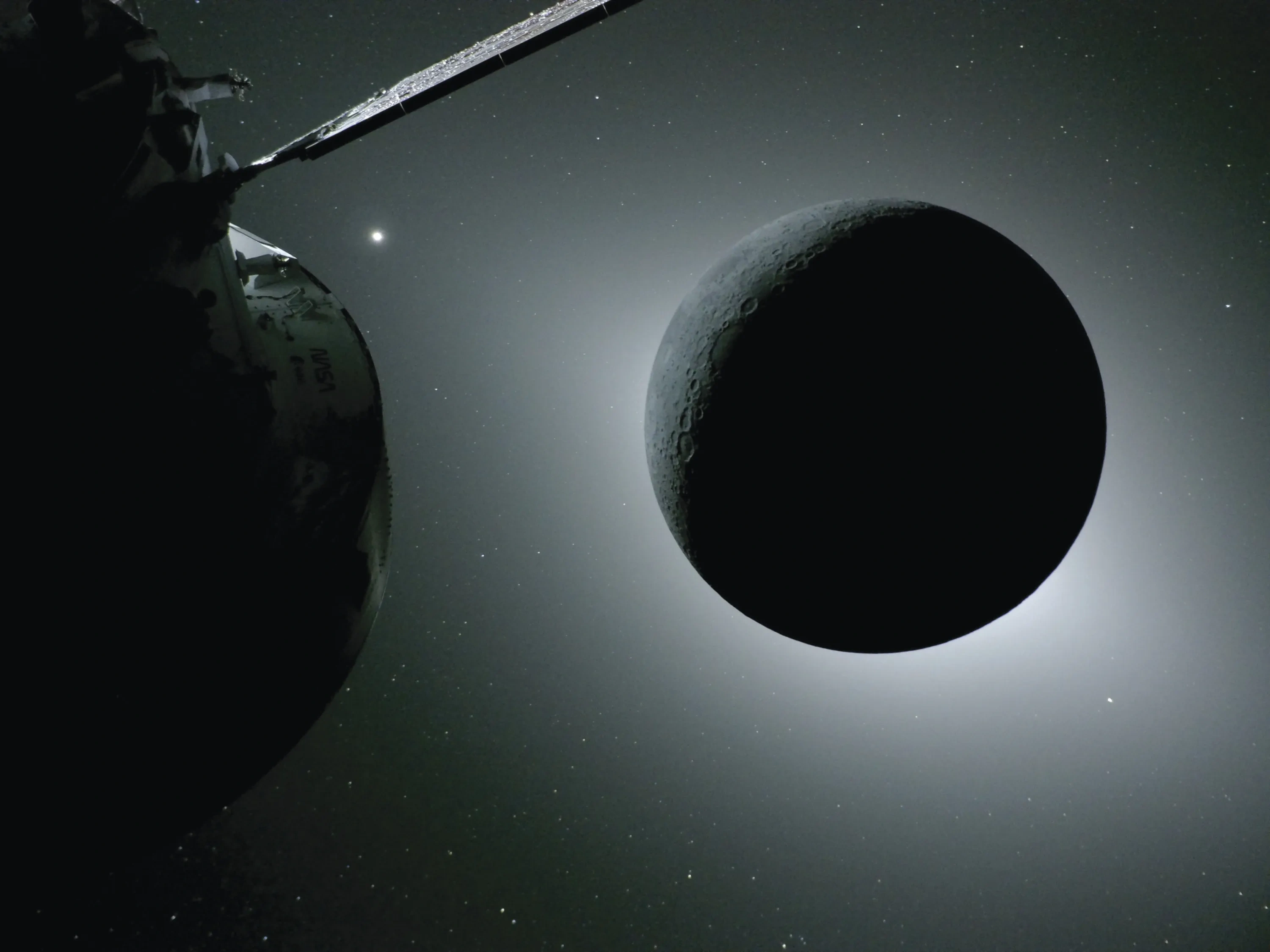
Artemis II was not only the first time in more than 50 years that any humans have been near the moon—it was also the farthest anyone has traveled from Earth, at 252,756 miles.
Christina Koch was the first woman, and Victor Glover, the first person of color, to fly to the moon. The eight eyeballs belonging to the Artemis II crew are the only ones to have ever seen some features of the far side of the moon.
“It doesn’t matter how many photos you take,” Nelson says. “The human eyes, which provide stereoscopic views, are better at seeing what’s happening down there.” Even observations as seemingly banal as subtle differences in color can provide information on the composition of the lunar surface. NASA gave the crew a “Lunar Science Passport,” with terminology to describe the most important lunar features they might see, such as swirls, wrinkle ridges, ejecta blankets, and scarps.
“At one point, Victor Glover was like, ‘There are lots of shades of brown and lots of shades of green,’” Nelson says. “The moon is green, folks!” she adds with a clap of her hands. (Still, commander Reid Wiseman found himself at a loss when he radioed down to Mission Control: “Houston, if you could give me about 20 new superlatives in the mission summary tomorrow, it would help my vocabulary out a bit.”)
Perhaps most significantly, however, Artemis II was a small step toward another leap: sending humans to Mars. “As a human race, there’s always been a desire to explore and figure out what else is out there,” Schneider says. “And the moon is a stepping stone to do that.”
And that essential humanity was on great display with Artemis II, as words failed them (or else Microsoft Outlook did). One would be hard-pressed to watch without crying the video of the crew, via their Canadian compatriot Jeremy Hansen, naming the Carroll Crater after Wiseman’s late wife. It’s the thing that drew hundreds of thousands of viewers to join Schneider on the livestream, even in the obscure hours of night.
“We’re going through a difficult time, when people are generally finding more things to disagree about than agree about,” Nelson says. “Finding something that was uplifting and positive, that is not something you fight about, not something you find a side on, was really refreshing for the global community.”
Koch said it best, in her first public remarks back on Earth:
A crew is a group that is in it all the time, no matter what. That is stroking together every minute with the same purpose. That is willing to sacrifice silently for each other. That gives grace. That holds accountable. A crew has the same cares and the same needs. And a crew is inescapably, beautifully, dutifully linked.
When we saw tiny Earth, people asked our crew what impressions we had. And honestly, what struck me wasn’t necessarily just Earth. It was all the blackness around it. Earth was just this lifeboat hanging, undisturbingly, in the universe. I know I haven’t learned everything that this journey has yet to teach me, but there’s one new thing I know, and that is: Planet Earth, you are a crew.
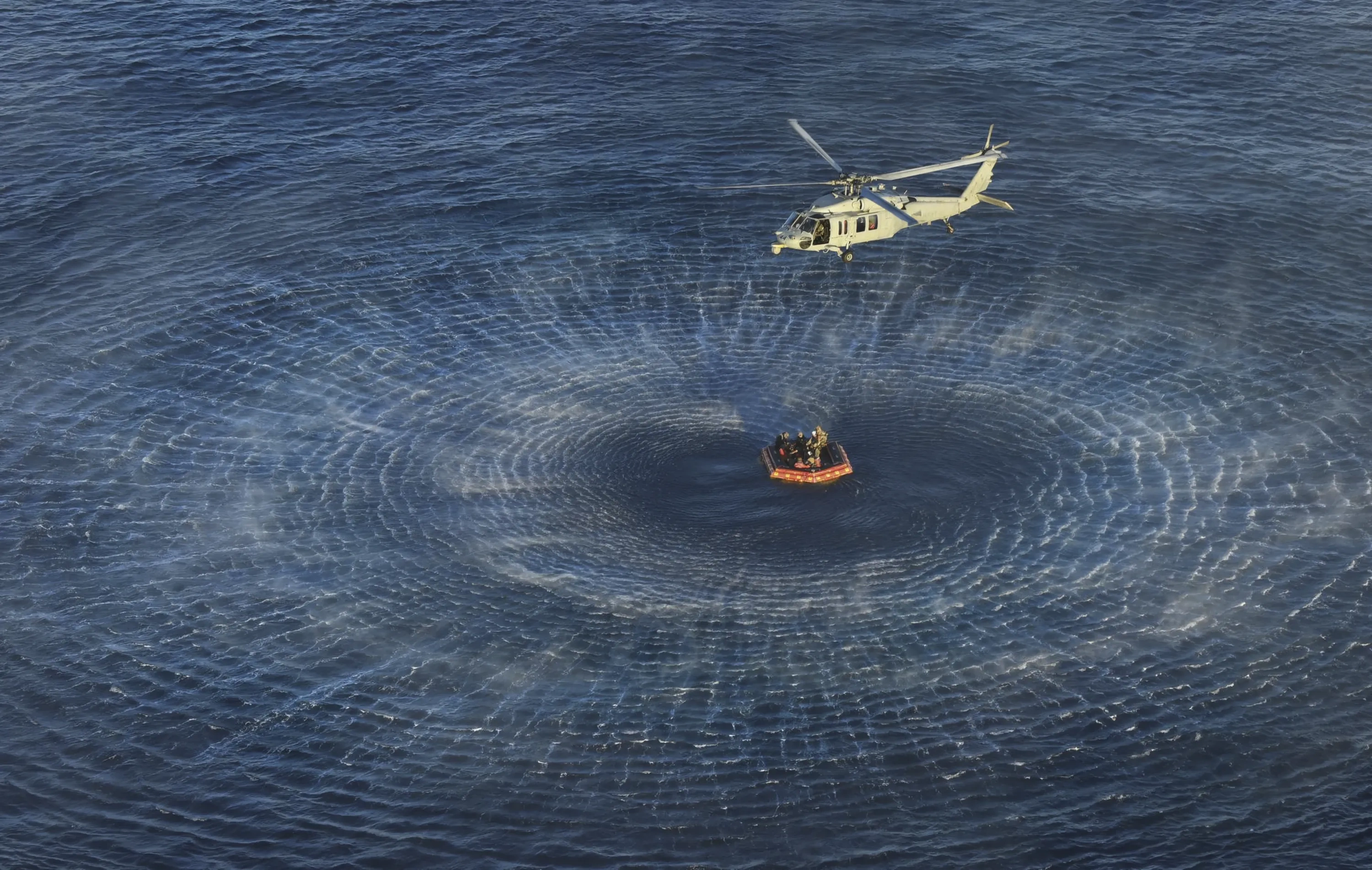
Artemis II splashed down on a Friday night, and by Monday morning, the JSC was buzzing once again—despite joking threats among Schueppert’s team that they were finally going to spend all of the vacation time they’d accrued while preparing for the mission. Even before Wiseman, Koch, Glover, and Hansen boarded Orion, NASA had announced Artemis III would no longer be the long-anticipated lunar landing, instead remaining in low Earth orbit to practice rendezvous and docking with commercial space landers from Blue Origin and SpaceX.
“That’s really exciting because it shows we are making progress toward the eventual goal of not only landing people on the moon, but also ... making humans a multi–celestial body species,” Frieling says.
This isn’t to say that our Longhorns have finished (or even begun) processing the generation-defining event they helped to make happen. Schueppert has been trying to write down the small things she wants to remember, such as the champagne that one of her colleagues snuck into the employee and family watch party at the JSC, passed around in Dixie cups.
“I think I need to go back and just read through all of our logs and messages to one another, spend a day reliving the whole mission on fast forward, to remember all of it,” Nelson says.
Schneider will never forget being one of the first people on Earth to see a picture of the total solar eclipse when it came through to Mission Control. “We’re still kind of riding the wave,” she says. “At the end of the day, we still want to captivate people long beyond Artemis. It’s just one of our many programs and missions that we are continuously supporting for human spaceflight and space exploration in general.”
As long as there is space to explore, The University of Texas at Austin will train people to do so—not because it’s easy, but because it is hard. Before long, there could be a burnt-orange flag flying on the red planet.
“I need to spend some time looking back,” Nelson adds, “but it’s also really, really fun to look forward.”
Hero image: NASA's Space Launch System rocket carrying the Orion spacecraft, with astronauts Reid Wiseman, Victor Glover, Christina Koch, and Jeremy Hansen onboard, launches on the Artemis II mission, April 1, 2026.
Other alumni who were pivotal to the Artemis II mission include, but are certainly not limited to: David Korsmeyer, MS ’88, PhD ’91, Life Member, deputy center director of Ames Research Center, NASA; Jack Brazzel, BS ’89, Life Member, acting chief of aeroscience and flight mechanics division, NASA; Nathan Vassberg, BS ’91, acting chief of safety and mission assurance, NASA; Edgar Rivera, BS ’95, Life Member, safety and mission assurance specialist, NASA; and Maxon Widner, MS ’18, mission design engineer team lead, Amentum.
CREDIT: From top, NASA/Robert Markowitz; courtesy of Lily Schueppert; NASA/Robert Markowitz; NASA/Aubrey Gemignani; NASA; NASA/James Blair