Good Reads Q&A: A Longhorn Veteran and Poet Explores the Complexity of War

When Kevin Powers, MFA ’12, returned from serving in the U.S. Army in Iraq from 2004–05, he turned to poetry to process his experience—which he would later publish in the collection Letter Composed During a Lull in the Fighting. His debut novel, The Yellow Birds, was a finalist for the National Book Award and adapted into a 2017 movie starring Alden Ehrenreich and Jennifer Aniston.
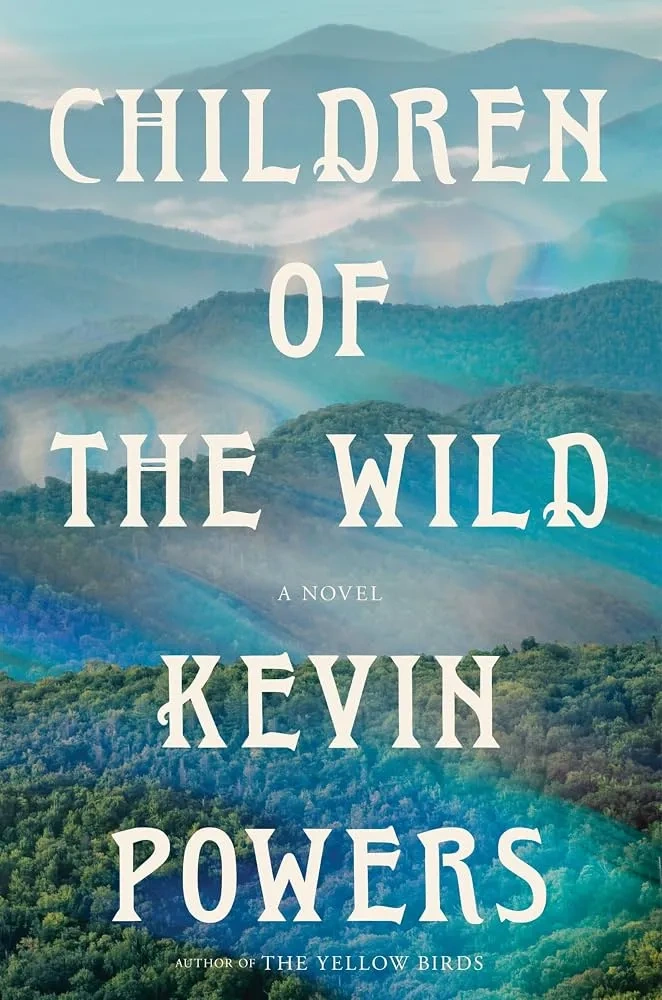
With his new historical fiction novel, Powers revisits familiar themes in a new era. Children of the Wild is a transporting story of loyalty tested by the extremes of human existence. The ALCALDE spoke with Powers about his childhood in Virginia, the intimacies of war, and how writing brings him closer to his own humanity.
When did you start writing fiction?
When I was looking at graduate programs, one of the reasons I was so excited about the prospect of going to the Michener Center was that I knew I would have the opportunity to treat my fiction writing as seriously as my poetry. I had amazing support there from Jim Magnuson and Michael Adams who have both sadly passed. I’m so grateful for that opportunity that UT provided for me, and the Michener Center in particular. It means a lot to me to be an alum of The University of Texas. I will throw up the horns at any time.
Where did your first seed of inspiration for this book come from?
I happened to be reading a history of the American army and the Battle of the Meuse-Argonne [in World War I]. I got to this brief passage that described a regiment of soldiers from the mountains of Virginia tasked with trying to capture this incredibly heavily defended, very small stretch of wood.
I grew up in Virginia, and I spent a decent amount of time in places like the ones these boys would have been from. I was struck by the distance they traveled—not only the literal distance, but also aesthetically. To me, rural Virginia is one of the most beautiful places on the face of the earth. It’s Edenic. And so to go from that, to this industrialized, mechanized hell on earth was fascinating to me ... I also felt like there was some resonance between that time and our time. It felt like rich territory to explore.
What does it mean to you to be writing in the rich Appalachian literary tradition?
It’s hard for me to imagine setting a story anywhere else, because it’s the setting for all the stories that exist in my mind. I do think it’s interesting: Everything that’s great about America started in Virginia—and everything that’s not so great about America also began in Virginia. The history is complex. I’m fascinated by placing characters in a situation where they have to contend with complexity and parallels of virtue and vice.
How did you develop a language for the character, Ennis, who grew up outside of civilization?
I really had to think through how to present him as a character. On the one hand, he has to be capable of speech in order to have dialogue. But I didn’t want to depict him as having an elegant understanding of the world. I wanted his character to be true to the circumstances that he came from.
The challenge was figuring out how to situate him—what his role would be in the dynamic between the three main characters, and how to depict him in a way that was true to his character, but also legible to the reader. It was an adventure.
The Yellow Birds also has a pair of main characters at war, one of whom promises to bring the other home safely, like this book. Why do you think this scenario compels you?
A big portion of this book takes place after [the war] and explores how the characters put their lives back together. Veterans—and anybody who has gone through difficulty—what we have available to us to put our lives back together are the relationships we have with the people around us. And those relationships are always imperfect and complicated, but that’s what we’ve got. I spend a lot of time thinking about what our obligations are to each other. War as a setting or [plot] allows for an intense concentration that tests those obligations.
I think one of the things that attracts young men to the military is that society gives a permission structure for young men to have these really deep, intimate relationships with other men—which is often frowned upon in other contexts. You’re allowed to tell your buddy you love them in a foxhole, but not when you’re getting off a phone call, you know? ... That [intimacy] may be the thing I’m most interested in about these characters and their relationships.
The epigraph is a quote from Rilke: “For one human being to love another is ... the work for which all other work is but preparation.” How is writing preparation for loving others?
It requires a kind of openness that feels intensely vulnerable at times. That openness is such an important part of any relationship—a willingness to be vulnerable. So, for me, [writing] becomes a practice in my own life, to remain willing to doubt my own ideas, to be open to other perspectives, to be open to my own fears. It feels useful to put that on the page, and the best possible outcome is that there’s somebody on the other side of that who will connect to that emotion ... As a writer, if I can create that for one person, I feel it’s a success.
This interview has been edited and condensed.
CREDIT: Lynn Tennille Photography