UT’s Outdoor Spaces Are Getting a Makeover
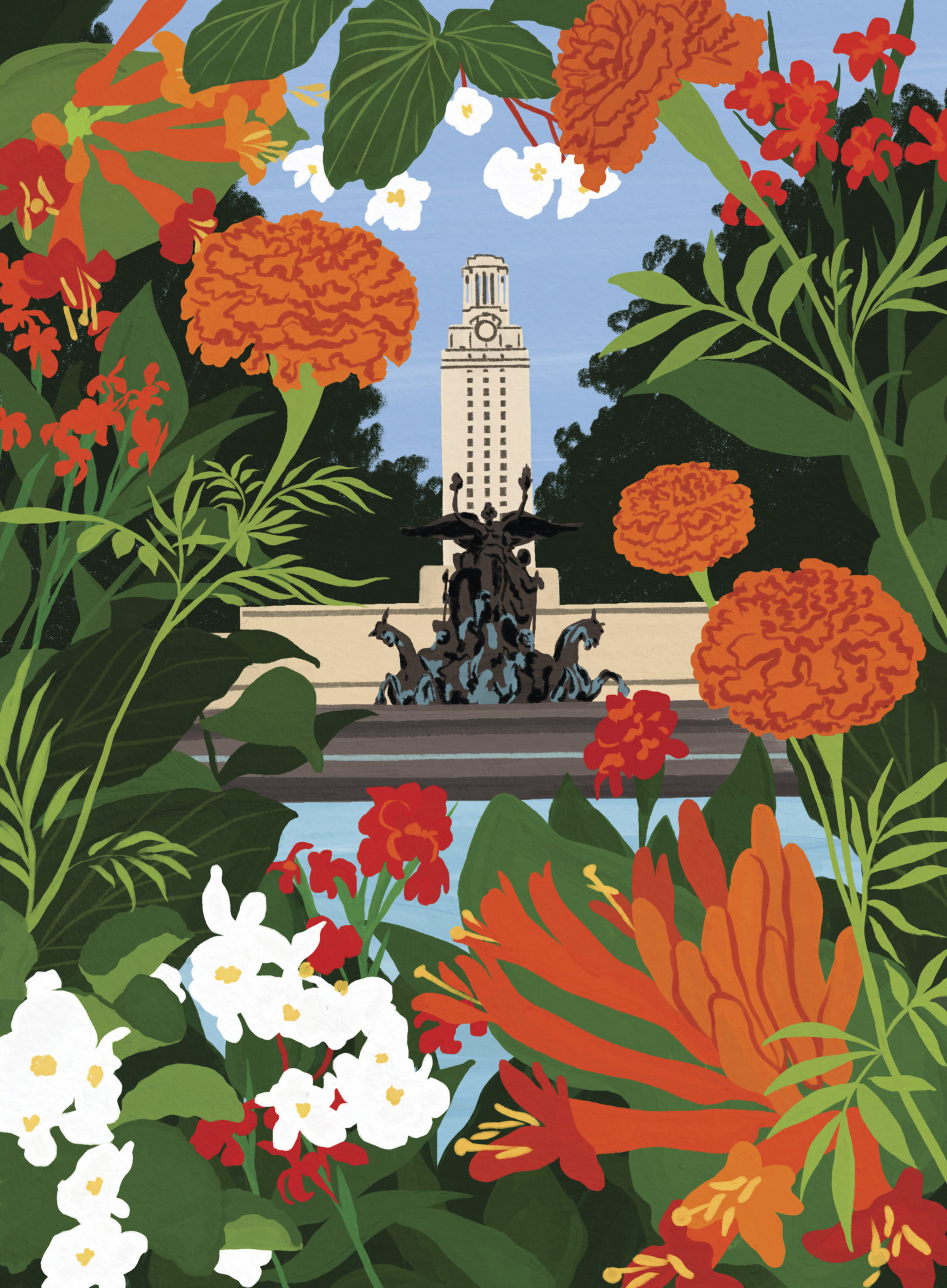
“The University of Texas at Austin seeks a visionary and experienced grounds and landscape professional to serve in the newly created role of Director of Grounds and Landscape. This inaugural position is being created to enhance the focus on the campus environment, experience, and overall aesthetic in support of The University of Texas brand.”
So went the job listing, and by last spring, UT had recruited Jeff McManus, who in his 25 years at the University of Mississippi led Ole Miss to five titles as the Most Beautiful Campus in America, according to USA Today. He even bought his team members national championship rings. And in a field rich in metaphors for growth, teamwork, and leadership, he has parlayed his expertise into a parallel career as a popular keynote speaker and author of Growing Weeders into Leaders: Leadership Lessons from the Ground Level.
If you think landscaping is a peripheral subject in higher education, McManus has a statistic for you: “One study reported that 62% of [incoming] college students make a decision within the first few minutes of visiting a campus based on its appearance,” he says in a warm Southern drawl, “and the top three factors were how the landscaping looked, how the buildings looked, and how clean it was. That was before they talked to anybody, looked at the classes, or anything! We’re really in the recruiting business.”
In a Longhorn baseball cap and a navy sport coat even on a stifling morning, he drives me slowly around the core campus in a golf cart, braking every 20 yards or so to point out an improvement the team has made, something he’s imagining, or something he just saw that irritates his searching eye.
“This is what I’m talking about,” he says as he stops the cart at the northeast corner of the Main Building. “There’s really no defining edge right here. You don’t know where to stop mowing; you don’t know where the mulch really is ... It doesn’t pop right now because it just looks disorganized.”
We pass a tiny patch of ground surrounded by sidewalk and curbs: short weeds, a few dead leaves, and bare dirt. “See that?” McManus asks. “That bothers me. If you clean that up and put some mulch in there, then it pops.”
“There’s another one,” I say, pointing to a similar spot, and just like that, I’m now seeing the same sort of thing: grass straying into mulch, patches of bare ground, even non-landscape details such as stickers on metal signs. In less than 15 minutes, he has turned me into an amateur landscaping critic, moving my focal plane from buildings and trees into the foreground. This is what he aims to do with all 105 members of his staff: open everyone’s eyes—be they “front-line weeding professionals,” as he calls them, managers, or designers—to the little things. It’s not about perfection; it’s about moving toward a vision.
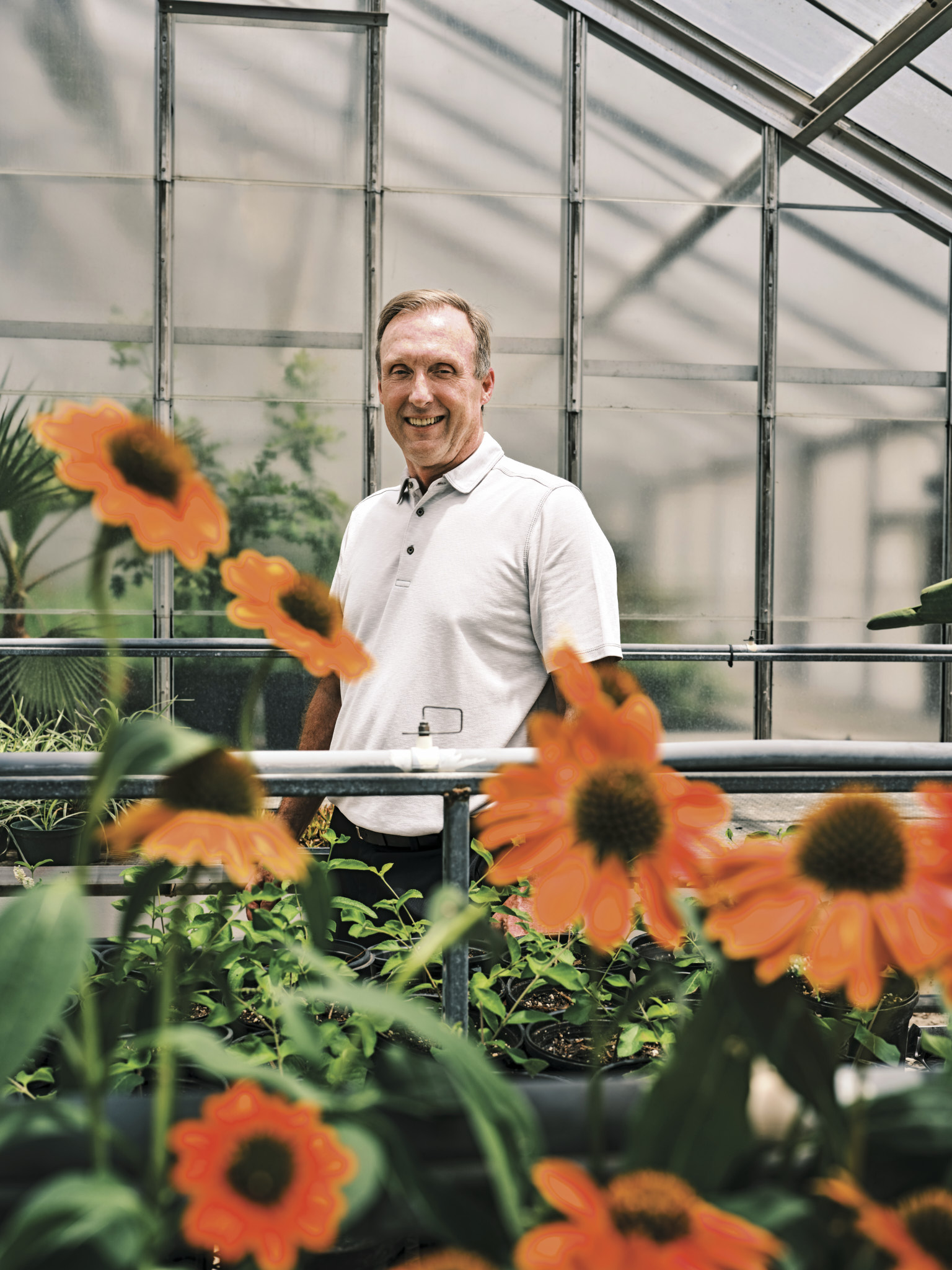
“You make the place look clean, make it look loved, like somebody is taking care of it,” he says. “You don’t have to have a lot of money to make the place look loved.”
You could say the move toward leveling up the Forty Acres began in earnest two years ago, when campus leaders resolved to renovate the Tower. At that time, UT System Board of Regents Chairman Kevin Eltife, BBA ’81, Life Member, told me, “We want a campus that’s inviting to students, future students and faculty. We want an incredible environment. The Forty Acres is already beautiful; it just needs some tender, loving care, and that’s what we plan to provide.” (Work on the Tower is now underway, and a campaign to fund the renovation fully launched in the fall.)
University President Jim Davis, BA ’96, who in his previous role as senior vice president and COO oversaw facilities and landscaping, has been instrumental in the push. “Davis was very involved in wanting this campus to be very pretty, and you have to have the buy-in of your top leadership to really start gaining momentum,” McManus says.
“Our campus’s distinct character and setting, shaped by generations of Longhorns, make it a special place for many of us,” Davis says. “Jeff McManus is the best in his field, and he and his team are enhancing our physical space so that it reflects our spirit, vibrance, and excellence. I’m excited for our students and alumni to experience this transformation.”
Brent Stringfellow, associate vice president for campus operations and University architect, envisioned the new position and hired McManus. “We intentionally called it grounds and landscape to expand the idea that what the portfolio is looking at is not just the softscape elements—plants, etc.—but all the other things that affect the outdoor experience ... paving, bike racks, trash cans, light fixtures, signage, keeping everything coherent.” As one example, Stringfellow says UT currently has 27 different kinds of outdoor trash cans. What if there were just one? In its own little way—even subconsciously—that would help to unify the campus.
Those are the kinds of things that, if done well, don’t draw people’s attention. “They just become part of this subconscious feeling that you’re in a place that’s thoughtful and well put together,” says Stringfellow. McManus points out to me that during a stroll down the East Mall he counted five different types of sidewalk surfaces.
“When things are erratic or disconnected, you tend to sense that,” says Stringfellow. “That’s been one of the challenges for campus. We have a lot of beautiful spaces, but they haven’t always been well connected. They haven’t always related to one another effectively, and that’s our goal right now—to provide a more unified experience.”
McManus says UT is primed for campus greatness. “Our culture is good, but we’re really going to take it to the next level.” He relaunched a staff training program that blends technical training and experiences to foster personal growth and teamwork. “It’s not just to sit in classes and say, ‘Here’s how you prune a tree.’ You go out and do it together, and you experience it so that you create high-quality work. We want to be one of the best in the country at pruning. We want to set the standard. Our football team is competing at a national level because they do the fundamentals really well. They block. They tackle. They hold onto the ball. Well, we’ve got to prune. We’ve got to mow. We’ve got to plant and do the fundamentals right.” And this is where his strategy goes all in on UT culture.
Six weeks into the job, McManus dived deep into Longhorn identity in an all-staff meeting, where he showed retired Admiral William McRaven’s 2014 “Make Your Bed” commencement speech and gave each staffer a laminated card summing up McRaven’s points. Not content with stopping there, he then recruited McRaven, a former UT System chancellor, to speak to the landscapers this fall. At Ole Miss, he would invite coaches to speak to his staff, a tradition he hopes to continue here.
That’s just behind the scenes. The way the public will experience his full embrace of the Longhorn brand is already visible. From the campus entrance at University Avenue and MLK Jr. Boulevard, to the Littlefield Fountain to the Main Building, he wants one feel and one dominant color—and you get one guess which color.
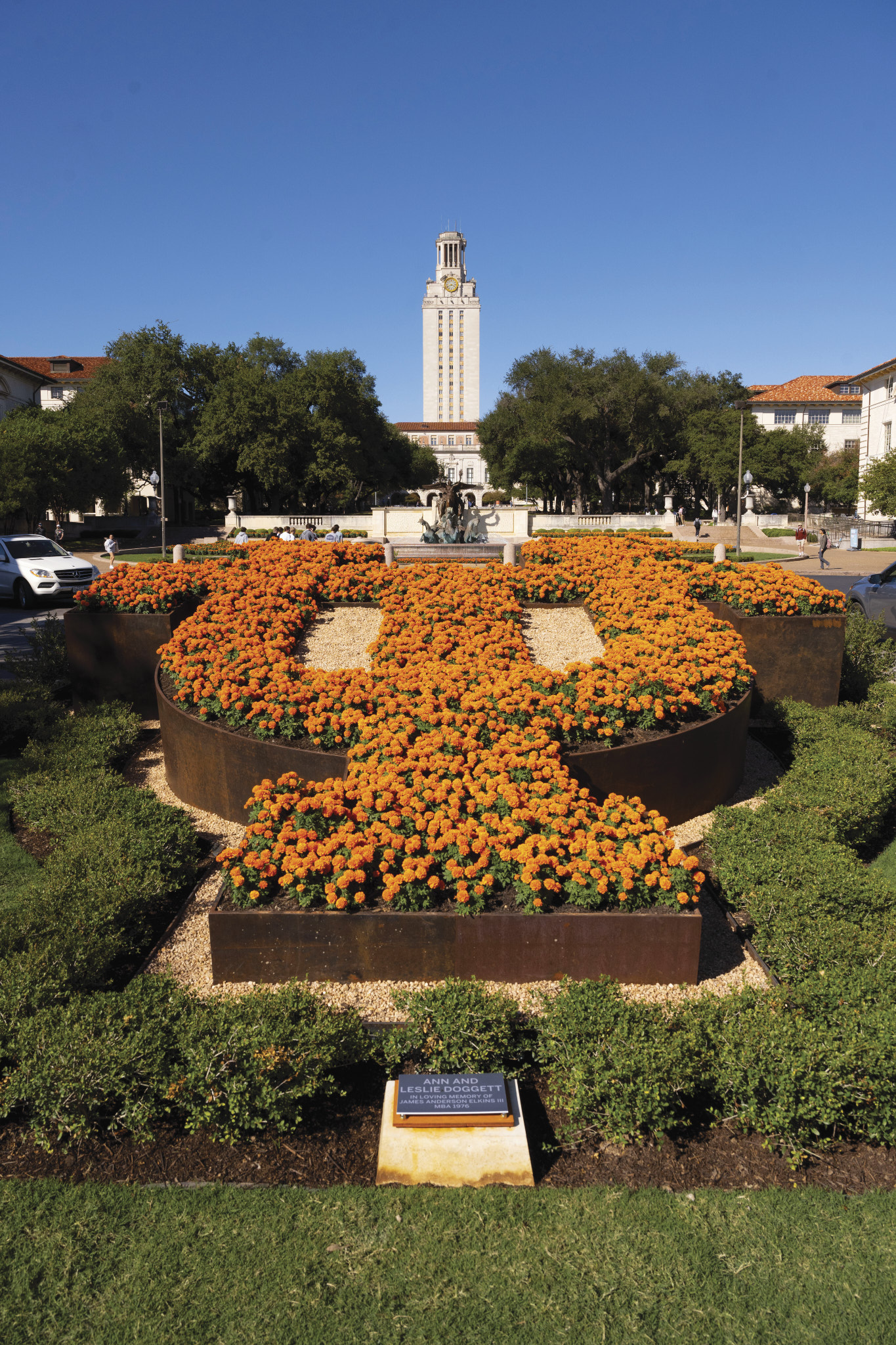
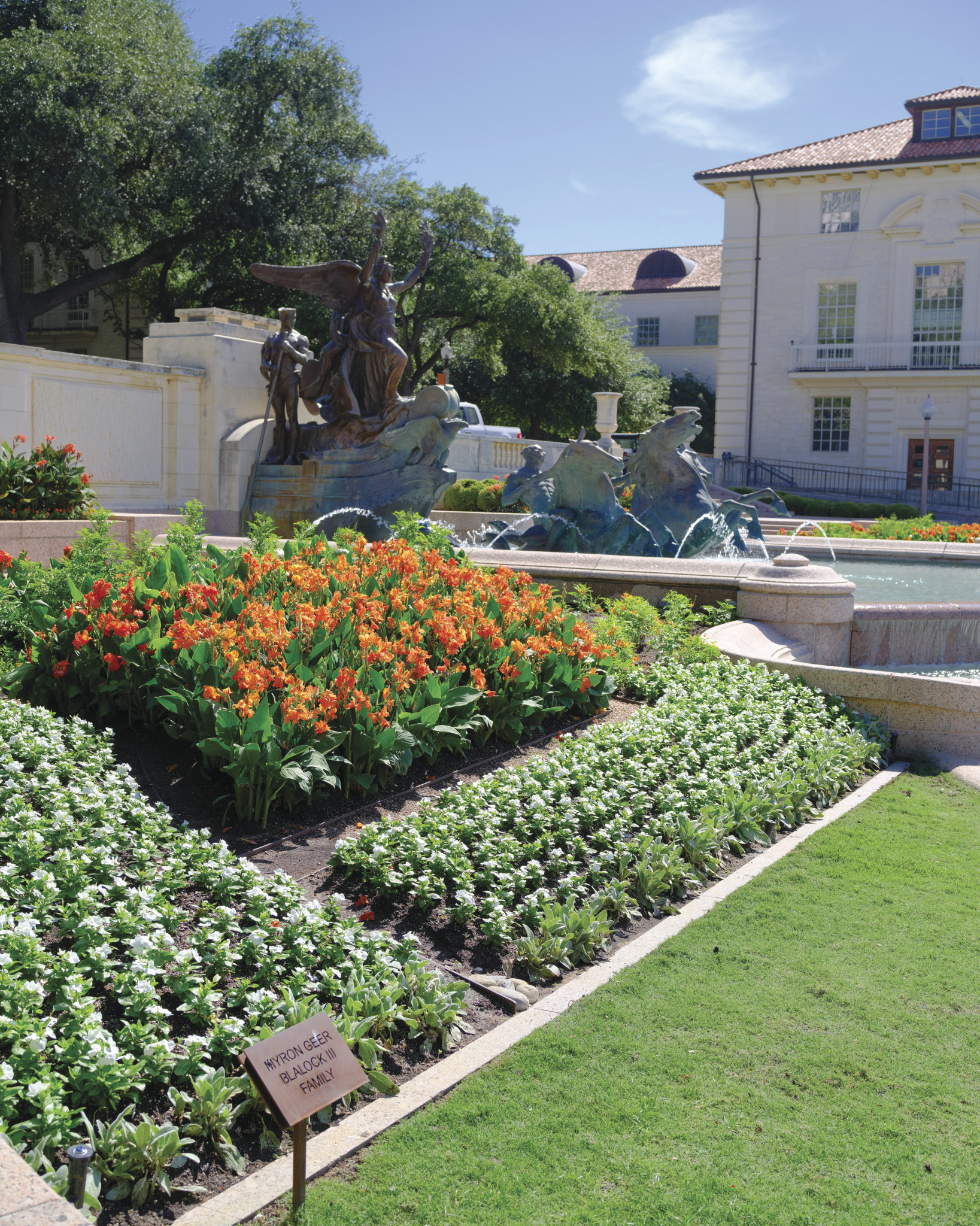
One of the first projects McManus directed was the replacement of flowers on both sides of the Main Building’s grand entrance—which were seven different colors—with a sea of orange marigolds. Dark orange canna lilies and orange honeysuckle are already a common sight around the historic core campus as well. Look for more solid blocks of The Color, including in new 14-foot-deep flower beds soon to be carved out of the flag courts flanking the Main Mall. “It grabs you when you come in and says, ‘Hey, you’re at UT!’” McManus says.
But not every class in the training program discusses landscaping. “We’re talking about things in life that matter: how we think, how we lead, how we grow, how we develop. It makes us a more unified and stronger team. They’re hearing themselves say things for the first time they’ve never said out loud. We’re not just cutting grass and pulling weeds and planting flowers here; we’re creating a growth culture and leaders.”
The young McManus would have laughed at the notion of growing up to do outdoor work. “When I was a little boy, I hated this, because my dad made me work all the time. I was raking in the hot Georgia sun in that red clay, and I was like, I do not like this at all! I never knew my job existed when I was in high school, never thought about it.” As a freshman at Auburn University, he intended to study computer science. “That lasted about two weeks,” he remembers with a laugh. He then switched to marketing.
When his brother opened a gardening store, McManus had a chance to work for him in the summers, so he thought it wouldn’t hurt to take a botany class at Auburn. He loved it and began to think horticulture just might be his direction. When he failed his marketing class, the transition was complete. “The only problem was I had to take organic chemistry and systematic botany,” but he says he got through those because of his mother, who was a high school chemistry teacher. Although he quips that his degree is in “manual labor,” it was in horticulture and landscape design.
The next stop on his journey was Florida, working at resorts in Orlando then Miami, from the late 1980s through the ’90s. Moving to Florida required learning a whole new plant vocabulary, and dealing with water restrictions there gave him the experience he’ll need in adjusting to the westernmost school in the Southeastern Conference.
In 2000, Ole Miss lured McManus away from a five-star Florida resort and into higher education. Shortly after he arrived in Oxford, he saw Chancellor Robert Khayat out on campus picking up trash and pulling weeds. “I said, ‘Dr. Khayat, what are you doing?’ He said, ‘I’m weeding by example.’” It was a phrase and an idea McManus never forgot. “He had a doctorate, he was a lawyer, he was chancellor of the university, but he didn’t own the university, so why was he doing it? It’s because he had such a passion for the university.”
McManus’s book, Growing Weeders Into Leaders, was published in 2017, and since then he’s maintained a nationwide speaking schedule. In June, he was off to Rhode Island to speak to a group of cemetery professionals. In January, he’ll be down in San Antonio to speak to a conference of sports turf specialists. “Some people use their time off for gardening. I use mine for this,” he says, adding that he gets to raise UT’s profile in the process.
His work will result in more beds and more flowers, to be sure, but it also entails less glamorous projects that nevertheless lead to a prettier—and quieter—campus. One example is creating a more mower-friendly campus, where mulch beds are gently curved so mowers can be moving ever forward instead of having to mow patches with corners, which requires backing up. Expanding mulch beds to encompass signposts, poles, fire hydrants and other pieces of infrastructure means not having to weed-eat around them. Less weed-trimming, less noise.
He’s keenly aware of the environmental challenges of Central Texas and says UT already has many eco-friendly systems in place, such as a smart irrigation system that measures the moisture in the soil and keeps water off until necessary. “We’re trying to be ahead of the curve in how we do our irrigation and using smart plants as best we can.” That means using natives such as yaupons. (One surprise for him was learning that impatiens, a genus of shade-loving flowering plants he was accustomed to using for additional color, don’t grow here in summer.)
Crews are also working back the trees on the South Mall a bit to regain the view of the Capitol from the center of the Main Mall. “Our live oaks are our brand because we grow them so well. With our sun and our heat, we need that shade. What is it the old country boy says? ‘We’ve got more than we can say grace over.’ That’s how I feel about our live oaks!” UT has some 5,000 trees that have to be touched at least once every five years, including controlling the Virginia creeper that loves to climb them, clipping suckers off their trunks, and pruning lower branches to maintain sight lines.
Now he stops the cart in front of Battle Hall. “What do you think happened to that grass right there?” The grass is wet, bent over sharply and a bit yellow.
“It looks like flood damage,” I say, “but we’re at the highest point on campus.” Then I see it and point. “Aha! Fire hydrant.”
“Right,” he says. A siloed grounds team had been testing the hydrants. Now that UT has one person responsible for not just landscaping but all the grounds, the hope is more things like this can be avoided through coordination.
Six weeks in, he was pretty sure he had seen most of the 441-acre campus, but he hadn’t walked it all, something he was in the process of doing. And until you’ve walked it all, you don’t really know what every area needs, he says.
“We want students to come here and have a great experience. We want them to be able to lie in the grass and enjoy this time in their lives. We’re the icing on the cake. We’re the last part that gets done and the first part that everybody sees.
As the golf cart eases to a stop near where we began, I’m now seeing the whole campus through his eyes, and not just our landscaping but our landscapers as well—the weeders he is turning into leaders. “There seems to be a real desire for us to have a premier campus, a really pretty campus to show off, and be environmentally sensitive as well,” McManus concludes. “We’ve got the people. We’re getting the resources. It’s just a matter of time.”