
Blog

Really? UT Administrators “Unproductive” Because They Teach Too?
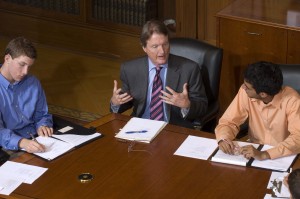
 

Photo by Marsha Miller/UT Public Affairs

If The University of Texas wanted to reduce its costs, it could slash the number of faculty on staff and start holding classes in Darrell K Royal Texas Memorial Stadium. Never mind the quality of the education; our professors would be ever so “productive” churning out more and more students!

One-on-one interaction with a professor? Who needs it. Small classes that offer the opportunity to build important critical thinking skills? Why bother. Laboratory environments where instructors use hands-on techniques to teach? Inefficient. That’s essentially the central tenet of a misguided study by the “Center for College Affordability and Productivity” that used raw data the University provided to the University of Texas System Board of Regents.

In a press release issued today by the newly formed Coalition for Excellence in Higher Education, our group points out that the analysis the Center did on UT’s data paints “unproductive” those who do not teach enough semester hours—as if that were the only measure of productivity. In fact, based on their measurements, University president Bill Powers would be deemed “unproductive” because he chooses to teach a signature course for undergrads in addition to his full-time leadership duties. Other top UT administrators and deans would suffer the same grossly misleading characterization.

UT president emeritus Peter Flawn puts a fine point on it: “Teaching the future leaders of our state and nation to think critically, challenge assumptions and make informed, reasoned decisions is quite different from manufacturing widgets on an assembly line. …University degrees are not widgets.”

Knowledge can’t be measured with manufacturing metrics. UT should always strive to be better, more efficient, and more excellent in everything that it does. After all, the state constitution mandated that Texas establish “a University of the first class.” That’s why UT is on the cutting edge, looking for new and better ways to educate, innovate, cut costs, and offer new programs that meet the ever-changing needs of our global economy. As Powers recently laid out in his update to the Commission of 125, “Our vision includes a strong commitment to undergraduate teaching…to harnessing technology to deepen and enrich the learning experience…to greater efficiency in all our operations…to developing new revenue streams…and to strengthening our research enterprise to expand the Texas economy to improve life in America and beyond.”

And we, the Longhorn community, should hold him to it. We should always ask for our university to be accountable to its important stakeholders and strive to be ever better. But we should not stand by while outside groups malign our university, misrepresent raw data, and hold UT up as an example of national inefficiency. It’s untrue and unfair, and it diminishes the value of our degrees.

Find out more about the Coalition at www.TexasEducationExcellence.org.

Jenifer Sarver chairs the Texas Exes’ Public Relations Committee and serves as spokeswoman for the Texas Coalition for Excellence in Higher Education.


10 Comments

  1. Shawn Miller says:

    Wow, just where to begin, from the mischaracterization of what is being proposed, to being reminiscent of everything Powers has written, to the complete trust of his flowery words (and no proposals)….

    “After all, the state constitution mandated that Texas establish “a University of the first class.”
    The Constitution of the Great State of Texas does say this, and since the state established the University and continues to fund it they’re allowed to have a say in how their money is spent. To think that just because they are “outsiders” that their opinions don’t matter is head-in-the-sand logic at best, and does a disservice to a University that you applaud for it’s free and critical thinking. Part of free and critical thinking involves listening to and evaluating the ideas of others, something that you and President Powers may want to do more of.

    • David says:

      Wow, Shawn, just where to begin. The report claimed that most UT faculty don’t teach much. The problem is that it treats all faculty, including full-time administrators, as full-time faculty who are supposed to have the same teaching loads. The fact is that professors, administrators, adjuncts, and graduate students have very different teaching roles, and Vedder’s report treats them all under one category.

      When are you going to actually research these matters? You are like a fool who reads what others say about Shakespeare without ever reading Shakespeare for yourself.

      Stop reading all the trash published by the TPPF. Go and do your own research. If you were a student at UT who took advantage of all its resources, you would have learned how to carry out such a task.

      • Shawn Miller says:

        I think you need to read the report, because that’s not what it says at all…but then again, I’m sure you’re too busy trying to think up clever references to make your posts seem more intelligent.

        Is anyone really against trying to reduce costs to students and taxpayers by having Professors teach more?

        • David says:

          I read the report and the rebuttals. Vedder is a bad researcher. The least productive teachers at UT aren’t even full time faculty, yet Vedder categorizes them that way.

          You need to read the rebuttals.

          UT is a Tier 1 institution. Faculty teach fewer courses precisely because they were hired to engage in more research than their peers at community and state colleges. Go learn what a university is and what it isn’t.

  2. Charlie Delta says:

    Have you ever heard of beating up on a straw man? It’s a lot easier to create a caricature and tear it down than to debate the real issues and present real solutions to actual problems.

    Higher ed has a bubble, but it doesn’t have to have a bubble. It is only a bubble if we continue to let costs explode and quality fall.

    UT can choose to be an ostrich, or we can get ahead of the curve. What really diminishes the value of our degrees is the waste, overhead, inefficiency, and the lack of transparency about where tuition dollars and taxpayer dollars are going.

  3. Ben De Leon says:

    Shawn and Charlie, did either of you attend the University of Texas at Austin? The Texas Consitution’s madate to establish “a University of the first class” necessarily values research and teaching together. To say the State of Texas continues to fund the University of Texas is a flawed understanding of the overall picture of UT’s annual budget: 14% of UT’s annual budget comes from state support, 24% comes from tuition and fees, 45% comes from other funding sources, 9% comes from gifts and endowments, 7% comes from AUF (incomes from PUF), and 1% comes from AUF (nonrecurring) (Source: Campaign for Texas summary through June 1, 2011). State support of “a University of the first class” continues to dwindle thanks to shorsighted thinking like yours. At this juncture, UT is at best state-assisted, not state-funded. The Texas Coalition for Excellence in Higher Education, which includes Democrats and Republicans alike, is simly advocating the idea that our degrees matter. As for not evaluating the ideas of others, I would encourage you to view President Powers’ speech on the Public Research University of the Future: http://www.utexas.edu/president/speeches/05092011.html
    Having received my undergraduate and law degrees from UT, and as a Big Brother in the Big Brothers Big Sisters Program for the past 5+ years, I’ve seen firsthand that education starts early on – before one ever enters the college ranks. The Texas Coalition will not sit idly by and allow Gov. Perry, the Texas Public Policy Foundation, or others to continue to distort the picture and devalue the fundamental tenets of teaching and reserch at UT, A&M and other institutions across the State of Texas. The more they do so, the more students we’ll continue to lose to out-of-state institutions that indeed value such things.

    • David says:

      Great comment, Ben. It’s places like UT, committed both to research and teaching, that empowers people and inspires our youth.

    • Shawn Miller says:

      It’s not like the Legislature paid for the University to be founded, or that sweetheart oil deal it received or anything…

      And if you want to talk about strawman arguments that’s fine, since you’re putting up one of your own…

      • David says:

        Um, UT is a state university. It’s supposed to be founded and maintained by the State…..

        State support has not kept up with inflation. 1980 levels of state support are not adequate for the UT of 2011.

  4. Keshav Rajagopalan says:

    Without great Tier One research universitities like The University of Texas and Texas A&M, the State of Texas will lose top talent to other regions of the country and world. These universities are nexuses for innovation, leadership development, and cultivating the minds of future generations. I am proud of my degree from UT, and I want it to continue to “earn” value– not have it stripped of it.

Post a Comment


SWA Rapid Rewards
Become a UT Advocate